A capture card with VRR passthrough can let you stream or record gameplay without giving up the smoother motion and lower latency that variable refresh rate provides.
We compare 10 options for PS5, Xbox Series X|S, PC, and high-refresh HDMI 2.1 setups, focusing on passthrough resolution, capture quality, compatibility, and practical streaming features.
Best 10 Capture Card with Vrr Passthrough Picks for 2026
Best Flexible High-Refresh Option

- 4K60 capture with 1080p240 passthrough
- Supports VRR, HDR, and ultra-low latency
- Works with Windows, macOS, and Linux
Best For: Gamers needing flexible high-refresh capture and passthrough
Best Plug-and-Play Choice
AVerMedia Live Gamer Extreme 3

- 4K30 capture with 4K60 HDR passthrough
- VRR passthrough up to 1440p120 or 1080p120
- Built-in 3.5mm audio input and output
Best For: Streamers wanting simple setup and integrated audio ports
Best Budget-Friendly Feature Set

- 4K60 HDR passthrough with 1080p240 capture
- Includes VRR and 3.5mm audio connections
- Supports consoles, PCs, mobile devices, and major OSs
Best For: Creators seeking broad compatibility and high-refresh modes
Best Premium HDMI 2.1 Option

- 4K144 capture and passthrough via HDMI 2.1
- VRR passthrough with ultra-low latency
- Captures up to 1080p240 and supports HDR10
Best For: High-end creators with HDMI 2.1 gaming setups
Best for HDR High-Refresh Console Capture
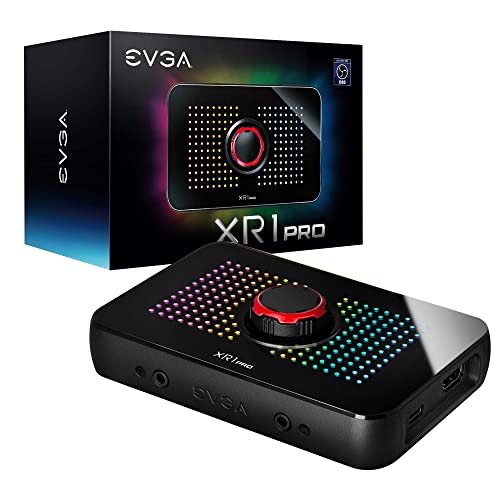
- 1440p/144Hz and 4K/60Hz HDR passthrough
- Captures 1440p60 or 4K30
- Built-in mixer, control dial, and ARGB
Best For: HDR gaming and hands-on OBS streaming
Best Overall VRR Passthrough

- 4K60 HDR and VRR passthrough
- VRR recording plus ultrawide input support
- 5.1 audio and console, PC, Mac, and iPad support
Best For: High-refresh, HDR, and ultrawide streaming
Best Compact HFR Alternative

- 4K60 capture with 1440p120 passthrough
- Supports 1080p240 and HDR10
- USB-C design with analog audio input
Best For: Compact high-frame-rate console capture
Best HDMI 2.1 Pick
AVerMedia Live Gamer Ultra 2.1

- 4K144 HDR/VRR passthrough
- Up to 4K144 Windows capture
- Party chat and 5.1 audio support
Best For: High-refresh console and PC streaming
Best Internal Card

- 8K60 HDMI 2.1 passthrough
- 4K60 HDR10 capture
- VRR and dual-PC support
Best For: Windows desktops with PCIe slots
Best High-Refresh Value

- 4K144 capture and passthrough
- Up to 1080p360 passthrough
- PS5 party-chat audio capture
Best For: Competitive gaming and PS5 streaming
Best Flexible High-Refresh Option – PORTTA DX20R
The PORTTA DX20R is a versatile capture card with VRR passthrough for creators who want high-refresh gameplay support without sacrificing 4K capture. It captures up to 4K at 60Hz and supports passthrough up to 1080p at 240Hz or 2K at 120Hz, with HDR and ultra-low latency support.
Best For: Gamers who want broad high-refresh compatibility, VRR/HDR support, and software-based control over capture settings.
Pros:
- Captures 4K at 60Hz and supports 1080p at 240Hz passthrough.
- Supports VRR, HDR, and multiple formats including YUY2, NV12, and RGB24.
- Works with Windows, macOS, and Linux without driver installation.
- PORTTA CapHub software provides EDID/VRR, audio, firmware, and video controls.
Cons:
- Some advanced settings require downloading the CapHub utility.
- The listed capture and passthrough modes may require compatible HDMI and USB hardware.
With its combination of 4K60 capture, high-refresh passthrough, and configurable VRR controls, the DX20R is a strong all-around choice for console and PC streamers.
Best Plug-and-Play Choice – AVerMedia Live Gamer Extreme 3
The AVerMedia Live Gamer Extreme 3 is a straightforward capture card with VRR passthrough for streaming and recording modern console gameplay. It records at up to 4K30, provides 4K60 HDR passthrough, and supports VRR passthrough at 1440p120 or 1080p120.
Best For: Streamers who prioritize simple setup, low-latency gameplay, and integrated headset or microphone connectivity.
Pros:
- Offers 4K60 HDR passthrough and VRR passthrough at supported high-refresh modes.
- Plug-and-play design requires no extra drivers or external power.
- Includes 3.5mm audio input and output for game chat and commentary.
- Supports Windows, macOS, iPadOS, PS5, Xbox Series X/S, and Nintendo Switch.
Cons:
- Capture resolution is limited to 4K30 rather than 4K60.
- VRR passthrough is specified for 1440p120 or 1080p120 modes.
This model is a practical option when easy setup and audio connectivity matter more than 4K60 recording. Its VRR passthrough and high-refresh support help preserve responsive gameplay while streaming.
Best Budget-Friendly Feature Set – 4K60 VRR Capture Card
This 4K60 capture card with VRR passthrough is designed for high-refresh console and PC streaming. It supports 4K60 HDR input and passthrough, 1080p240 or 2K144 capture, plus 3.5mm audio connections and a dedicated charging port for mobile streaming.
Best For: Creators who need high-refresh capture, mobile-streaming support, and broad compatibility across consoles, computers, and mobile devices.
Pros:
- Supports 4K60 HDR input and passthrough, with 1080p240 and 2K144 capture.
- VRR passthrough is designed to reduce tearing, flicker, and perceived latency.
- Includes 3.5mm microphone and audio-monitoring ports.
- Compatible with Windows, macOS, Linux, Android, iOS, PS5, Xbox, and Switch.
Cons:
- HDCP-encrypted content and 3D, CEC, and Blu-ray playback are not supported.
- High-refresh operation requires suitable HDMI 2.0 cables and the included USB 3.x connection.
- PS4 and PS5 require HDCP to be disabled before use.
Its specifications make it appealing for creators who want a wide range of capture modes and device compatibility. Be prepared to follow the cable and HDCP requirements for reliable high-refresh operation.
Best Premium HDMI 2.1 Option – Elgato 4K X
The Elgato 4K X is a premium capture card with VRR passthrough built around HDMI 2.1. It supports 4K capture and passthrough at up to 144Hz, along with high-refresh 1080p capture up to 240fps and ultra-low-latency USB 3.2 Gen 2 connectivity.
Best For: Advanced PC and console creators who want HDMI 2.1, 4K144 support, and compatibility with popular broadcasting applications.
Pros:
- Supports 4K144 capture and passthrough with HDMI 2.1 connectivity.
- VRR passthrough helps provide smoother gameplay without screen tearing.
- Supports up to 1080p240 capture and HDR10.
- Works with OBS, Streamlabs, Twitch Studio, Zoom, Teams, and other applications.
Cons:
- Full performance requires a USB 3.2 Gen 2 port and capable computer hardware.
- USB 3.2 Gen 1 works with reduced capture resolution.
- The listed operating-system support is limited to Windows 10, macOS 11, and iPadOS 17 or later.
For users with a compatible setup, the 4K X offers the most advanced refresh-rate ceiling in this group. Its HDMI 2.1 interface and 4K144 capability make it especially suited to high-end gaming displays and newer consoles.
Best for HDR High-Refresh Console Capture – EVGA XR1 Pro
The EVGA XR1 Pro is a practical capture card with VRR passthrough alternatives in mind, offering high-refresh HDR passthrough at up to 1440p/144Hz and 4K/60Hz. It also combines OBS certification, plug-and-play setup, and an onboard audio mixer for a straightforward streaming workflow.
Best For: Gamers who want HDR high-refresh passthrough, OBS compatibility, and convenient physical audio controls.
Pros:
- Supports 1440p/144Hz HDR and 4K/60Hz HDR passthrough.
- Captures up to 1440p at 60fps or 4K at 30fps.
- Includes a built-in audio mixer, control dial, and customizable ARGB lighting.
- Plug-and-play setup requires no driver installation and includes a two-year warranty.
Cons:
- Does not list explicit VRR passthrough support in the supplied specifications.
- 4K capture is limited to 30fps.
- Requires a USB 3.1 interface.
The XR1 Pro is a strong fit when HDR passthrough and hands-on audio adjustment matter more than 4K60 recording or confirmed VRR support.
Best Overall VRR Passthrough – AVerMedia Live Gamer ULTRA S
The AVerMedia Live Gamer ULTRA S is the clearest match for shoppers seeking a capture card with VRR passthrough. It supports 4K60 HDR, 1440p144, and 1080p240 passthrough, while also adding VRR recording options, ultrawide input support, and broad computer and console compatibility.
Best For: Streamers who want documented VRR passthrough, high-refresh gameplay, ultrawide support, and flexible platform compatibility.
Pros:
- Supports 4K60 HDR and VRR passthrough, plus 1440p144 and 1080p240 modes.
- Can record VRR at up to 1440p60 or 1080p240 with Streaming Center.
- Supports ultrawide inputs including 3440×1440 and 2560×1080.
- Offers 5.1-channel audio capture on Windows and a three-year warranty.
Cons:
- 5.1-channel audio capture is specified for Windows workflows.
- Requires compatible operating systems and an unencrypted HDMI source.
- Its feature set may be more than needed for basic 1080p streaming.
With explicit VRR passthrough and recording support, the Live Gamer ULTRA S is the most versatile option here for high-refresh, HDR, and ultrawide gaming setups.
Best Compact HFR Alternative – Elgato 4K S
The Elgato 4K S is a compact USB-C capture card for console and PC setups that need high-frame-rate passthrough. While the supplied notes do not explicitly identify VRR support, it handles 1440p120 and 1080p240 passthrough, 4K60 capture, HDR10, and analog audio input.
Best For: Console creators who prioritize compact hardware, high-frame-rate passthrough, HDR10, and simple cross-platform connectivity.
Pros:
- Captures up to 4K60 and supports 1440p120 or 1080p240 passthrough.
- Supports HDR10 capture with tone mapping on Windows.
- Works with PS5, Xbox Series X/S, Switch 2, PCs, Macs, and compatible iPads.
- Includes a 3.5mm analog audio input for chat or commentary.
Cons:
- VRR passthrough is not explicitly listed in the supplied specifications.
- HDR tone mapping is specified for Windows.
- Requires USB-C and relatively recent computer hardware.
The 4K S is a capable high-frame-rate option, but shoppers specifically requiring confirmed VRR passthrough should favor the AVerMedia model instead.
Best HDMI 2.1 Pick – AVerMedia Live Gamer Ultra 2.1
If you need a capture card with VRR passthrough for a high-refresh console or PC setup, the AVerMedia Live Gamer Ultra 2.1 supports up to 4K144 HDR/VRR passthrough on compatible displays. It also captures up to 4K144 MJPEG on supported Windows PCs and connects through USB-C 10Gbps.
Best For: PS5, Xbox Series X/S, Switch 2, and PC gamers using compatible high-refresh HDMI 2.1 displays.
Pros:
- Supports 4K144 HDR/VRR passthrough, plus 1440p240 and 1080p360 modes.
- Windows capture reaches up to 4K144 MJPEG; macOS supports up to 4K60.
- Includes party-chat support, 5.1-channel audio support, RGB lighting, and OBS compatibility.
Cons:
- 4K passthrough may be limited to 4K120 with monitors using DSC.
- Full 4K144 capture requires a supported Windows PC workflow.
This is a strong choice for creators who want modern HDMI 2.1 passthrough and flexible audio features in a compact external unit. Check display compatibility carefully if you plan to use DSC or the highest refresh rates.
Best Internal Card – Elgato 4K Pro
The Elgato 4K Pro is an internal capture card for Windows systems that want a capture card with VRR passthrough. Its HDMI 2.1 inputs and outputs support gameplay passthrough up to 8K60, while capture reaches 4K60 HDR10 and high-frame-rate modes up to 1080p240.
Best For: Windows gaming PCs with an available PCIe slot, including dual-PC streaming setups.
Pros:
- Offers 8K60 passthrough and 4K60 capture with HDR10 support.
- Supports VRR passthrough for smoother, tear-free gameplay.
- Works with OBS, Streamlabs, Twitch Studio, Zoom, Teams, and other listed apps.
Cons:
- Requires a Windows 10 system and an available PCIe slot.
- The supplied details list video capture resolution as 1080p, despite the stated 4K60 capture capability.
Choose the Elgato when you prefer an internal installation and need broad software compatibility, HDMI 2.1 connectivity, and VRR support. It is less suitable for laptop or Mac users because the listed requirements call for Windows and PCIe hardware.
Best High-Refresh Value – Hunter4K Pro 4K144Hz
The Hunter4K Pro combines a capture card with VRR passthrough-style high-refresh gaming support, low-latency HDMI pass-through, and broad device compatibility. It can capture and pass through 4K at 144Hz, while supporting higher passthrough refresh rates at lower resolutions.
Best For: Competitive gamers and streamers who want 4K144 workflows, ultrawide support, and PS5 party-chat capture.
Pros:
- Supports 4K144 capture and passthrough, 1440p240 passthrough, and 1080p360 passthrough.
- Captures PS5 gameplay, game audio, microphone voice, and party chat with the included 4-pole cable.
- Works with OBS, Streamlabs, Restream, Zoom, Microsoft Teams, and several listed platforms.
Cons:
- Its supplied notes do not explicitly state VRR support.
- USB connectivity and high-refresh modes require compatible computer and display hardware.
This card is compelling for users prioritizing high refresh rates and flexible platform support, especially PS5 creators. If VRR is essential rather than simply high-refresh passthrough, verify the manufacturer’s current VRR specifications before buying.
How We Picked the Best Capture Card with Vrr Passthrough
We evaluated these capture cards by looking at the features that matter most in a modern gaming and streaming setup: VRR support, HDMI 2.1 compatibility, passthrough resolution and refresh rate, maximum capture quality, latency, connection type, and platform compatibility. We also considered practical details such as HDR handling, audio support, OBS compatibility, installation, and whether the device is better suited to a desktop PC or a portable USB setup.
Product listings can describe VRR and passthrough capabilities differently, so verify the manufacturer’s specifications for your console, display resolution, refresh rate, and preferred recording software before buying.
Quick Comparison
- Best for HDMI 2.1 gaming: Elgato 4K X, AVerMedia Live Gamer Ultra 2.1, or AVerMedia Live Gamer Ultra 2.1 models with 4K high-refresh passthrough.
- Best for high-refresh 1080p or 1440p: PORTTA DX20R, the 4K60/1080p240 model, EVGA XR1 Pro, or Hunter4K Pro.
- Best internal PC option: Elgato 4K Pro Internal Capture Card.
- Best for simple USB setups: Elgato 4K S, AVerMedia GC551G2, and AVerMedia GC553Pro.
Key Buying Factors for a Capture Card with Vrr Passthrough
Passthrough Versus Capture Resolution
Passthrough is the signal sent to your gaming display, while capture resolution is what reaches your PC or recording software. A card may pass through 4K at 120Hz or 144Hz but capture at a lower resolution. Check both specifications rather than judging the product by its maximum headline number.
VRR, HDMI 2.1, and Refresh-Rate Support
For PS5, Xbox Series X, and newer PC GPUs, HDMI 2.1 can be important when you want 4K at 120Hz or higher. Confirm support for the VRR format used by your display, such as HDMI VRR, FreeSync, or G-SYNC-compatible operation. Your console, capture card, cable, and monitor or television must all support the intended signal.
Latency, HDR, and Audio
Low-latency passthrough keeps the direct gaming image responsive, but the preview inside streaming software may still have delay. HDR support is useful for compatible games and displays, while reliable audio pass-through and mixing matter if you use a headset, microphone, or console chat.
Connection and Installation
USB 3.x models are convenient for laptops and flexible setups, but they depend on a suitable high-speed port and cable. Internal PCIe cards generally offer a cleaner desktop installation and consistent bandwidth. Confirm operating-system, software, and port requirements before purchase.
Who Should Buy Which Capture Card with Vrr Passthrough?
Choose an HDMI 2.1 capture card if you play at 4K high refresh rates and want to preserve VRR on a modern television or monitor. A high-refresh 1080p or 1440p model is often the better value for competitive players who prioritize 120Hz, 144Hz, or 240Hz performance over 4K capture. USB cards suit creators who move between systems, while an internal card is ideal for a permanent streaming PC.
For occasional streaming, prioritize plug-and-play setup and dependable compatibility. For frequent creators, look for the strongest combination of VRR passthrough, HDR handling, capture quality, audio controls, and software support rather than choosing solely by maximum resolution.