The right capture card can turn Nintendo Switch gameplay into a clean livestream or recording without adding unnecessary setup complexity. This roundup focuses on practical features such as 1080p capture, 4K pass-through, low-latency HDMI looping, and reliable USB connectivity.
Whether you stream from a docked Switch, record gameplay, or want a flexible device for other consoles, these options cover the most useful combinations of performance, compatibility, and value.
Best 10 Capture Card for Nintendo Switch Picks for 2026
Best 1080p60 Value

- 1080p60 YUY2 capture over USB 3.0
- 4K30 input and zero-latency pass-through
- Mic-in and plug-and-play setup
Best For: Simple Switch streaming and recording at 1080p60
Best Connectivity
UGREEN 2K USB 3.0 Capture Card

- 2K30 or 1080p60 capture
- 4K30 HDMI loop-out
- USB-A and USB-C interfaces
Best For: Mixed computer and tablet streaming setups
Best Portable Setup

- 2K30 and 1080p60 recording
- Compact aluminum plug-and-play design
- USB 3.0-to-USB-C adapter included
Best For: Mobile Switch streaming and multi-device recording
Best Audio Features

- 1080p60 or 2K30 capture
- 4K60 input and loop-out
- Dedicated mic-in for commentary
Best For: Switch streams with external voice commentary
Best All-Around Pick
Acer USB 3.0 HDMI Capture Card

- 4K input with 1080p/60Hz output
- Built-in 3.5mm mic input
- USB-A and USB-C connectivity
Best For: Switch and Switch 2 streaming with commentary
Best Resolution Flexibility
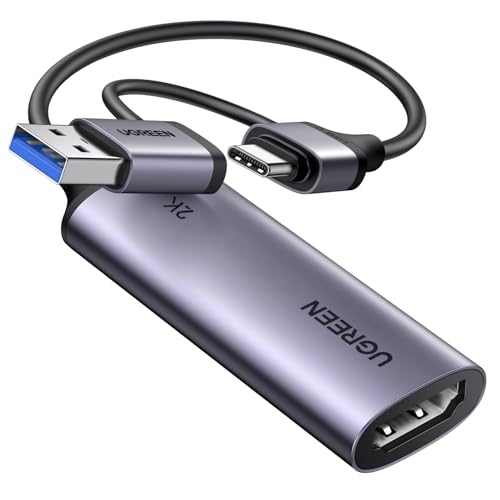
- 4K input and 2K/30Hz output
- 1080p/60FPS backward compatibility
- USB-A and USB-C interfaces
Best For: Flexible console and mobile streaming setups
Best Budget Starter
PDAPTMAG 1080p HDMI Capture Card

- 1080p HDMI video and audio capture
- Driver-free plug-and-play setup
- Compact USB 2.0 design
Best For: Beginners and portable basic streaming
Best Value USB-C Capture

- 1080p at 60fps output
- Plug-and-play USB-C/USB connectivity
- Compact design for portable streaming
Best For: Switch recording and flexible laptop-based streaming
Best for Pass-Through Gaming
4K Capture Card with HDMI Loop-Out

- HDMI loop-out for play with capture
- 1080p capture with 4K input support
- 3.5mm TRS microphone input
Best For: Console gamers who stream with commentary
Best Portable Streaming Option
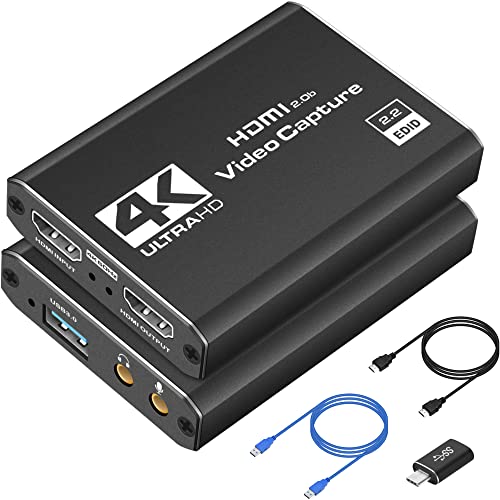
- 1080p capture at 60fps
- 4K preview and HDMI loop-out
- Compact kit with USB adapters
Best For: Mobile creators using Switch, consoles, or cameras
Best 1080p60 Value – Swudloe C7-01 Capture Card
If you want a straightforward capture card for Nintendo Switch streaming, the Swudloe C7-01 combines 1080p at 60fps capture with 4K input and pass-through. Its USB 3.0 connection, plug-and-play setup, and microphone input make it suitable for gaming recordings and live broadcasts.
Best For: Switch users who want smooth 1080p60 capture, 4K pass-through, and simple OBS or streaming-software setup.
Pros:
- Captures YUY2 video at up to 1080p60 through USB 3.0.
- Supports 4K input and 4K30 zero-latency HDMI pass-through.
- Includes a 3.5mm mic-in for commentary and requires no external power or drivers.
- Works with Windows, macOS, Linux, Android, and multiple consoles and cameras.
Cons:
- USB output is limited to 1080p60, while 4K30 applies to HDMI pass-through.
- The microphone input does not record party chat.
This is a practical choice when 1080p60 capture matters more than 4K recording. Confirm that your computer has a USB 3.0 port and that your streaming setup can use the included audio features.
Best Connectivity – UGREEN 2K USB 3.0 Capture Card
The UGREEN capture card for Nintendo Switch is a flexible option for users who need both USB-A and USB-C recording connections. It captures up to 2K at 30fps or 1080p at 60fps, while its 4K30 loop-out supports low-latency monitoring during gameplay.
Best For: Streamers who switch between USB-A and USB-C computers, tablets, or recording devices and want 2K capture capability.
Pros:
- Captures up to 2K30 or 1080p60 and accepts 4K30 input.
- Provides 4K30 HDMI loop-out for real-time, low-latency preview.
- Includes USB 3.0 Type-C and Type-A connectivity.
- Its aluminum casing supports durability and heat dissipation, with a 24-month warranty service.
Cons:
- It does not support 4K capture; 4K is limited to input and loop-out.
- Windows 7 requires USB 3.0 drivers, and Fire TV Stick is not compatible.
- PS4 and PS5 require HDCP to be turned off.
UGREEN stands out for connection flexibility and its higher-than-1080p 2K recording mode. It is a strong fit for a mixed-device setup, provided your source and operating system meet the listed requirements.
Best Portable Setup – VIXLW U168-1 Capture Card
For a portable capture card for Nintendo Switch, the VIXLW U168-1 offers 4K30 HDMI input, 2K30 recording, and 1080p60 capture in a compact aluminum design. The included USB 3.0-to-USB-C adapter also helps connect the card to compatible computers and mobile setups.
Best For: Mobile streamers and creators who need a compact card for Switch, console, camera, OBS, Zoom, or tablet-based recording.
Pros:
- Supports 4K30 HDMI input with 2K30 or 1080p60 recording.
- Uses USB 3.0 and USB-C connections with no external power or driver installation.
- Aluminum housing is designed for heat dissipation and low-latency transmission.
- Includes a USB 3.0-to-USB-C adapter and supports Windows, macOS, Linux, and Android.
Cons:
- It records at up to 2K30 or 1080p60 rather than 4K.
- Tablet use requires OTG functionality to be enabled.
- The source device should be tested with a monitor first to confirm video and audio output.
This model makes the most sense when portability and broad device support are priorities. Its recording limits are clearly below 4K, but 1080p60 is well suited to smooth Switch gameplay streams.
Best Audio Features – XIIXMASK HDMI Capture Card
The XIIXMASK HDMI capture card is a useful capture card for Nintendo Switch if you want smooth 1080p60 recording plus a dedicated microphone input. It also supports 4K60 HDMI input and loop-out, along with USB-A and USB-C connectivity for computers and compatible devices.
Best For: Switch streamers who want microphone commentary, 4K60 pass-through, and 1080p60 or 2K30 capture.
Pros:
- Captures 1080p60 or 2K30 while supporting 4K60 input and loop-out.
- Includes a 3.5mm mic-in for voice commentary.
- Aluminum construction and redesigned cable layout are intended to improve heat dissipation and stability.
- Supports USB-A and USB-C connections and works with OBS, Zoom, VLC, and other software.
Cons:
- The capture output does not reach 4K; 4K is for input and loop-out.
- The mic input does not record party chats.
- OBS may need to be restarted after audio setup to restore sound output.
This card is particularly appealing for commentary-heavy streams because of its mic-in and high-refresh-rate pass-through. Plan on checking the OBS audio configuration before your first broadcast.
Best All-Around Pick – Acer USB 3.0 HDMI Capture Card
If you want a versatile capture card for Nintendo Switch, the Acer OCB5B0 combines 4K HDMI input with 1080p at 60Hz capture and output. Its USB 3.0 connection, low-latency audio-video processing, and built-in mic input make it practical for gameplay, commentary, and streaming.
Best For: Switch and Switch 2 gamers who want smooth 1080p/60Hz capture, direct microphone commentary, and broad device compatibility.
Pros:
- Supports 4K input and 1080p at 60Hz output.
- Includes a 3.5mm mic input for live commentary.
- Plug-and-play design works with OBS, XSplit, VLC, and multiple operating systems.
- Offers USB-A and USB-C connectivity and supports Switch, Switch 2, PlayStation, Xbox, cameras, and PCs.
Cons:
- Requires a USB 3.0 port for USB 3.0 operation.
- Listed capture resolutions are 1080p and 720p, despite the 4K input support.
The Acer is a strong general-purpose choice when smooth 1080p gameplay and easy voice capture matter more than recording at 4K. Its wide compatibility also leaves room to use it with other consoles and cameras.
Best Resolution Flexibility – UGREEN 2K HDMI Capture Card
For shoppers comparing a capture card for Nintendo Switch, the UGREEN model stands out with 4K input, 2K at 30Hz output, and backward-compatible 1080p at 60FPS support. Its USB 3.0 bandwidth, USB-A and USB-C interfaces, and aluminum-alloy housing suit a range of streaming setups.
Best For: Streamers who want 2K output options, fast USB transfer, and compatibility with Switch, Switch 2, consoles, computers, and select tablets.
Pros:
- Supports 4K input, 2K at 30Hz output, and 1080p at 60FPS.
- USB 3.0 provides 5 Gbps high-speed data transfer and low latency.
- Includes both USB-A and USB-C interfaces for flexible setup options.
- Works with OBS, XSplit, PotPlayer, QuickTime Player, Windows, macOS, Linux, and compatible mobile devices.
Cons:
- Supports only unidirectional HDMI input to USB output.
- iPad compatibility requires iPadOS 17 or later.
- Console sources may require HDCP to be disabled.
The UGREEN is the most flexible option here for users who want more than standard 1080p capture. Before buying, confirm that the source device, computer, and intended resolution support the required connections and settings.
Best Budget Starter – PDAPTMAG 1080p HDMI Capture Card
If you need a simple capture card for Nintendo Switch without extra setup, this compact PDAPTMAG model provides HDMI-to-USB capture for 1080p video. Its driver-free operation and compatibility with common streaming software make it a straightforward starting point for gaming, meetings, and recording.
Best For: Budget-conscious beginners who need portable 1080p capture for Switch, PS5, Xbox, or basic screen sharing.
Pros:
- Captures HDMI video and audio at up to 1080p.
- Driver-free plug-and-play operation works with Windows, macOS, and Linux.
- Compatible with Twitch, YouTube, OBS, PotPlayer, and VLC.
- Compact and lightweight for portable indoor or outdoor streaming.
Cons:
- Uses USB 2.0 rather than USB 3.0.
- Provides one HDMI input channel and USB-A connectivity only.
- Listed system requirements include an i5-3400-or-better CPU, NVIDIA GT630-or-better graphics, and 4GB RAM.
This model is a practical entry-level choice when affordability, portability, and easy software compatibility are the priorities. Users seeking higher bandwidth or more advanced resolution options should consider a USB 3.0 alternative.
Best Value USB-C Capture – 4K HDMI to USB-C Capture Card
If you need a practical capture card for Nintendo Switch, this compact USB 3.0 model offers 1080p at 60fps output while accepting input up to 4K at 30Hz. It supports USB-C and USB connections, making it flexible for laptops, tablets, and common streaming setups.
Best For: Switch recording, streaming, online meetings, and portable setups using OBS or similar capture software.
Pros:
- Supports 1080p at 60fps output and up to 4K input at 30Hz.
- Plug-and-play design requires no additional drivers or external power.
- Includes USB-C and USB connectivity, plus a compact aluminum-alloy body.
- Works with Windows, Mac, Linux, Android, OBS, Twitch, YouTube, and multiple consoles.
Cons:
- It is intended for capture and does not directly cast to a monitor or TV.
- USB 3.0 is recommended for the stated bandwidth and resolution.
- Audio setup in OBS may require restarting the software.
This is a versatile, travel-friendly option for creators who want high-frame-rate 1080p capture without a complicated installation. Keep its one-way HDMI-to-USB design and software requirement in mind when planning your setup.
Best for Pass-Through Gaming – 4K Capture Card with HDMI Loop-Out
For a capture card for Nintendo Switch that emphasizes gameplay convenience, this model combines USB 3.0 capture with HDMI loop-out. It can accept 4K input at supported refresh rates, capture up to 1080p, and pass video through for gaming with no stated gameplay delay.
Best For: Gamers who want HDMI pass-through, external microphone commentary, and streaming through OBS, Twitch, YouTube, or VLC.
Pros:
- HDMI loop-out supports playing while capturing a single HDMI video channel.
- Supports 1080p capture and 4K input at 30Hz or 60Hz.
- Plug-and-play operation automatically identifies the device as a webcam.
- Includes a 3.5mm microphone input for external commentary.
Cons:
- It does not support 4K at 120Hz or 144Hz.
- The microphone input accepts a 3.5mm TRS standard headset only.
- Requires a USB 3.0 port and a system capable of processing 1080p video.
The loop-out connection makes this a strong fit for players who want to keep gaming on a display while sending a feed to a computer. Its microphone input is useful for commentary, though headset compatibility is limited to the specified TRS standard.
Best Portable Streaming Option – 4K HDMI USB 3.0 Capture Card
This capture card for Nintendo Switch is designed for straightforward 1080p 60fps recording and streaming from HDMI devices. It offers 4K HDMI real-time preview, USB 3.0 connectivity, and compatibility with OBS Studio, Streamlabs, and XSplit on Windows and Mac systems.
Best For: Switch, PS5, Xbox, camera, and PC users who need a compact capture device for home or mobile streaming.
Pros:
- Captures smooth 1080p video at 60fps.
- Provides 4K HDMI real-time preview and HDMI loop-out.
- Works with OBS Studio, Streamlabs, and XSplit without additional drivers.
- Compact, lightweight design includes USB and USB-C adapter accessories.
Cons:
- Requires a USB 3.0 port on a compatible Windows or Mac system.
- Its 4K capability is listed for preview, while recording is specified at 1080p 60fps.
- The listed warranty description is one year.
This model suits creators who prioritize simple setup and portability across different gaming or camera sources. Its 1080p 60fps capture and loop-out features cover common streaming needs, while the supplied adapters make it easier to move between setups.
How We Picked the Best Capture Card for Nintendo Switch
We focused on the specifications that matter most for Switch streaming and recording: HDMI input compatibility, capture resolution, frame rate, pass-through support, USB interface, and device flexibility. Since Nintendo Switch gameplay is commonly output at up to 1080p when docked, models capable of 1080p at 60 frames per second can preserve smooth motion for most streams and recordings.
We also considered whether each device supports 4K input or pass-through, which can be useful with other consoles or a 4K display, even when the captured video is limited to 1080p. USB 3.0 models are preferred for higher-bandwidth connections, while USB-C options may be more convenient with modern laptops and tablets.
Quick Comparison
| Feature | What to look for | Why it matters |
|---|---|---|
| Capture quality | 1080p at 60fps | Produces smooth, detailed Switch recordings and streams. |
| Pass-through | 4K or 1080p HDMI loop-out | Lets you play on a monitor or TV with minimal display delay. |
| Connection | USB 3.0 or USB-C | Provides the bandwidth needed for high-quality video transfer. |
| Input support | HDMI input with console compatibility | Ensures the card works with a docked Nintendo Switch and other devices. |
Key Buying Factors for a Capture Card for Nintendo Switch
Capture Resolution and Frame Rate
For most Switch users, 1080p at 60fps is the best target. It balances image quality, smooth motion, storage needs, and streaming bandwidth. A product advertising 4K input may still capture at 1080p, so check the capture specification separately from the pass-through specification.
Pass-Through and Latency
HDMI pass-through sends the console signal to a television or monitor while the computer receives a separate capture feed. This setup is preferable for action games because it avoids playing from the preview window. Look for clear loop-out specifications and use a short, capable HDMI cable when possible.
USB Compatibility and Software
USB 3.0 is generally the safest choice for 1080p60 capture. Confirm that your computer has the required USB-A or USB-C port, and check whether an adapter is needed. Most UVC-compatible cards work with common software such as OBS Studio, but verify operating-system support before buying.
Audio and Setup
HDMI capture usually carries game audio, but microphone mixing may require separate software or hardware. A straightforward plug-and-play design is valuable if you want to connect the Switch dock, capture card, and computer without installing proprietary software.
Who Should Buy Which Capture Card for Nintendo Switch?
Choose a 1080p60 USB 3.0 model if you mainly stream or record Nintendo Switch gameplay and want the best balance of quality and cost. Choose 4K pass-through if you also use a 4K display or plan to connect a PS5, Xbox, or another high-resolution source. Choose USB-C connectivity if your laptop has limited USB-A ports or you want a compact setup for portable recording. For occasional clips and basic streaming, a simple plug-and-play card is usually sufficient; frequent creators should prioritize stable pass-through, dependable drivers, and clear audio handling.