Using a DSLR as a webcam or streaming camera can deliver sharper, more professional-looking video than a typical laptop webcam—but only if the HDMI signal reaches your computer cleanly. A capture card bridges that gap, converting your camera’s output into a USB video source for streaming, recording, meetings, and live production.
We’ve selected 10 options ranging from established brands to affordable USB 3.0 models. The right choice depends on your camera’s HDMI output, desired resolution and frame rate, connection type, and whether you need features such as pass-through or near-zero-latency monitoring.
Best 10 Capture Card for Dslr Camera Picks for 2026
Premium Pick

- 1080p60 and up to 4K60 capture
- Ultra-low latency for synced audio and video
- Works with OBS, Zoom, Mac, PC, and iPad
Best For: Creators seeking a compact, versatile DSLR capture setup
Budget Versatility

- 4K30 input with 2K30 or 1080p60 recording
- USB 3.0 and USB-C connections
- Compatible with cameras, consoles, OBS, and multiple systems
Best For: Portable mixed-device streaming and recording
Professional 4K Choice

- Up to 4K60 RGB24 capture
- Ultra-low latency with synchronized audio and video
- Includes a 1/4-inch shoe-mount adapter
Best For: Higher-end DSLR, camcorder, and live-production workflows
Feature-Packed Value

- 1080p capture with 4K HDMI input support
- HDMI loop-out for low-delay monitoring
- 3.5mm microphone input for commentary
Best For: Budget streamers needing pass-through and mic input
High-Resolution Pick
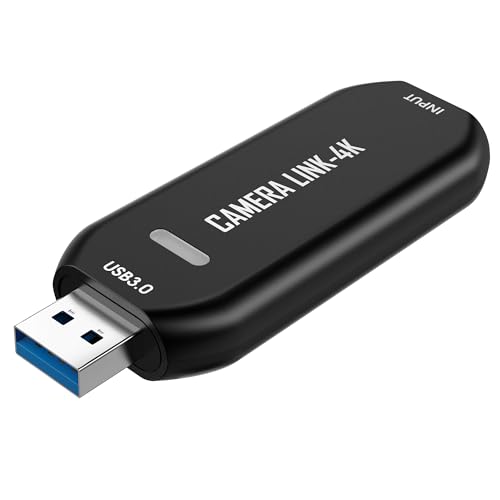
- Up to 4K60 or 1080p120 modes
- Plug-and-play Windows and macOS support
- Works with cameras, consoles, and microscopes
Best For: High-resolution streaming and varied HDMI sources
Pass-Through Pick
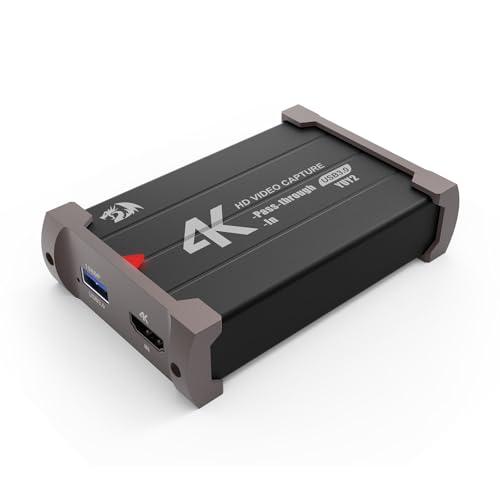
- 4K30 input with 1080p60 capture
- Zero-latency HDMI pass-through
- Simultaneous audio and video capture
Best For: Camera streaming and gaming with direct HDMI monitoring
Budget Travel Pick

- Up to 4K30 capture and 1080p120
- Compact 0.07 kg portable design
- Driver-free Windows and Mac operation
Best For: Affordable DSLR streaming and travel setups
Precision Capture Pick
- 1080p60 or up to 2K50 capture
- Works with DSLR cameras and microscopes
- Driver-free setup for OBS and Zoom
Best For: DSLR streaming and detailed demonstrations
Budget-Friendly Starter
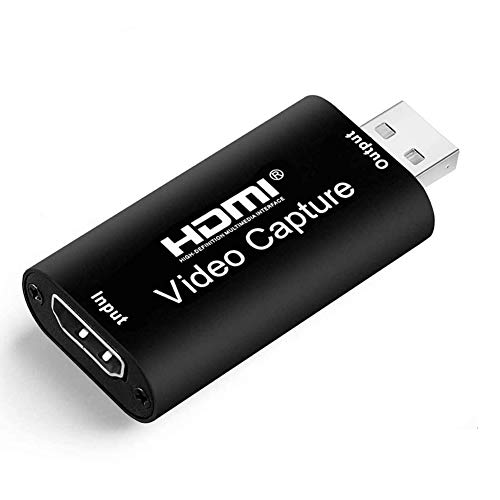
- 4K input with 1080p30 output
- Supports Windows, Mac, and Linux
- No driver or external power required
Best For: Basic DSLR streaming and video conferencing
High-Frame-Rate Choice
Cam Link 4K External Capture Card
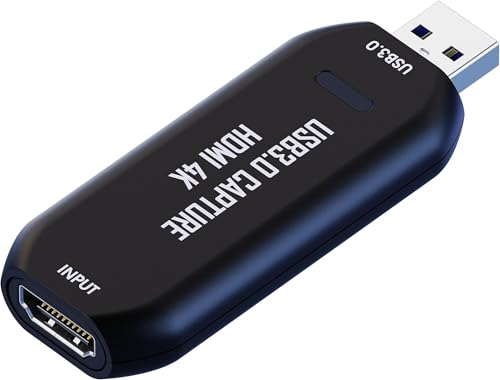
- 1080p60 or up to 2K50 capture
- USB 3.0 with no external power
- Includes HDMI cable and manual
Best For: Smooth DSLR livestreaming and broadcasting
Premium Pick – Elgato Cam Link 4K
The Elgato Cam Link 4K is a polished capture card for DSLR camera setups, mirrorless cameras, camcorders, and action cameras. It connects over USB 3.0 and supports 1080p60 or 4K capture, depending on the camera and model compatibility.
Best For: Creators who want a compact, established solution for streaming, recording, video calls, or iPad monitoring.
Pros:
- Supports 1080p60 and up to 4K60 capture with compatible equipment.
- Ultra-low latency helps keep video and audio synchronized.
- Works with OBS, Zoom, Discord, PC, Mac, and iPad.
- Compact 20.14-gram design includes a USB 3.0 extension cable.
Cons:
- 4K60 requires a compatible camera and the latest Cam Link 4K model.
- Compatibility details vary by operating system and connected device.
Choose this model when reliable software compatibility and a compact design matter more than having extra input or pass-through connections.
Budget Versatility – VIXLW 4K HDMI Capture Card
This VIXLW capture card for DSLR camera use combines 4K HDMI input with USB 3.0 and USB-C connectivity. It records at 2K30 or 1080p60 and is designed for plug-and-play streaming, recording, meetings, and mobile setups.
Best For: Buyers who need broad device and operating-system compatibility in a small, portable capture card.
Pros:
- Accepts up to 4K30 HDMI input and records at 2K30 or 1080p60.
- Supports Windows, macOS, Linux, and Android.
- Works with DSLR cameras, consoles, tablets, OBS, Zoom, and Twitch Studio.
- Compact aluminum-alloy design requires no driver or external power.
Cons:
- Recorded output does not match the 4K input resolution.
- Tablet use may require enabling OTG and verifying HDMI output first.
This is a flexible choice for mixed-device users, especially if 1080p60 recording is sufficient and portability is a priority.
Professional 4K Choice – AVerMedia CamStream 4K
The AVerMedia CamStream 4K is a capable capture card for DSLR camera and camcorder workflows. It captures up to 4K60 with RGB24 color, connects through USB, and is built for streaming, recording, conferencing, and real-time monitoring.
Best For: Camera users who want 4K60 capture, synchronized audio and video, and a supplied shoe-mount adapter.
Pros:
- Captures up to 4K60 video with RGB24 color.
- Plug-and-play operation works with OBS Studio, Streamlabs, Zoom, Twitch, and YouTube Live.
- Ultra-low latency supports responsive monitoring and live production.
- Includes a 1/4-inch cold/hot shoe mount adapter and USB Type-C to Type-A cable.
Cons:
- Listed operating-system support is limited to newer Windows, macOS, Android, and iPadOS versions.
- Its strongest 4K60 capabilities depend on compatible source equipment and software.
With its high capture specification, mounting accessory, and three-year manufacturer warranty, this model suits more demanding camera-based production setups.
Feature-Packed Value – Rybozen HDMI Capture Card
This Rybozen capture card for DSLR camera setups provides HDMI-to-USB 3.0 connectivity, 1080p capture, and HDMI loop-out. It also adds microphone input for commentary, making it useful for streaming cameras, consoles, and other HDMI sources.
Best For: Streamers who want pass-through video and a dedicated microphone input without needing an external power supply.
Pros:
- Supports up to 1080p capture while accepting 4K30/60Hz input.
- HDMI loop-out enables gameplay or monitoring without added delay.
- Plug-and-play design requires no driver or external power.
- Includes microphone input for commentary with a 3.5mm TRS microphone headset.
Cons:
- Output capture is limited to up to 2K30, with 1080p listed as the primary capture quality.
- Microphone input accepts only a 3.5mm TRS standard microphone headset.
- The listed warranty is 60 days.
This model stands out for streaming layouts that benefit from HDMI pass-through and direct commentary, though its short warranty and output limits deserve consideration.
High-Resolution Pick – Cam Link 4K
If you need a capture card for DSLR camera streaming, the VIXLW Cam Link 4K offers unusually high stated capture modes, including up to 4K60 or 1080p120 depending on format. Its USB 3.0, plug-and-play design supports cameras, consoles, microscopes, and other HDMI sources on Windows and macOS.
Best For: Creators who want high-resolution camera streaming, low-latency video, and broad HDMI-device compatibility.
Pros:
- Supports up to 4K60 or 1080p120 in specified formats.
- Works with Windows and macOS without requiring drivers or external power.
- Compatible with DSLRs, camcorders, action cameras, consoles, and microscopes.
- Includes a stated lifetime warranty.
Cons:
- Actual maximum resolution varies by video format.
- The supplied notes do not specify included HDMI cable or detailed system requirements for macOS.
The VIXLW is the strongest choice here when maximum stated resolution and wide source compatibility matter. Just verify your camera output and computer setup against the supported formats before buying.
Pass-Through Pick – Redragon VC321
For a capture card for DSLR camera use that also suits gaming setups, the Redragon VC321 combines up to 4K30 input with 1080p60 capture. Its zero-latency HDMI pass-through is useful when you need to preview or play from the source without relying on the computer feed.
Best For: DSLR users, streamers, and gamers who prioritize 1080p60 capture and zero-latency HDMI pass-through.
Pros:
- Captures up to 1080p60 while accepting up to 4K30 input.
- Provides zero-latency HDMI pass-through.
- Captures video and audio simultaneously.
- Supports Windows 7 and newer and macOS 10.15 and newer.
Cons:
- Capture output is limited to 1080p according to the listed details.
- The supplied warranty is one year.
- The product is larger and heavier than the Mwin option listed here.
The VC321 makes the most sense if pass-through performance is central to your setup. It is less suited to buyers specifically seeking 4K recording rather than 4K input support.
Budget Travel Pick – Mwin Cam Link 4K
The Mwin Cam Link 4K is a compact, cost-focused option for anyone comparing a capture card for DSLR camera streaming. It connects through USB 3.0, supports up to 4K30 capture and 1080p120, and works with common software such as OBS, VLC, and Amcap on Windows and Mac.
Best For: Budget-minded creators who want a portable, driver-free capture card for DSLR streaming and conferencing.
Pros:
- Supports up to 4K30 capture, 1440p60, and 1080p120 modes.
- Compact 0.07 kg design is convenient for travel.
- Works with Windows, Mac, OBS, VLC, and Amcap.
- Requires no driver or external power.
Cons:
- An HDMI cable is not included.
- Maximum 4K capture is 30 fps rather than 60 fps.
- The notes do not provide a detailed warranty process beyond the two-year warranty listing.
Mwin is a practical value pick for mobile setups and straightforward streaming. Its 4K30 ceiling and missing HDMI cable are the main trade-offs, but the compact design and broad software support keep it versatile.
Precision Capture Pick – Cam Link 4K USB Capture Card
If you need a capture card for DSLR camera use plus detailed demonstrations, this HDMI-to-USB 3.0 model offers a flexible setup. It supports smooth 1080p60 capture and up to 2K50, with no drivers required for compatible Windows and Mac software.
Best For: DSLR streaming, microscope work, electronics repair, teaching, and precision demonstrations.
Pros:
- Supports 1080p60 and up to 2K50 capture.
- Works with DSLR cameras, microscopes, action cameras, and other HDMI devices.
- Plug-and-play setup with OBS, Zoom, and other streaming software.
- USB 3.0 interface is suited to high-resolution capture workflows.
Cons:
- The supplied notes do not specify the exact supported operating-system versions.
- It has one channel, so it is designed for a single HDMI source at a time.
This is a versatile choice when your DSLR capture setup also needs to handle close-up inspection or instructional content. Its higher capture modes and USB 3.0 connection make it especially practical for detail-focused recording.
Budget-Friendly Starter – HDMI Video Capture Card
This affordable capture card for DSLR camera setups accepts up to 4K HDMI input and outputs Full HD at 1080p30. Its USB 2.0 connection and driver-free design suit straightforward streaming, recording, teaching, and video-conferencing applications.
Best For: Basic DSLR streaming, gaming capture, online teaching, and video conferences.
Pros:
- Accepts up to 4K input while providing 1080p output at 30fps.
- Compatible with Windows, Mac, and Linux.
- Works with DSLR cameras, camcorders, action cameras, and HDMI gaming devices.
- No external driver or power supply is required.
Cons:
- USB 2.0 and 1080p30 output are less suited to high-frame-rate capture.
- The supplied specifications list a single-channel capture design.
- Requires a computer meeting the listed minimum system requirements.
Choose this model if you want broad platform compatibility and a simple way to bring a DSLR or other HDMI source into streaming software. It is a practical entry-level option, though its 30fps Full HD output is more limited than faster USB 3.0 alternatives.
High-Frame-Rate Choice – Cam Link 4K External Capture Card
For a capture card for DSLR camera streaming, this external HDMI-to-USB 3.0 model is built around 1080p60 recording and up to 2K50 capture. It requires no external power and is designed for driverless use on supported Windows and Mac systems with software such as OBS or QuickTime Player.
Best For: DSLR webcams, livestreaming, broadcasting, online teaching, and video conferences.
Pros:
- Supports 1080p60 or up to 2K50 capture.
- Uses USB 3.0 and requires no external power.
- Compatible with DSLR cameras, camcorders, action cameras, consoles, and other HDMI sources.
- Includes an HDMI cable and user manual.
Cons:
- Windows 11 users may need to manually install patches for compatibility.
- Acquisition software is required; the product notes recommend OBS for Windows and QuickTime Player for Mac.
- The listed video capture resolution is 1080p, despite support for up to 2K50 capture.
This is the stronger fit for creators who prioritize smoother 60fps DSLR video and a USB 3.0 workflow. Factor in the Windows 11 patch requirement and software setup before buying, particularly if you want a plug-in-and-stream experience on a newer Windows system.
How We Picked the Best Capture Card for Dslr Camera
We focused on the features that matter most when connecting a DSLR, mirrorless camera, camcorder, or action camera to a computer. Each pick was evaluated for supported input and output resolutions, frame-rate claims, USB connectivity, plug-and-play compatibility, pass-through capability, latency, and suitability for common software such as OBS Studio, Zoom, Microsoft Teams, and video-editing applications.
Because product listings can use similar names for very different devices, check the detailed specifications before buying. Some models accept a 4K signal but output only 1080p over USB, while others offer 4K pass-through without recording 4K on the computer.
Quick Comparison
| Feature | What to look for |
|---|---|
| Camera input | HDMI, preferably full-size or a clearly specified micro/mini-HDMI connection |
| Computer connection | USB 3.0 or USB-C for higher-quality, higher-frame-rate video |
| Typical USB output | 1080p at 60 frames per second is a practical target for streaming |
| 4K support | Confirm whether 4K applies to capture, pass-through, or input only |
| Pass-through | Useful for sending the signal to a monitor while capturing it on a computer |
Key Buying Factors for a Capture Card for Dslr Camera
Resolution and Frame Rate
For video calls and most livestreams, 1080p at 30 or 60 fps is sufficient. Choose a 4K-capable model if you record locally, want to preserve detail for editing, or plan to upgrade your camera setup. Read the full specification rather than relying on “4K” in the product title; inexpensive devices may support 4K input while limiting USB capture to 1080p.
HDMI Compatibility
Identify your camera’s port before ordering. DSLRs commonly use mini-HDMI or micro-HDMI, so you may need a separate cable or adapter. The camera should also provide a clean HDMI output without menus, focus boxes, or battery warnings over the image. Continuous power, an AC adapter, or a dummy battery is strongly recommended for extended sessions.
USB Speed and Latency
USB 3.0 is preferable for uncompressed or lightly compressed HD video. Avoid assuming that a USB-C plug means faster performance—the underlying standard still matters. Low latency is important when monitoring yourself, gaming, demonstrating equipment, or syncing audio and video.
Software and Audio Workflow
Most UVC-compliant devices work without special drivers, but verify compatibility with your operating system and preferred software. Decide whether audio will enter through the camera, a microphone connected to the computer, or a separate interface. A capture card usually does not replace a dedicated microphone.
Who Should Buy Which Capture Card for Dslr Camera?
For dependable everyday streaming: Choose a reputable 1080p60 or 4K-input model with USB 3.0 and broad UVC compatibility.
For 4K workflows: Select a device that explicitly states 4K capture or 4K pass-through, depending on your needs. Confirm the maximum frame rate at each resolution.
For gaming or live production: Prioritize HDMI pass-through and low latency so you can monitor on a display without relying only on the software preview.
For occasional calls or budget setups: An affordable plug-and-play HDMI-to-USB model can work well, provided it supports your camera’s output and your computer’s USB port.