The best Bible dictionaries for adults make it easier to understand biblical people, places, words, customs, and events without interrupting your study flow. The right reference can support casual reading, sermon preparation, topical research, or deeper word study.
We’ve selected 10 useful options ranging from richly illustrated one-volume works to compact dictionaries and combined dictionary-concordance references, so you can match the format and depth to your study habits.
Best 10 Bible Dictionaries for Adults Picks for 2026
Best Visual Reference
Holman Illustrated Bible Dictionary
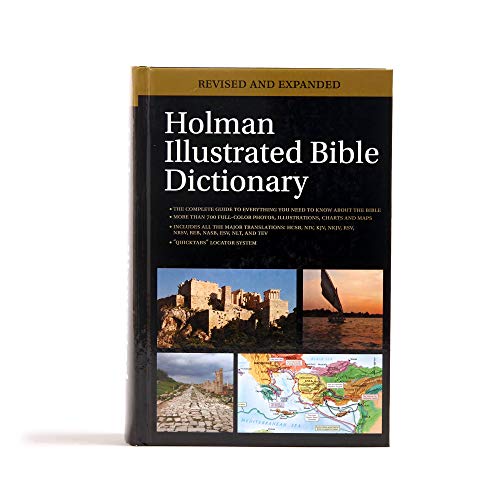
- 6,500-plus articles for broad Bible coverage
- About 700 full-color visual aids
- Useful for study, teaching, and sermon preparation
Best For: Adults wanting an illustrated, all-purpose Bible reference
Best for Word Studies
Vine's Complete Expository Dictionary

- Studies over 6,000 biblical words
- Explains usage, frequency, and meaning
- Includes Strong's numbering and topical material
Best For: Adults exploring biblical word meanings without formal language training
Best Scholarly Overview

- Over 1,000 articles by 139 scholars
- Thousands of cross-references
- Covers theology, history, culture, and biblical books
Best For: Adults wanting a substantial evangelical reference for study and teaching
Best Comprehensive Classic
The New Unger's Bible Dictionary

- More than 67,000 entries
- Includes essays, maps, photos, and charts
- Cross-references support multiple translations
Best For: Adults building a deep, single-volume Bible reference library
Best Comprehensive Pick
Zondervan Illustrated Bible Dictionary

- 7,200+ entries for broad biblical coverage
- 75 maps and 500+ color visuals
- Useful for pastors, teachers, and serious readers
Best For: Adults wanting a detailed, visual one-volume reference
Best Portable Option

- Concise definitions for quick lookups
- Color maps, photos, and reconstructions
- Compact 512-page format for group study
Best For: Adults who want an accessible, portable reference
Best Visual Classic
Nelson's Illustrated Bible Dictionary

- More than 7,000 biblical entries
- 500+ color visuals and study graphics
- Enlarged type and translation cross-references
Best For: Adults wanting broad, visual Bible-study coverage
Best Compact Reference
Zondervan Compact Bible Dictionary
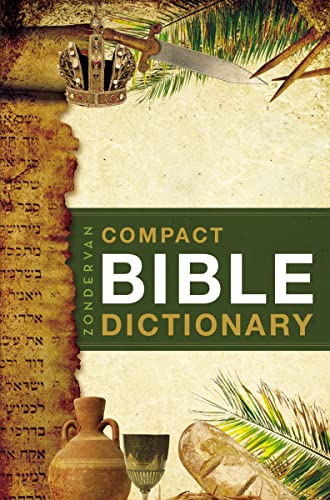
- 5,000-plus described entries covering people, places, and concepts
- Includes illustrations, archaeology notes, book summaries, and maps
- Compact 621-page reference for broad Bible study
Best For: Laypersons, students, teachers, and pastors needing a portable overview
Best Dictionary-Concordance Combo
New Combined Bible Dictionary and Concordance

- More than 10,000 entries with thorough references
- Combines dictionary and concordance functions in one volume
- Includes an essay on how to study the Bible
Best For: Readers 15 and up who want definitions and verse-reference help together
Best Word-Study Volume
Strong’s and Vine’s Concise Bible Reference

- Combines Strong’s concordance with Vine’s concise dictionary
- Includes transliterations, Strong’s numbers, and expository definitions
- Designed for study without Hebrew or Greek knowledge
Best For: Bible students and ministry readers wanting integrated word-study tools
Best Visual Reference – Holman Illustrated Bible Dictionary
For adults looking for bible dictionaries for adults that balance broad coverage with easy navigation, the Holman Illustrated Bible Dictionary is a versatile choice. Its 6,500-plus articles cover biblical people, places, terms, and themes, while photographs, maps, charts, and reconstructions add helpful context.
Best For: Bible students, teachers, small-group leaders, pastors, and everyday readers who want clear explanations plus visual aids for personal study, teaching, or sermon preparation.
Pros:
- More than 6,500 articles, ranging from Aaron to Zuzite.
- Combines concise definitions with fuller topic development.
- Includes around 700 full-color photos, maps, charts, and reconstructions.
- Provides linguistic, historical, geographical, cultural, and archaeological background.
Cons:
- Its broad coverage and hardcover format may be more reference-oriented than casual readers need.
- Published in 2015, so some information may not reflect the newest scholarship.
Choose this dictionary if visual context and broad, approachable coverage matter as much as definitions. It is especially useful as an all-purpose companion for study, lesson planning, and Bible reference work.
Best for Word Studies – Vine's Complete Expository Dictionary
Vine's Complete Expository Dictionary of Old and New Testament Words: Super Value Edition
Check Price On AmazonAdults comparing bible dictionaries for adults should consider Vine’s Complete Expository Dictionary when the goal is to explore biblical word meanings. It focuses on more than 6,000 key Old and New Testament words and helps readers study original-language concepts without years of Greek or Hebrew training.
Best For: Bible students, pastors, and curious readers who want a practical introduction to biblical word studies, including word frequency, usage, meaning, and Strong’s numbering.
Pros:
- Covers more than 6,000 key biblical words.
- Combines dictionary, commentary, and topical concordance functions.
- Includes the numbering system used in The New Strong’s Exhaustive Concordance.
- Designed for readers with little or no formal Hebrew or Greek training.
Cons:
- Its specialized word-study focus is narrower than a general illustrated Bible dictionary.
- The supplied edition dates from 1996, making it an older reference work.
Vine’s is a strong fit when examining the meaning and usage of biblical terms is your priority. It works best alongside a Bible and other reference tools rather than as a general guide to places, cultures, and biblical history.
Best Scholarly Overview – Tyndale Bible Dictionary
For readers seeking bible dictionaries for adults with substantial scholarly depth, the Tyndale Bible Dictionary offers more than 1,000 articles contributed by 139 Bible scholars. Cross-references, maps, pictures, and illustrations make its coverage useful for both research and everyday Scripture reading.
Best For: Adults preparing sermons or Bible studies, researching theological topics, or seeking historical and cultural context from an evangelical, single-volume reference work.
Pros:
- Includes more than 1,000 in-depth articles from 139 Bible scholars.
- Provides thousands of cross-references for connected research.
- Covers manuscripts, translations, theology, ancient cultures, locations, and objects.
- Includes overviews of canonical, apocryphal, and pseudepigraphical books.
Cons:
- At 1,352 pages and over four pounds, it is a substantial desk reference.
- Its depth may be more than readers seeking only quick definitions require.
This dictionary stands out for readers who want breadth, scholarly contributors, and linked research through extensive cross-references. It is a particularly capable option for building a serious home or church reference library.
Best Comprehensive Classic – The New Unger's Bible Dictionary
The New Unger’s Bible Dictionary is a compelling option for adults comparing bible dictionaries for adults and wanting extensive reference coverage. With more than 67,000 entries, updated scholarship, essays, photos, maps, charts, and illustrations, it is designed for readers who want a deep resource in one volume.
Best For: Serious Bible students, teachers, pastors, and home libraries that need detailed entries and broad translation compatibility through extensive cross-referencing.
Pros:
- Offers more than 67,000 entries.
- Includes detailed essays, colorful photography, maps, charts, and illustrations.
- Updated and expanded by Bible authorities including R.K. Harrison, Howard F. Vos, and Cyril J. Barber.
- Cross-references make it useful with major translations beyond its New American Standard basis.
Cons:
- Its extensive entry count can make it feel more like a research reference than a quick-start guide.
- The supplied edition was published in 2006, so it is not the newest available scholarship.
Choose The New Unger’s Bible Dictionary if maximum coverage in a single volume is more important than portability or simplicity. Its visual material and cross-referencing also make it useful for organized research across Bible translations.
Best Comprehensive Pick – Zondervan Illustrated Bible Dictionary
For adults seeking comprehensive bible dictionaries for adults, the Zondervan Illustrated Bible Dictionary is a substantial one-volume reference covering the Bible’s historical, geographical, archaeological, social, theological, and biographical context. Its extensive visuals and cross-references make it useful for deeper study alongside Scripture.
Best For: Pastors, teachers, students, and adult Bible readers who want a large, visually rich reference for detailed study.
Pros:
- More than 7,200 entries across a wide range of biblical topics.
- Includes 75 full-color maps and more than 500 photographs, charts, and illustrations.
- Offers up-to-date scholarship, archaeological findings, and cross-references to the NIV and King James Version.
Cons:
- Its 1,584-page format is better suited to desk reference than casual portability.
- The breadth of material may be more than beginners need for quick lookups.
This is a strong choice when depth, context, and visual support matter more than compact size. It is especially well suited to readers building a dependable home Bible reference library.
Best Portable Option – Ultimate Bible Dictionary
The Ultimate Bible Dictionary is a practical choice among bible dictionaries for adults when portability and accessible explanations are priorities. It provides concise definitions of biblical people, places, objects, and events, with additional detail and visual aids available for readers who want more context.
Best For: Beginners, students, small-group participants, and adult readers who want a compact reference for personal or group study.
Pros:
- Clear, approachable definitions designed for quick understanding.
- Hundreds of colorful maps, photos, and reconstructions appear alongside related entries.
- The 512-page, compact format is convenient to carry to study sessions or group activities.
Cons:
- Its concise format offers less coverage than larger 1,000-plus-page dictionaries.
- Readers seeking highly technical or extensive discussions may need a more comprehensive reference.
Choose this edition if you want straightforward explanations without carrying a large reference volume. It balances visual context, usability, and coverage for everyday Bible reading.
Best Visual Classic – Nelson's Illustrated Bible Dictionary
Nelson’s Illustrated Bible Dictionary is a strong middle-ground option for adults comparing bible dictionaries for adults and looking for broad coverage with a visual presentation. The enhanced edition combines more than 7,000 entries with photographs, maps, charts, timelines, graphics, and pronunciation guides.
Best For: Adult readers at any study level who want a substantial reference with updated visuals and easier-to-read type.
Pros:
- Includes more than 7,000 entries covering a broad range of biblical subjects.
- Features more than 500 full-color photographs, maps, charts, timelines, and graphics.
- Provides cross-references to all major translations and enlarged type for easier reading.
Cons:
- At 1,280 pages and 5.1 pounds, it is not especially portable.
- Its large reference format may be unnecessary for readers who need only basic definitions.
This edition fits readers who want extensive coverage but value visual learning and readable design. It works well as a home reference for regular study, teaching, and Scripture exploration.
Best Compact Reference – Zondervan Compact Bible Dictionary
Zondervan Compact Bible Dictionary: A-to-Z Pocket Dictionary with Over 5,000 Entries
Check Price On AmazonFor shoppers comparing bible dictionaries for adults, the Zondervan Compact Bible Dictionary is a broad yet portable reference. It covers more than 5,000 entries—described in the supplied material as over 6,000—including people, places, objects, events, concepts, biblical books, archaeology, and ancient-world maps.
Best For: Laypersons, students, teachers, and pastors who want an illustrated, all-purpose Bible reference in a compact format.
Pros:
- Broad coverage of biblical people, places, cultures, concepts, and events.
- Includes hundreds of illustrations and maps spanning Abraham through the Roman Empire.
- Offers summaries of the books of the Bible and information on Holy Land archaeology.
- Portable 5 x 7.05-inch format with 621 pages.
Cons:
- Its compact format may provide less detail than a larger specialist reference.
- Published in 2001, so it is not a current edition.
This is a practical choice when visual aids, historical context, and wide topical coverage matter more than advanced original-language analysis.
Best Dictionary-Concordance Combo – New Combined Bible Dictionary and Concordance
If you want bible dictionaries for adults that also support verse lookup, The New Combined Bible Dictionary and Concordance combines more than 10,000 definitions with thorough references. It covers biblical names, places, objects, and concepts, and opens with Charles Pfeiffer’s essay on how to study the Bible.
Best For: Readers age 15 and up, students, and Bible users who want definitions and concordance functions in one volume.
Pros:
- More than 10,000 entries provide extensive alphabetical coverage.
- Includes references for names, places, objects, and biblical concepts.
- Combines a dictionary and concordance in a single 464-page book.
- Includes an introductory Bible-study essay.
Cons:
- The 1973 original publication date may matter to shoppers seeking newer scholarship.
- Its 5.25 x 8.5-inch format is less pocket-sized than a compact dictionary.
This volume is especially useful for buyers who prefer one straightforward reference book for both word definitions and locating related biblical passages.
Best Word-Study Volume – Strong’s and Vine’s Concise Bible Reference
For adults seeking bible dictionaries with added language-study support, this 1,200-page volume combines Strong’s Concise Concordance with Vine’s Concise Dictionary. It provides definitions, explanations, concordance entries, transliterations, Strong’s numbers, and expository notes without requiring Hebrew or Greek knowledge.
Best For: Bible students, ministry trainees, and serious readers who want concordance searches alongside concise biblical word studies.
Pros:
- Combines two established reference tools in one volume.
- Designed for use without prior Hebrew or Greek knowledge.
- Includes transliterations, Strong’s numbers, parts of speech, and cross-indexing details.
- Supports modern translations by grouping variant spellings of proper names.
Cons:
- At 1,200 pages and over 3 pounds, it is substantially less portable than a pocket reference.
- The concise format may not satisfy readers seeking exhaustive dictionary articles.
- Published in 1999, so it is an older edition.
This is the strongest fit of the three for readers who want practical word-study features and concordance access in one comprehensive reference book.
How We Picked the Best Bible Dictionaries for Adults
We compared these references by scope, organization, readability, portability, usefulness for independent study, and the kind of research each one supports. Larger illustrated dictionaries generally provide broader background on biblical culture, geography, archaeology, and biography. Compact editions prioritize quick lookups, while expository dictionaries and concordance combinations are more useful for examining word meanings and related passages.
We also considered whether a title works well for adults with different experience levels, from newer Bible readers to teachers, students, and long-time study leaders. Because no single volume does everything equally well, the final selection includes several distinct reference styles.
Quick Comparison
- Best overall depth: Holman Illustrated Bible Dictionary
- Best for word studies: Vine’s Complete Expository Dictionary of Old and New Testament Words
- Best reference-library format: Tyndale Bible Dictionary
- Best for detailed traditional reference work: The New Unger’s Bible Dictionary
- Best illustrated premium option: Zondervan Illustrated Bible Dictionary
- Best concise starter guide: Ultimate Bible Dictionary
- Best enhanced illustrated value: Nelson’s Illustrated Bible Dictionary
- Best portable option: Zondervan Compact Bible Dictionary
- Best dictionary-and-concordance combination: The New Combined Bible Dictionary and Concordance
- Best two-in-one word reference: Strong’s Concise Concordance and Vine’s Concise Dictionary
Key Buying Factors for Bible Dictionaries for Adults
Coverage and Level of Detail
Check whether you need brief definitions or extended articles. A comprehensive dictionary is better for background research, while a concise volume may be faster for everyday reading and study.
Illustrations, Maps, and Charts
Visual material can clarify ancient locations, objects, architecture, clothing, and historical settings. If context matters to your study, choose an illustrated edition with maps and explanatory graphics.
Word-Study Features
Expository dictionaries and concordances can help you trace biblical terms, related words, and Scripture references. They are especially useful when studying themes or comparing how a word is used across passages.
Size and Portability
Large reference books offer more content but may be better suited to a desk or home library. Compact dictionaries are easier to carry to church, Bible study, or class, though their entries are usually shorter.
Ease of Navigation
Alphabetical entries, cross-references, pronunciation help, indexes, and readable typography can make a major difference. A well-organized book is more useful when you need an answer quickly.
Who Should Buy Which Bible Dictionaries for Adults?
Choose a large illustrated dictionary if you want an all-purpose reference for serious personal study, teaching, or sermon preparation. Pick an expository dictionary or concordance-based volume if your main goal is examining biblical words and tracing related passages.
Newer readers and small-group participants may prefer a concise guide with straightforward explanations. Students and experienced researchers should consider broader reference-library editions with more historical and cultural coverage. If you regularly study away from home, a compact dictionary is likely the most practical choice.
Before buying, consider whether you need one dependable general reference or a specialized word-study tool. For many adults, pairing a comprehensive illustrated dictionary with a compact or expository volume provides the most flexible study setup.