The best Bible dictionaries for families make Scripture easier to explore together, whether you need simple explanations for children, background information for teens, or deeper study support for adults.
These 10 options cover a range of formats, reading levels, subjects, and budgets so your household can choose a reference book that fits the way you learn and study the Bible.
Best 10 Bible Dictionaries for Families Picks for 2026
Comprehensive Family Reference
Holman Illustrated Bible Dictionary
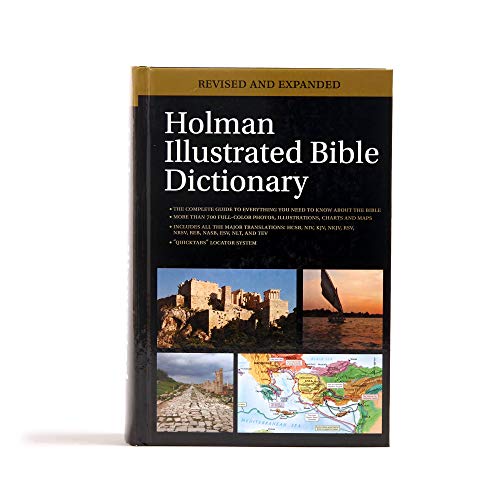
- 6,500+ articles on biblical terms and topics
- About 700 colorful visual aids
- Detailed historical and cultural context
Best For: Families and Bible students wanting a substantial, versatile reference
Catholic Theology Companion
Dictionary of Biblical Theology

- Covers 350+ biblical topics and terms
- Includes a solid Catholic perspective
- Provides extensive Scripture references
Best For: Catholic families and older students exploring biblical theology
Portable Study Pick

- Accessible definitions for Bible beginners
- Colorful maps, photos, and reconstructions
- Compact 512-page format
Best For: Families wanting an easy-to-carry, visual study reference
Kid-Friendly Explorer
Explorer Bible Dictionary for Kids

- 750+ common Bible terms
- Full-color illustrations, maps, and reconstructions
- Designed for ages 6–10 and grades 1–7
Best For: Young children using a Bible reference at home, church, or school
Best for Kids

- 700+ kid-friendly Bible entries
- Vivid illustrations and indexed topics
- Designed for ages 8–12
Best For: Children and families using The Action Bible
Best Illustrated Reference

- 5,500 entries across one volume
- More than 500 photographs
- Cross-references six Bible translations
Best For: Family Bible study, teaching, and general reference
Best for In-Depth Study

- 1,000+ articles by 139 scholars
- Maps, photos, and extensive cross-references
- Covers theology, history, and Bible books
Best For: Adults, teachers, and serious family Bible study
Best for Young Bible Explorers

- Clear definitions for students and families
- Color maps, charts, photos, and illustrations
- Expanded 304-page reference
Best For: Family Bible study with children and teens
Best Comprehensive Reference
- 1,326 pages of Bible reference material
- Covers history, geography, customs, and culture
- Designed for deeper home study
Best For: Older students and adults seeking extensive context
Best Family Heirloom Bible
King James Family Record Edition

- King James Version with red-letter text
- Pictorial dictionary and instructive features
- Illustrated family Bible keepsake
Best For: Families wanting a traditional record Bible with visual references
Comprehensive Family Reference – Holman Illustrated Bible Dictionary
For families building a shared Bible-study library, the Holman Illustrated Bible Dictionary offers broad coverage with clear explanations and visual context. Its large collection of articles and illustrations makes it useful for answering questions that arise during personal reading, family discussion, or lesson preparation.
Best For: Families, Bible students, teachers, and lifelong learners who want a comprehensive reference with accessible definitions, historical background, and visual aids.
Pros:
- More than 6,500 articles cover biblical people, places, themes, and terms.
- Approximately 700 full-color photos, maps, charts, and reconstructions support visual learning.
- Entries begin with concise definitions and continue with more detailed development.
- Includes linguistic, geographical, historical, cultural, and updated archaeological context.
Cons:
- Its comprehensive hardcover format may be more reference-oriented than child-focused.
- The breadth of material may be more than younger children need for simple lookups.
This is a strong all-purpose choice for households that want one substantial Bible reference to support years of study. It is especially suitable when parents, older children, teachers, or small-group leaders need more context than a basic glossary provides.
Catholic Theology Companion – Dictionary of Biblical Theology
Families seeking Bible dictionaries for families from a Catholic perspective may appreciate the Dictionary of Biblical Theology. Rather than focusing mainly on quick definitions, this 712-page reference explores major biblical concepts with Scripture references and contributions from specialized scholars.
Best For: Catholic families, adult readers, and study groups looking for theological explanations of important biblical concepts within a solid Catholic framework.
Pros:
- Presents more than 350 biblical topics and terms, including faith, the Eucharist, and prayer.
- Offers a clearly identified Catholic biblical perspective.
- Provides dozens of Scripture references for each topic.
- Combines the work of 70 scholars and 18 specialized translators.
Cons:
- Its theological emphasis may be more advanced than what younger children need.
- The reference does not emphasize the kid-focused illustrations and maps found in some family-oriented dictionaries.
This volume is best viewed as a deeper theological resource for family study rather than a beginner’s picture dictionary. It can complement family Bible reading when adults or older students want to explore how key themes develop across Scripture.
Portable Study Pick – Ultimate Bible Dictionary
For families who want an approachable reference that can move from a bookshelf to the kitchen table or church group, the Ultimate Bible Dictionary is a practical option. It combines concise definitions with colorful maps, photos, and reconstructions in a compact 512-page format.
Best For: Beginners, homeschoolers, children studying with adults, and families wanting a portable dictionary for personal or group Bible study.
Pros:
- Explains biblical people, places, objects, and events in accessible language.
- Hundreds of colorful maps, photos, and reconstructions appear alongside definitions.
- Compact dimensions make it easier to carry to study groups or classes.
- Definitions provide quick answers while often offering additional detail.
Cons:
- Its concise format may not provide the depth of a larger scholarly reference.
- It is designed for broad accessibility rather than a specifically Catholic or child-only audience.
This is a well-balanced family choice when portability and ease of use matter. Its visual presentation can help younger learners engage with Bible terms, while the expanded definitions give adults and older students useful additional context.
Kid-Friendly Explorer – Explorer Bible Dictionary for Kids
For households specifically looking for bible dictionaries for families with younger children, the Explorer Bible Dictionary for Kids is designed around early learners. Its full-color pages introduce more than 750 common Bible terms through concise definitions, illustrations, maps, and reconstructions.
Best For: Children ages 6–10, elementary homeschoolers, and families wanting a child-focused reference for home, church, or school use.
Pros:
- Includes more than 750 common Bible terms for children to explore.
- Uses concise definitions paired with engaging full-color visuals.
- Features images, illustrations, maps, and reconstructions to support comprehension.
- Designed for use at home, church, or school and intended to grow with children.
Cons:
- At 224 pages, it offers less coverage than the larger adult reference works in this roundup.
- Its kid-focused approach may not meet the needs of advanced adult or scholarly study.
This is the clearest fit for families whose primary users are elementary-age children. It prioritizes accessible explanations and visual learning, making it a useful companion for guided Bible reading and independent exploration.
Best for Kids – Action Bible Handbook
For families seeking bible dictionaries for families, The Action Bible Handbook offers an approachable introduction for children. Its kid-friendly explanations, vivid illustrations, more than 700 entries, complete index, and page references make it easy to explore Bible people, places, animals, objects, and more.
Best For: Children ages 8–12 and families who want a visual companion to The Action Bible.
Pros:
- Kid-friendly explanations supported by vivid illustrations.
- More than 700 “whos,” “wheres,” and “whats.”
- Topics include animals, plants, places, people, weapons, and biblical phrases.
- Complete index and page references make topics easy to locate.
Cons:
- Its reading age and grade-level positioning make it less suited to advanced adult study.
- It is especially tailored as a companion to The Action Bible.
This is the most accessible choice of the three for younger readers. Families wanting a friendly, illustrated starting point should find its focused format particularly practical.
Best Illustrated Reference – Illustrated Bible Dictionary
Among bible dictionaries for families, the Illustrated Dictionary of the Bible is a substantial one-volume reference with 5,500 entries and more than 500 photographs. It covers Bible books, backgrounds, teachings, people, places, and things, with cross-references to several major Bible translations.
Best For: Families, students, teachers, and lay readers who want a broad illustrated reference for Bible study.
Pros:
- Includes 5,500 entries in a single volume.
- Features more than 500 photographs.
- Cross-referenced to NKJV, KJV, NIV, RSV, NAS, and NEB.
- Includes teaching outlines for lessons and sermon preparation.
Cons:
- At 1,152 pages and 2.5 pounds, it is less portable than a compact children’s reference.
- The supplied details do not specify a children’s reading level.
This dictionary balances breadth and visual support, making it a flexible household reference. It is a strong middle-ground option for families who want more depth than a children’s handbook without moving to the most extensive volume here.
Best for In-Depth Study – Tyndale Bible Dictionary
For families wanting bible dictionaries for families that can support serious study, the Tyndale Bible Dictionary provides more than 1,000 in-depth articles from 139 Bible scholars. Cross-references, maps, photographs, and illustrations add context for Scripture, theology, biblical cultures, places, translations, and books.
Best For: Families, Bible-study leaders, teachers, and adults seeking a comprehensive Christian reference work.
Pros:
- Offers more than 1,000 informative, in-depth articles.
- Draws on the work of 139 Bible scholars.
- Includes thousands of cross-references, maps, photographs, and illustrations.
- Covers translations, theological concepts, ancient cultures, canonical books, and additional biblical writings.
Cons:
- At 1,352 pages and 4.05 pounds, it is the heaviest and least portable option listed.
- Its in-depth approach may be more than younger children need.
This is the strongest choice for a shared family reference shelf when depth matters most. Its extensive scholarship and cross-referencing make it especially useful for ongoing study, teaching, and contextual questions.
Best for Young Bible Explorers – The Student Bible Dictionary
For families seeking approachable bible dictionaries for families, The Student Bible Dictionary offers hundreds of clear definitions in a format designed for students and accessible to late elementary readers. Its updated content and visual aids make it a practical choice for shared Bible study.
Best For: Families with children, teens, or adults who want an easy-to-use visual reference.
Pros:
- Defines Bible people, places, events, doctrines, and other concepts clearly.
- Includes full-color photographs, paintings, maps, charts, and illustrations.
- Expanded and updated with information from newer Bible translations.
- Compact 304-page format is easier for younger readers to handle.
Cons:
- Its student-focused explanations may be less detailed than a scholarly reference.
- Published in 2014, so it may not reflect the newest reference resources.
This is the strongest family-friendly option when readability and visual engagement matter most. It provides useful coverage without overwhelming younger Bible learners.
Best Comprehensive Reference – New Bible Dictionary
Families wanting a more substantial reference among bible dictionaries for families may prefer New Bible Dictionary. Its 1,326 pages cover biblical people, concepts, doctrines, and the historical, geographical, cultural, and customary background of the Middle East.
Best For: Families with older students or adults who want extensive background information for deeper study.
Pros:
- Provides broad coverage of people, concepts, and doctrines in the Bible.
- Explains historical, geographical, cultural, and customary context.
- Offers a substantial 1,326-page reference collection.
Cons:
- At 3.55 pounds, it is considerably heavier than a compact family reference.
- Its 1982 publication date makes it an older edition.
- The extensive scope may be more than younger children need.
This is the better fit for households that value depth and background study over portability. Its size makes it more suitable as a home reference than a casual read-along resource.
Best Family Heirloom Bible – King James Family Record Edition
For families looking for bible dictionaries for families in a keepsake Bible format, this King James Version family record edition combines Scripture with a pictorial dictionary and other instructive features. Its religious artwork and family-record presentation give it a distinctly heirloom-oriented role.
Best For: Households that want a King James family Bible with visual reference features and space for family records.
Pros:
- Uses the authorized King James Version with red-letter text.
- Includes a pictorial dictionary and other instructive features.
- Beautifully illustrated with masterpieces of religious art.
- Family Bible format suits household keepsake use.
Cons:
- Its reference material is described as a pictorial dictionary, not a comprehensive dictionary.
- Published in 1985, making it an older edition.
- At 4.2 pounds, it is heavy for everyday carrying.
This edition is most appealing when family records, artwork, and traditional King James presentation are priorities. Choose it as a family keepsake rather than as the primary detailed reference dictionary.
How We Picked the Best Bible Dictionaries for Families
We compared these family-friendly Bible references by looking at readability, coverage, illustrations, organization, theological usefulness, durability, and age range. A strong family dictionary should explain unfamiliar people, places, objects, events, and concepts without making every entry difficult to use. We also considered whether each book works best for children, students, general family study, or more advanced adult reference.
Because no single volume serves every reader equally well, this list includes concise quick-reference books, illustrated children’s resources, student editions, and comprehensive scholarly dictionaries.
Quick Comparison
| Best For | Look For |
|---|---|
| Young children | Large illustrations, short definitions, and accessible language |
| Elementary and middle-school students | Clear explanations, visual aids, and broad subject coverage |
| Teenagers | More context, cross-references, and study-oriented entries |
| Whole-family use | A balance of readability, detail, and durable construction |
| Adult Bible study | Extensive coverage, historical context, and theological depth |
Key Buying Factors for Bible Dictionaries for Families
Age and Reading Level
Start with the youngest regular user. Children generally benefit from brief definitions, pictures, maps, and familiar vocabulary. Teens and adults may prefer longer entries that explain cultural, historical, and theological context.
Depth and Scope
Concise dictionaries are useful for answering quick questions, while comprehensive references are better for serious study. Check whether the book covers only people and places or also includes objects, customs, doctrines, archaeology, and Bible background.
Illustrations and Navigation
Maps, timelines, photographs, diagrams, and artwork can make unfamiliar material easier to understand. Alphabetical entries, indexes, cross-references, and pronunciation help also improve everyday usability.
Translation and Theological Perspective
Consider the Bible translation or tradition your family uses. Some dictionaries are broadly useful across denominations, while others may reflect a particular scholarly or theological approach.
Format and Durability
A compact paperback suits casual use and travel, while a larger hardcover or leather-bound edition may be a better long-term household reference. For children, sturdy pages and a manageable size matter as much as content.
Who Should Buy Which Bible Dictionaries for Families?
Choose an illustrated children’s dictionary or handbook for younger readers who need visual explanations and short entries. A student dictionary is a practical middle ground for school-age children and teenagers. Families wanting one versatile reference should look for broad coverage with readable prose and helpful illustrations.
For parents, teachers, or serious adult study, a comprehensive title such as a major Bible dictionary or theological reference offers more historical and doctrinal detail. If your household uses the King James Version, a KJV-focused family edition may provide a more familiar presentation and additional devotional features.
The right choice among these Bible Dictionaries for Families depends on who will use it most, how deeply you study, and whether quick answers or long-term reference value matters more.