Finding the best bible dictionary for students can make Bible study more approachable by explaining unfamiliar people, places, objects, events, and terms in clear reference entries.
This roundup compares 10 student-friendly options, from compact pocket editions to illustrated volumes and dictionaries paired with concordances, so you can choose a format that fits your study habits and budget.
Best 10 Bible Dictionary for Students Picks for 2026
Best Visual Study Companion
Nelson's Student Bible Dictionary

- Nearly 2,000 accessible Bible entries
- Maps, charts, photos, and diagrams
- Outlines for every Bible book
Best For: Teen students, teachers, and visual learners
Best Comprehensive Reference
Holman Illustrated Bible Dictionary
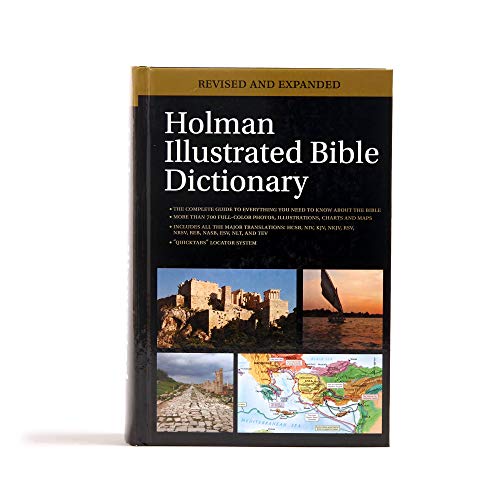
- Over 6,500 clearly structured articles
- About 700 full-color visual aids
- Updated historical and archaeological context
Best For: Serious students, teachers, and pastors
Best for Younger Students

- Simple enough for late elementary readers
- Updated definitions and translation information
- Color maps, photos, paintings, and charts
Best For: Teens, families, and beginning Bible students
Best Compact High-Count Reference
Zondervan Compact Bible Dictionary
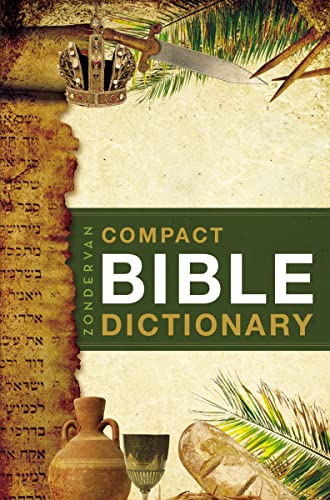
- Over 6,000 concise entries
- Book summaries and archaeological information
- Hundreds of illustrations and historical maps
Best For: Students and teachers wanting broad reference coverage
Best Comprehensive Visual Reference
Nelson's Illustrated Bible Dictionary

- 7,000+ entries for broad coverage
- 500+ full-color visuals and study aids
- Enlarged type and translation cross-references
Best For: Students wanting an extensive, visual reference for detailed Bible study
Best Portable Choice

- Concise 512-page reference
- Colorful maps, photos, and reconstructions
- Accessible definitions in a compact format
Best For: Beginners and students needing an easy-to-carry study aid
Best Traditional All-in-One Reference
Illustrated Dictionary of the Bible

- 5,500 entries across Bible topics
- 500+ photographs and translation cross-references
- Includes teaching outlines
Best For: Students and teachers wanting a broad, single-volume reference
Best with Extra Features
The New Combined Bible Dictionary and Concordance

- More than 10,000 Bible entries
- Includes thorough references
- Features a Bible-study introduction
Best For: Older students seeking an extensive desk reference
Everyday Study Pick

- Defines 2,500 key Bible entries
- Includes modern-translation cross references
- Compact 3.99-ounce format
Best For: Students needing a portable quick-reference tool
Student-Focused Choice
World's Bible Dictionary: Student Edition

- Designed specifically as a student edition
- Easy-to-use reference format
- 478 pages of study material
Best For: Students seeking conservative evangelical scholarship
Best Visual Study Companion – Nelson's Student Bible Dictionary
Nelson's Student Bible Dictionary: A Complete Guide to Understanding the World of the Bible
Check Price On AmazonNelson’s Student Bible Dictionary is a practical bible dictionary for students who want clear definitions alongside visual tools. Its nearly 2,000 entries cover biblical people, places, events, objects, and doctrines, while maps, charts, photographs, and book-by-book outlines make research easier to follow.
Best For: Students ages 13–18, Sunday School teachers, and readers who want an accessible reference that works with several English Bible translations.
Pros:
- Nearly 2,000 alphabetically arranged definitions with related-entry guides.
- Includes photographs, maps, charts, diagrams, and a Bible history chart.
- Offers study and teaching outlines for every book of the Bible.
- Cross-references NKJV terms with five additional translations.
Cons:
- Its 288-page format is less comprehensive than larger Bible dictionaries.
- The primary quotations are from the NKJV, which may not suit every reader’s preferred translation.
This is a strong all-around choice when portability, visual learning, and student-friendly explanations matter more than exhaustive coverage.
Best Comprehensive Reference – Holman Illustrated Bible Dictionary
The Holman Illustrated Bible Dictionary is a substantial bible dictionary for students who need more depth for personal study, coursework, teaching, or research. With over 6,500 articles and approximately 700 visual aids, it connects biblical language and themes with historical, geographical, archaeological, and cultural context.
Best For: Bible students, teachers, pastors, small-group leaders, and lifelong learners seeking a broad reference without requiring advanced theological training.
Pros:
- Provides over 6,500 articles, from Aaron to Zuzite.
- Begins topics with concise definitions before offering fuller explanations.
- Includes around 700 full-color photos, maps, charts, and reconstructions.
- Offers updated archaeological information in the revised and expanded edition.
Cons:
- Its broad coverage may be more than younger or beginning students need.
- The hardcover reference format is less portable than a compact dictionary.
Choose this edition if you want a long-term reference for deeper investigation and appreciate visual explanations of the ancient biblical world.
Best for Younger Students – The Student Bible Dictionary
The Student Bible Dictionary is a friendly bible dictionary for students designed to remain useful from late elementary school through adulthood. It explains hundreds of Bible words, names, places, events, and doctrines in clear language, supported by a newly designed collection of color maps, photographs, paintings, and charts.
Best For: Teens, families, homeschool students, and beginners who want an approachable reference that is simple enough for younger readers but complete enough for adults.
Pros:
- Uses clear, concise definitions for hundreds of biblical terms and names.
- Designed for students of all ages, including late elementary readers.
- Includes full-color photographs, paintings, maps, and charts.
- Expanded and updated with information from newer Bible translations.
Cons:
- It covers hundreds of entries rather than the larger article counts of comprehensive dictionaries.
- The colorful, simplified approach may provide less depth for advanced academic research.
This is an especially approachable pick for younger readers and families who value readability, visual appeal, and straightforward explanations.
Best Compact High-Count Reference – Zondervan Compact Bible Dictionary
Zondervan Compact Bible Dictionary: A-to-Z Pocket Dictionary with Over 5,000 Entries
Check Price On AmazonThe Zondervan Compact Bible Dictionary is a space-efficient bible dictionary for students with over 6,000 entries in a compact format. It covers biblical people, places, objects, events, and concepts, while also adding book summaries, archaeological information, illustrations, and maps spanning major periods of the ancient world.
Best For: Students, lay readers, teachers, and pastors who want extensive alphabetical coverage and a compact reference for studying biblical history and culture.
Pros:
- Contains over 6,000 concise entries.
- Includes summaries of the books of the Bible.
- Provides archaeological information and hundreds of illustrations.
- Maps cover the ancient world from Abraham’s era through the Roman Empire.
Cons:
- At 621 pages and 2.31 pounds, it is compact in dimensions but not especially lightweight.
- Its concise-entry format may offer less explanation than a fully developed reference article.
Consider this dictionary when entry count and historical breadth are priorities, particularly for readers who want maps and cultural background in one volume.
Best Comprehensive Visual Reference – Nelson's Illustrated Bible Dictionary
For shoppers seeking a comprehensive bible dictionary for students, Nelson’s Illustrated Bible Dictionary offers a substantial reference with more than 7,000 entries. Its updated full-color photographs, maps, charts, timelines, graphics, pronunciation guides, and enlarged type support detailed Bible study across experience levels.
Best For: Students and readers who want an extensive, visual Bible reference for ongoing study, with cross-references to major translations.
Pros:
- More than 7,000 up-to-date entries.
- Includes over 500 full-color photographs and other visual aids.
- Features maps, charts, timelines, graphics, pronunciation guides, and translation cross-references.
- Enlarged type improves readability.
Cons:
- At 1,280 pages and 5.1 pounds, it is less portable than compact options.
- Its extensive format may be more reference-focused than quick-lookup focused.
This is a strong choice when depth and visual context matter more than portability. Its large format and broad coverage make it well suited to a desk, classroom, or dedicated study area.
Best Portable Choice – Ultimate Bible Dictionary
If you want a portable bible dictionary for students, the Ultimate Bible Dictionary combines accessible definitions with hundreds of colorful maps, photographs, and reconstructions. Its concise 512-page format is designed for quick lookups during personal reading, classroom work, or group study.
Best For: Beginners, students, homeschoolers, and group participants who prefer clear explanations and a compact reference they can carry easily.
Pros:
- Definitions provide quick explanations, with added detail where useful.
- Hundreds of colorful maps, photos, and reconstructions support visual learning.
- Compact 4.8-by-7.1-inch format and 1.1-pound weight improve portability.
- Accessible for personal study and group activities.
Cons:
- Its 512 pages offer less coverage than the larger dictionaries in this roundup.
- Readers seeking highly extensive reference material may find the concise format limiting.
This dictionary is a practical middle ground: easier to carry than a large desk reference while still providing visual context and researched definitions. It is especially convenient when you need a quick answer alongside your Bible.
Best Traditional All-in-One Reference – Illustrated Dictionary of the Bible
The Illustrated Dictionary of the Bible is a traditional, all-in-one bible dictionary for students covering Scripture, biblical backgrounds, teachings, people, places, and things. With 5,500 entries, more than 500 photographs, translation cross-references, and teaching outlines, it supports both study and lesson preparation.
Best For: Students, laypeople, teachers, pastors, and readers who want a broad single-volume reference with teaching-oriented extras.
Pros:
- Provides 5,500 entries on Bible-related people, places, facts, books, and backgrounds.
- Includes over 500 photographs throughout.
- Cross-references NKJV, KJV, NIV, RSV, NAS, and NEB.
- Teaching outlines can assist lesson and sermon preparation.
Cons:
- At 1,152 pages and 2.5 pounds, it is not the most portable option.
- Published in 2003, it is older than the other supplied editions.
This is a useful choice for buyers who value broad coverage and teaching support in one volume. Its established format suits home reference shelves, classrooms, and readers who use several Bible translations.
Best with Extra Features – The New Combined Bible Dictionary and Concordance
For students looking for a substantial bible dictionary for students, this combined dictionary and concordance offers more than 10,000 entries covering biblical names, places, objects, and concepts. Its thorough references and introductory essay on how to study the Bible make it suited to structured study.
Best For: Older students and serious readers who want a large, reference-focused Bible study volume.
Pros:
- Includes more than 10,000 entries.
- Covers names, places, objects, and biblical concepts.
- Provides thorough references and a Bible-study introduction.
- Offers 464 pages of substantial reference material.
Cons:
- Its 2.31-pound weight makes it less convenient for carrying.
- The listed reading age and grade level suggest it may be better suited to older students.
This is the strongest choice when depth and broad coverage matter more than portability. Its size and comprehensive approach make it particularly practical for desk-based study.
Everyday Study Pick – Pocket Bible Dictionary
This compact bible dictionary for students is designed for quick, everyday consultation. It defines 2,500 important biblical people, places, things, and ideas in concise language, while cross-references to modern translations extend its usefulness beyond its King James Version foundation.
Best For: Students who want a lightweight dictionary for brief study sessions, church, or travel.
Pros:
- Contains 2,500 carefully selected entries.
- Uses concise, no-nonsense explanations.
- Includes cross references to more modern translations.
- Features black-and-white illustrations and helpful phrase entries.
Cons:
- Its compact scope provides fewer entries than a full-size dictionary.
- The content is based on the King James Version, despite its modern-translation cross references.
With its small 3.99-ounce format and 352 pages, this is the most portable option in the group. Choose it when accessibility and fast lookups are more important than extensive coverage.
Student-Focused Choice – World's Bible Dictionary: Student Edition
Students comparing a bible dictionary for students may appreciate this dedicated student edition. It is presented as an easy-to-use reference work grounded in reliable, accurate, conservative evangelical biblical scholarship, with 478 pages for regular study.
Best For: Students who prefer a substantial, student-labeled reference with a conservative evangelical perspective.
Pros:
- Specifically identified as a student edition.
- Described as easy to use.
- Offers 478 pages of reference material.
- Emphasizes reliable, accurate scholarship.
Cons:
- The 2.05-pound, 9.5-inch-tall format is not especially portable.
- The supplied description does not specify the number or types of entries included.
This edition sits between a compact study aid and a large reference book in physical size. It is a sensible fit for students who value an explicitly student-oriented format and the stated evangelical scholarly approach.
How We Picked the Best Bible Dictionary for Students
We focused on reference books that balance accessible explanations with useful coverage of biblical names, places, customs, objects, historical background, and key theological terms. We also considered how well each title suits student use, including readability, organization, portability, illustrations, entry depth, and helpful cross-referencing.
Because students use reference books in different settings, this list includes both comprehensive desk references and smaller editions for classrooms, group study, travel, or quick lookups. Publisher reputation and the stated scope of each edition also matter, especially when a title is described as illustrated, compact, enhanced, or combined with a concordance.
Quick Comparison
| Best For | Look For |
|---|---|
| Everyday student study | Clear definitions, broad coverage, and simple navigation |
| Visual learners | Maps, photographs, artwork, charts, and illustrations |
| Small spaces or commuting | Compact dimensions and concise entries |
| Word-focused study | A combined dictionary and concordance |
| More detailed research | Expanded entries, background notes, and extensive cross-references |
Key Buying Factors for a Bible Dictionary for Students
Coverage and Entry Clarity
Check whether the book covers the subjects you are most likely to encounter in coursework or personal study. A strong student reference explains terms plainly without assuming advanced theological knowledge. Broader dictionaries are useful for research, while concise editions may be faster for basic definitions.
Illustrations and Visual References
Illustrations, maps, charts, and photographs can clarify ancient locations, objects, clothing, architecture, and cultural practices. Visual features are especially valuable if you learn better from diagrams or want additional context beyond a short definition.
Size, Layout, and Portability
A large volume generally offers room for more entries and detail, but a compact or pocket dictionary is easier to keep beside a Bible or carry to class. Look for readable type, logical alphabetical organization, and cross-references that reduce lookup time.
Dictionary-Only Versus Combined Reference
A dictionary explains concepts, while a concordance helps locate Bible verses by word. If you frequently trace repeated terms or compare passages, a combined edition may save space and money. If background explanation is your priority, choose a dedicated dictionary with fuller entries.
Who Should Buy Which Bible Dictionary for Students?
Choose a comprehensive illustrated or enhanced edition if you want one primary reference for long-term study, homeschooling, or Bible college preparation. Select a compact or pocket option if portability and quick answers matter more than extensive detail. Visual learners should prioritize illustrated formats, while students who regularly search for specific words may prefer a dictionary-concordance combination.
For beginners, the best Bible Dictionary for Students is usually the one with the clearest language and easiest navigation—not necessarily the largest book. Compare the entry depth, format, and subject coverage against how you actually study, then select the reference you will use consistently.