Starting a Bible study habit can feel overwhelming, especially when you are unsure what to read, what to write, or how to connect Scripture to daily life. The right journal provides structure without making study feel complicated.
These 10 options include guided devotionals, yearly study plans, note-taking Bibles, prayer prompts, large-print formats, and family-friendly workbooks, giving beginners several practical ways to begin.
Best 10 Bible Journals for Beginners Picks for 2026
Best Guided Start

- 100-day beginner-friendly plan
- 100 Bible stories with 200+ questions
- Includes prayers and reminder notifications
Best For: Readers who want a manageable first Bible study routine
Best for Creative Note-Taking

- Complete NIV Bible text
- Wide ruled margins for notes and art
- Lays flat with durable cloth cover
Best For: Readers building a flexible Scripture annotation habit
Best for Families

- Plain-English Genesis-to-Revelation journey
- Weekly readings, prayers, and activities
- Includes printable and audio resources
Best For: Families learning the Bible together
Best for Busy Women

- Five-minute daily study structure
- 90+ studies with prayers and application
- Spiral lay-flat design with writing space
Best For: Women fitting Bible study into busy mornings
Structured Scripture Journey

- 52 themed weeks with daily Scripture readings
- Devotionals and reflection questions included
- Lay-flat spiral design with room to write
Best For: Adults seeking a guided yearlong Bible study
Five-Minute Faith Practice
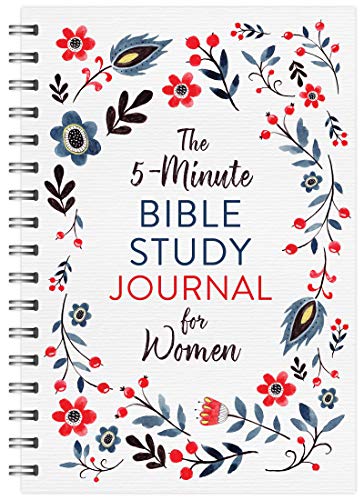
- Guided studies designed for five minutes
- More than 90 studies across the Bible
- Lay-flat spiral format with writing space
Best For: Busy women starting a consistent Bible-study habit
Whole-Bible Overview

- Covers all 66 books in six color-coded modules
- Large print on thick, no-bleed paper
- Includes sticky notes and a bookmark
Best For: Beginners and groups wanting an accessible Bible survey
Best Guided Bible Study

- 52-week structure with daily reading
- Includes prompts, questions, and prayers
- Compatible with any Bible translation
Best For: Women seeking a structured, theme-based Bible study
Best Compact Devotional Journal

- Daily Scripture and prayer prompts
- Includes cross-references and reflection guides
- Portable 66-page polyurethane journal
Best For: Women wanting guided daily study in a compact format
Best for Detailed Note-Taking
The Bible Study Guide in a Year

- 52-week, four-part study framework
- Flat-laying A4 spiral binding
- 220 pages with 11-point font
Best For: Readers wanting structured study and ample writing space
Best Guided Start – 100-Day Bible Study Journal
For shoppers comparing bible journals for beginners, this guided 100-day journal offers a clear path through 100 Bible stories without the commitment of a yearlong plan. Each day combines selected readings with reflection questions, practical advice, writing space, and prayer.
Best For: First-time Bible study participants who want a structured, manageable daily routine.
Pros:
- Designed specifically as an approachable introduction to Bible study.
- Covers 50 Old Testament and 50 New Testament stories.
- Includes 200+ reflection questions, daily advice, and closing prayers.
- Bonus smartphone notifications can help readers stay consistent.
Cons:
- It is less comprehensive than a read-the-Bible-in-a-year plan.
- The digital notification feature requires scanning a QR code and using a smartphone.
This is a practical choice if finishing a first study matters more than covering every biblical book. Its short timeline and built-in prompts reduce the uncertainty that can make beginner study plans difficult to maintain.
Best for Creative Note-Taking – NIV Journal the Word Bible
Among bible journals for beginners, this NIV edition is a strong fit for readers who want the full Bible alongside room for notes, prayers, and artwork. Its wide, lightly ruled margins make it useful for both study and creative reflection.
Best For: Beginners who want to read Scripture directly while building a personal annotation habit.
Pros:
- Provides the complete NIV Bible text in a journal-focused format.
- Extra-wide margins offer space for notes, questions, prayers, and artwork.
- Cloth-over-board cover lies flat for more comfortable writing.
- Includes cream-colored paper, a ribbon marker, and red-letter text.
Cons:
- At 1,088 pages and over two pounds, it is less portable than a small workbook.
- The 8-point print size may not suit readers who prefer larger text.
Choose this edition if you want an ongoing Bible companion rather than a dated study program. It leaves the pace and method up to you, which is flexible but provides less step-by-step guidance than a beginner workbook.
Best for Families – 52-Week Bible Study Workbook
For families seeking bible journals for beginners, this illustrated workbook turns Bible study into a weekly routine. It presents a Genesis-to-Revelation journey in plain English, with short readings, guided reflection, prayers, activities, and writing space.
Best For: Parents, children, and beginners who want to study together without lengthy sessions.
Pros:
- Uses two illustrated pages per week and a seven-day reading plan.
- Includes summaries, full key passages, reflection questions, and weekly prayers.
- Family activities and discussion resources support shared learning.
- Includes printable memory cards, trackers, bonus studies, and audio prayers.
Cons:
- Its family-oriented approach may be less suitable for adults seeking an individual study.
- The weekly format offers less day-by-day depth than a more intensive journal.
This workbook is especially useful when consistency and accessibility are the priority. The combination of short sessions and family activities can make Bible study easier to introduce at home while still giving adults room to reflect.
Best for Busy Women – 5-Minute Bible Study Journal
If time is the main obstacle, this journal stands out among bible journals for beginners with a simple five-minute format. Each study moves from reading to understanding, application, and prayer, while the spiral binding and writing space support a quick morning routine.
Best For: Women who want short, repeatable Bible study sessions that fit into busy mornings.
Pros:
- Breaks each session into five practical minutes.
- Offers more than 90 studies with questions, devotionals, and prayer starters.
- Spiral binding lies flat and provides generous room to write.
- Works with the reader’s preferred Bible translation.
Cons:
- The content is specifically designed for women.
- Readers looking for a complete Bible-reading plan may need an additional resource.
This is a good entry point for beginners who need a low-pressure habit rather than a comprehensive course. Its concise structure makes it easier to start consistently, and the prompts can help readers gradually build toward longer study sessions.
Structured Scripture Journey – Spiral Bible in a Year
For beginners comparing bible journals for beginners, this spiral-bound Bible-in-a-year guide offers a clearly structured path through Scripture. Its 52 weekly themes, daily readings, devotionals, and reflection questions help turn Bible study into a consistent routine.
Best For: Adults who want a guided yearlong study with generous space for notes, reflection, and prayer.
Pros:
- Organizes study around 52 weekly Christian-faith themes and daily passages.
- Includes weekly devotionals, seven Scripture readings, three reflection questions, and a blessing.
- Spiral binding, durable hardcover, lay-flat design, and full-page writing sections support note-taking.
- Large 8.5-by-11-inch format uses 50 lb paper and a clear 10-point font.
Cons:
- The yearlong, weekly format requires a sustained commitment.
- Its larger size may be less convenient than a compact journal for some users.
This is a strong choice when you want more than blank journaling space: it provides a defined pace, thematic organization, and prompts that can make beginning Bible study feel manageable.
Five-Minute Faith Practice – 5-Minute Bible Study Journal
Among bible journals for beginners, this journal stands out for its short, repeatable format. Each study breaks Bible engagement into reading, understanding, applying, and prayer, making it a practical option for busy readers who are building a habit.
Best For: Women who want brief guided studies that fit into a busy daily schedule.
Pros:
- Uses a simple five-minute structure with clear steps for reading, reflection, application, and prayer.
- Includes more than 90 studies covering Scripture from Genesis to Revelation.
- Spiral, lay-flat binding and generous writing space support convenient journaling.
- Works with the reader’s preferred Bible translation and can also serve as a gift.
Cons:
- It provides selected verses and references rather than reproducing the full Bible text.
- The content is specifically designed for women, so it may not suit every audience.
Its strongest advantage is approachability: the compact format reduces the time barrier while still adding questions, devotional guidance, and a prayer starter for each study.
Whole-Bible Overview – 66-Book Beginner Study Guide
For beginners looking through bible journals for beginners, this guide offers a compact overview of all 66 Bible books. Color-coded modules, large print, and plain-language explanations make it useful for readers who want a reference-style companion to their own Bible.
Best For: New or returning readers, students, and small groups seeking an accessible survey of every Bible book.
Pros:
- Covers all 66 books with two pages devoted to each one.
- Breaks each book into six modules, including context, themes, figures, imagery, and application.
- Uses large print and 100GSM thick paper designed to reduce eye strain and bleed-through.
- Includes lay-flat spiral binding, sticky notes, a bookmark, and an elastic closure band.
Cons:
- At two pages per Bible book, coverage is intentionally concise rather than extensive.
- The A5 format offers less writing area than a full-size study notebook.
This guide is best viewed as an organized Bible-study companion rather than a replacement for the Bible itself. Its consistent layout and beginner-friendly language make it easy to browse, discuss, and connect Scripture with daily life.
Best Guided Bible Study – The Bible in 52 Weeks
For beginners searching for bible journals for beginners, The Bible in 52 Weeks offers a manageable yearlong structure. Its daily reading plan, weekly themes, reflection questions, journaling prompts, and prayers can help new readers build a consistent Bible study habit using any preferred translation.
Best For: Women who want a guided, theme-based Bible study with options for individual or group use.
Pros:
- Organizes study into 52 approachable weekly themes.
- Works with any Bible translation.
- Combines daily readings with questions, journaling prompts, and prayers.
- Can be used independently or in a group setting.
Cons:
- Designed specifically for women.
- Its weekly format may feel less suitable for readers seeking unstructured journaling space.
This is a practical choice for beginners who prefer clear direction and a steady pace. The women-focused themes and built-in reflection activities make it more of a guided study workbook than a blank journal.
Best Compact Devotional Journal – 66-Page Bible Study Guide
This compact option stands out among bible journals for beginners by pairing daily Scripture quotes with prayer prompts, cross-references, and reflection guides. The 66-page organizer is designed for a full-year journey while remaining portable for everyday use.
Best For: Christian women who want a small, guided journal for daily Scripture reflection and prayer.
Pros:
- Provides a clear framework for Scripture background, themes, and application.
- Includes daily readings, reflection questions, prayer prompts, and cross-references.
- Portable 5.7-by-8.3-inch format weighs 3.2 ounces.
- Polyurethane cover supports a durable, user-friendly design.
Cons:
- Limited to 66 pages, so writing space may be more concise than in a larger journal.
- Content is targeted toward adult Christian women.
Its compact format makes it convenient for daily routines, travel, or gifting. Beginners get more guidance than a blank notebook provides, though those wanting extensive room for long-form notes may prefer a larger journal.
Best for Detailed Note-Taking – The Bible Study Guide in a Year
For beginners who want more room and structure, this A4 spiral-bound journal offers a 52-week framework with daily and weekly study elements. It is designed to work alongside any Bible translation and moves from contextual analysis to reflection and practical application.
Best For: New or returning Bible readers who want an organized, write-in study system with generous note-taking space.
Pros:
- Uses 52 thematic weeks with doctrine, cross-references, reflection prompts, and action directives.
- Supports a 365-day study journey with a worldview-focused framework.
- Spiral binding allows the A4 journal to lie flat while writing.
- Includes 220 pages and an 11-point font for extended reading.
Cons:
- The A4 size is less portable than a compact journal.
- The exegetical framework may feel more involved for beginners seeking a simple devotional.
This guide is a strong fit when note-taking and study organization matter more than portability. Its layered framework may require a little more commitment, but it offers a clear path from understanding Scripture to applying it.
How We Picked the Best Bible Journals for Beginners
We focused on journals and guided study resources that make it easier to begin and maintain a consistent Scripture routine. Key considerations included the clarity of the prompts, the amount of guidance provided, reading-plan structure, writing space, format, print size, portability, and suitability for different study preferences.
Because beginners do not all need the same level of support, this roundup includes several formats: short daily studies, 52-week programs, Bible-reading journeys, topical reflection journals, spiral-bound workbooks, and a journaling Bible designed for writing directly beside the text.
Quick Comparison
| Best For | Look For |
|---|---|
| Complete beginners | Step-by-step prompts and short daily lessons |
| Structured yearly study | 52-week or one-year reading schedules |
| Busy schedules | Five-minute studies or concise daily entries |
| Note-taking | Wide margins, quality paper, and readable Scripture text |
| Families | Accessible activities, discussion prompts, and flexible pacing |
| Readers who need accessibility | Large print, roomy layouts, and easy-to-handle binding |
Key Buying Factors for Bible Journals for Beginners
Level of Guidance
If you are not sure how to study the Bible, choose a journal with explanations, questions, prayers, and space for reflection. More experienced readers may prefer a minimally guided journal or a Bible with blank margins.
Time Commitment
Consider whether you can realistically study for five minutes a day, complete a weekly lesson, or follow a longer reading plan. A manageable format is more useful than an ambitious schedule you will quickly abandon.
Layout and Writing Space
Check whether the resource uses daily pages, weekly spreads, lined sections, or margins beside Scripture. Spiral binding can lay flat, while a bound book may be easier to carry and store.
Print and Portability
Large-print editions can improve comfort, but they may be heavier. Compact journals travel well, while larger A4-style formats generally provide more room for notes and responses.
Study Focus
Some journals emphasize devotional reflection and prayer; others concentrate on reading through the Bible, studying individual books, or recording observations. Pick the approach that matches your immediate goal.
Who Should Buy Which Bible Journals for Beginners?
Choose a short daily journal if you want a low-pressure way to establish a habit. A 52-week or yearlong guide is better if you prefer a clear schedule and regular milestones. Readers who want to annotate Scripture directly should consider a journaling Bible with note-taking space.
Families may benefit from a workbook with activities and discussion prompts, while readers who value readability should prioritize a large-print guide. If you frequently study on the go, select a compact, durable format; if you write extensively, favor generous pages and a binding that stays open.
The best choice is ultimately the one you will use consistently. Start with a realistic time commitment, choose a layout that feels inviting, and look for prompts that help you move from reading to reflection, prayer, and practical application.