The best Bible dictionaries for teenagers make unfamiliar names, places, objects, and events easier to understand without turning study time into a chore. The right choice depends on reading level, translation preference, illustration needs, and how much detail a student wants.
We compared ten options ranging from concise teen-friendly guides to full illustrated reference works, so you can choose a Bible dictionary that supports personal study, homeschool lessons, youth groups, or family reading.
Best 10 Bible Dictionaries for Teenagers Picks for 2026
Best All-Around Pick

- Hundreds of clear Bible definitions
- Color maps, charts, and photographs
- Accessible for students and adults
Best For: Teens and families seeking a versatile Bible reference
Best Visual Reference for Younger Readers
Holman Illustrated Bible Dictionary for Kids
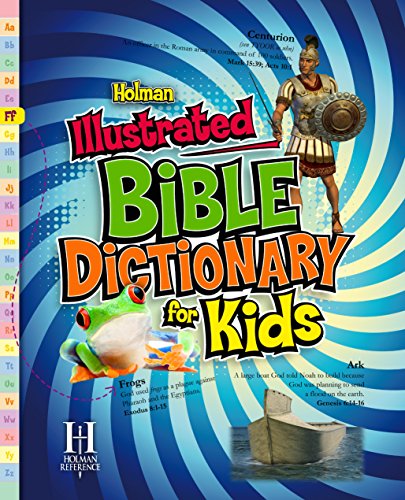
- Explains over 750 Bible terms
- More than 500 visual aids
- Designed for ages 5 to 10
Best For: Younger children and visual learners
Best for Teen Study Depth
Nelson's Student Bible Dictionary

- Nearly 2,000 Bible definitions
- Designed for ages 13 to 18
- Includes study outlines and verse references
Best For: Teens wanting a comprehensive study companion
Best New Illustrated Option
Explorer Bible Dictionary for Kids

- Over 750 concise Bible terms
- Full-color maps and reconstructions
- Designed to complement the CSB Explorer Bible
Best For: Younger children and CSB Explorer Bible users
Best KJV Teen Reference
KJV Bible Dictionary for Teens

- 636 entries use simple, teen-friendly explanations.
- Designed specifically for KJV readers ages 12–17.
- Includes questions, prompts, timelines, king lists, and maps.
Best For: Teens using the KJV for study, devotions, or group lessons
Best Illustrated Reference
Holman Illustrated Bible Dictionary
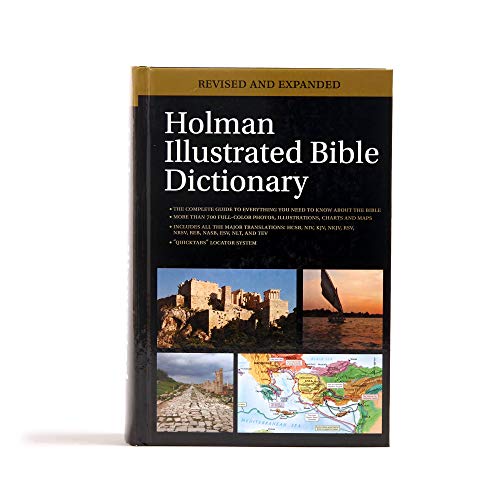
- Provides more than 6,500 Bible-related articles.
- Includes about 700 photos, maps, charts, and reconstructions.
- Balances concise definitions with fuller topic development.
Best For: Older teens and families wanting a comprehensive visual reference
Best Comprehensive Classic
The New Unger’s Bible Dictionary

- Contains more than 67,000 entries across 1,408 pages.
- Adds essays, photographs, maps, charts, and illustrations.
- Cross-references major translations, including KJV, NIV, and NKJV.
Best For: Older teens and serious students building a long-term Bible library
Best Value Classic
Illustrated Dictionary of the Bible

- 5,500+ entries and 500+ photographs
- Cross-references six major translations
- Includes teaching outlines
Best For: Students and families seeking a broad illustrated reference
Most Accessible Format

- Plain-English A-to-Z explanations
- Large print for comfortable reading
- Covers both Old and New Testaments
Best For: New readers and teens wanting quick, easy-to-read definitions
Most Comprehensive Visual Guide
Nelson's Illustrated Bible Dictionary

- More than 7,000 updated entries
- 500+ full-color visuals and study aids
- Includes maps, timelines, and pronunciation guides
Best For: Serious students wanting an extensive home reference
Best All-Around Pick – The Student Bible Dictionary
If you want one of the most adaptable bible dictionaries for teenagers, The Student Bible Dictionary combines hundreds of accessible definitions with visual aids. Its updated content and approachable format work well for teens while remaining useful for older students and adults.
Best For: Teenagers and families wanting a colorful, easy-to-use general Bible reference.
Pros:
- Defines hundreds of Bible people, places, events, words, and doctrines.
- Includes full-color photographs, paintings, maps, and charts.
- Updated with information from newer Bible translations.
- Simple enough for late elementary readers but complete enough for adults.
Cons:
- Its broad, accessible approach may not provide the depth of a specialist reference.
- Published in 2014, so it is not the newest option in this roundup.
With 304 pages and a strong mix of definitions and illustrations, this is a practical choice for everyday study, homework, or family reference use.
Best Visual Reference for Younger Readers – Holman Illustrated Bible Dictionary for Kids
Although aimed at younger children rather than teens, this illustrated reference can suit families comparing bible dictionaries for teenagers with more visual, introductory options. It explains more than 750 terms using concise definitions and extensive artwork.
Best For: Younger siblings, children, and visual learners who need an introductory Bible dictionary.
Pros:
- Covers more than 750 Bible terms.
- Pairs more than 500 entries with photographs, illustrations, maps, or reconstructions.
- Designed for clear comprehension and easy browsing.
- Useful at home, church, school, or in library settings.
Cons:
- The stated reading age is 5 to 10, making it less age-appropriate for most teenagers.
- Its child-focused presentation may feel basic to older students.
This is best viewed as a visual starter reference, not a teen-focused study tool. Its large illustrated format makes it especially suitable for younger learners.
Best for Teen Study Depth – Nelson's Student Bible Dictionary
Nelson's Student Bible Dictionary: A Complete Guide to Understanding the World of the Bible
Check Price On AmazonFor shoppers specifically comparing bible dictionaries for teenagers, Nelson’s Student Bible Dictionary stands out with nearly 2,000 definitions and a stated reading age of 13 to 18. It offers a more substantial reference while keeping the layout colorful and student-friendly.
Best For: Teenagers who want broad coverage, verse references, and structured Bible-study support.
Pros:
- Includes nearly 2,000 definitions of Bible words and topics.
- Provides relevant verse references and cross-references across multiple translations.
- Features photographs, charts, maps, diagrams, and a Bible history chart.
- Includes study and teaching outlines for every book of the Bible.
Cons:
- Key words are based on the NKJV, which may require adjustment for readers using another translation.
- Published in 2005, making it older than some alternatives.
This is one of the strongest choices for teens who need more than quick definitions. Its extensive entry count and study outlines make it useful for schoolwork, personal study, and teaching preparation.
Best New Illustrated Option – Explorer Bible Dictionary for Kids
The Explorer Bible Dictionary for Kids is a newer illustrated option to consider when browsing bible dictionaries for teenagers for younger family members or developing readers. It presents more than 750 terms with concise definitions, images, maps, and reconstructions.
Best For: Children ages 6 to 10 and families using the CSB Explorer Bible for Kids.
Pros:
- Covers more than 750 common Bible terms.
- Uses full-color images, illustrations, maps, and reconstructions.
- Designed for use at home, church, or school.
- Intentionally complements the CSB Explorer Bible for Kids.
Cons:
- The stated reading age of 6 to 10 is below the typical teenage range.
- Its concise definitions may be too introductory for older teens.
- It is listed for publication in April 2026, so availability may vary.
This is a colorful, accessible choice for younger readers rather than a dedicated teen reference. Families already using the CSB Explorer Bible for Kids may find the pairing particularly convenient.
Best KJV Teen Reference – KJV Bible Dictionary for Teens
For shoppers seeking bible dictionaries for teenagers, this KJV-focused guide is designed to make difficult names, older English, and unfamiliar biblical terms easier to understand. Its 636 entries use simple definitions, pronunciation help, key KJV verses, related topics, and faith-focused explanations.
Best For: Teens ages 12–17 using the King James Version for personal study, family devotions, youth groups, homeschool lessons, or Bible clubs.
Pros:
- Teen-friendly explanations cover people, places, objects, events, groups, books, and ideas.
- Includes help with KJV expressions such as “thee,” “thou,” and “ye,” plus older-word explanations.
- Adds Talk It Over questions, journal prompts, a Bible timeline, king lists, and maps.
Cons:
- Its focus on the KJV may be less useful for readers who primarily use another translation.
- At 205 pages, it is less comprehensive than the larger adult reference dictionaries in this roundup.
This is the most directly teen-oriented option here, especially for young readers who want practical help navigating the KJV without an overly academic presentation.
Best Illustrated Reference – Holman Illustrated Bible Dictionary
Among bible dictionaries for teenagers, the Holman Illustrated Bible Dictionary is a substantial choice for families or students who want broad coverage and visual support. It offers more than 6,500 articles, with concise definitions followed by fuller explanations, plus photographs, maps, reconstructions, and charts.
Best For: Older teens, families, Bible students, teachers, and small-group leaders who want a comprehensive reference for personal or classroom study.
Pros:
- Covers a wide range of biblical people, places, themes, language, history, geography, and culture.
- About 700 full-color visuals help connect biblical settings and concepts to the text.
- Useful for personal study, academic work, lesson preparation, and teaching.
Cons:
- Its extensive scope may feel more advanced than a dictionary written specifically for younger teens.
- The supplied details do not specify a teen reading range or a particular Bible translation focus.
The Holman is a strong long-term reference for teens who are ready for more depth and for households that want one resource to support both personal study and teaching.
Best Comprehensive Classic – The New Unger’s Bible Dictionary
For readers comparing bible dictionaries for teenagers with more advanced reference works, The New Unger’s Bible Dictionary offers exceptional breadth. This 1,408-page volume includes more than 67,000 entries, detailed essays, photographs, maps, charts, and illustrations, with cross-references supporting multiple major Bible translations.
Best For: Older teens, serious Bible students, and families building a substantial reference library for long-term study.
Pros:
- Its extensive entry count provides unusually broad coverage of biblical subjects.
- Updated scholarship is supplemented with essays, maps, photography, charts, and illustrations.
- Although based on the NASB, cross-referencing supports KJV, NKJV, NIV, and other major translations.
Cons:
- The 1,408-page format may be too detailed or intimidating for younger teens seeking quick definitions.
- At 2.31 pounds, it is less portable than a compact teen-focused guide.
- The supplied notes do not identify a teen-specific reading level or design.
This is best viewed as a serious reference investment rather than a beginner’s dictionary—well suited to motivated older teens who want a resource they can continue using for years.
Best Value Classic – Illustrated Dictionary of the Bible
For shoppers comparing bible dictionaries for teenagers, this illustrated one-volume reference offers broad coverage at a practical value-oriented price point. It combines more than 5,500 entries with over 500 photographs covering biblical people, places, teachings, books, backgrounds, and events.
Best For: Teen students, families, and Bible-study groups wanting a substantial general reference with visual support.
Pros:
- More than 5,500 A-to-Z entries in one volume
- Includes over 500 photographs of biblical subjects and settings
- Cross-references several major translations, including NKJV, KJV, NIV, RSV, NAS, and NEB
- Includes teaching outlines for lesson preparation
Cons:
- Its 1,152-page, 2.5-pound format may be bulky for carrying around
- Published in 2003, so it is an older edition than some alternatives
This is a strong all-purpose choice when you want extensive coverage and illustrations without moving to the largest, heaviest dictionary in the roundup.
Most Accessible Format – Bible Dictionary Large Print
Among bible dictionaries for teenagers, this large-print volume stands out for its plain-English explanations and approachable format. It covers people, places, events, books, and terms from both Testaments in an alphabetical 305-page guide.
Best For: New Bible readers, teens who prefer straightforward explanations, and families wanting an easy-to-read reference.
Pros:
- Uses clear, direct language rather than seminary-heavy terminology
- Large print is designed for comfortable reading
- Covers biblical people, places, events, books, and terms from Genesis to Revelation
- Useful for personal devotion, Sunday school preparation, and small-group study
Cons:
- At 305 pages, it has fewer entries and visual features than the larger illustrated dictionaries
- Independently published, with no supplied details about photographs, maps, or other illustrations
This is the most approachable option for teens who value readability and quick explanations over an expansive visual reference or extensive page count.
Most Comprehensive Visual Guide – Nelson's Illustrated Bible Dictionary
For families seeking the deepest coverage among these bible dictionaries for teenagers, Nelson’s Illustrated Bible Dictionary provides more than 7,000 entries in a full-color reference. The enhanced edition adds photographs, maps, charts, timelines, graphics, pronunciation guides, and an enlarged type size.
Best For: Serious teen Bible students, homeschoolers, and households wanting a long-term visual study resource.
Pros:
- More than 7,000 updated entries
- Includes over 500 full-color photographs and other visuals
- Features maps, charts, timelines, graphics, and pronunciation guides
- Cross-references all major translations and uses enlarged type
Cons:
- At 1,280 pages and 5.1 pounds, it is the heaviest option here
- Its substantial size may be better suited to desk or home use than carrying in a backpack
This enhanced edition is the best pick when comprehensive coverage and visual learning matter more than portability or a compact format.
How We Picked the Best Bible Dictionaries for Teenagers
We focused on reference books that help younger readers understand biblical vocabulary and context quickly. Our comparison considered readability, organization, coverage of people and places, illustrations, cross-references, translation focus, print clarity, and usefulness for independent study. We also included both youth-oriented books and more advanced dictionaries that can grow with a serious Bible student.
Because “teenager” can describe a wide range of reading levels, this list includes accessible introductions as well as detailed resources for students who want deeper historical and theological background.
Quick Comparison
- Best for a straightforward introduction: The Student Bible Dictionary
- Best for younger or visual learners: Holman Illustrated Bible Dictionary for Kids and Explorer Bible Dictionary for Kids
- Best for KJV readers: KJV Bible Dictionary for Teens
- Best for broad reference coverage: Holman Illustrated Bible Dictionary or Nelson’s Illustrated Bible Dictionary
- Best for traditional, detailed study: The New Unger’s Bible Dictionary
- Best for easy reading: Bible Dictionary Large Print
Key Buying Factors for Bible Dictionaries for Teenagers
Reading Level and Definition Style
Look for short, clearly written entries if the reader is new to Bible study. More advanced dictionaries may provide richer historical details but can use specialized language. A teen-focused title should explain terms rather than simply repeat them.
Coverage and Depth
Check whether the book covers only major people and places or also includes customs, objects, events, geography, and theological terms. A concise dictionary is portable and approachable, while a larger reference is more useful for research and repeated consultation.
Illustrations, Maps, and Layout
Maps, photographs, diagrams, and artwork can make ancient settings and objects easier to visualize. Alphabetical entries, bold headwords, cross-references, and an index also reduce the time needed to find information.
Translation Compatibility
Most dictionaries work with any Bible translation, but a KJV-specific guide may be especially helpful for readers who encounter older wording. If the student regularly uses a modern translation, prioritize a general dictionary with contemporary explanations.
Print Size and Portability
Large-print editions help readers who prefer less crowded pages, while compact books are better for church, travel, or youth-group use. Consider whether the dictionary will be used at a desk or carried with a Bible.
Who Should Buy Which Bible Dictionaries for Teenagers?
Choose a kids’ illustrated dictionary for younger teens, visual learners, or readers who benefit from short entries and abundant artwork. Choose a student dictionary for a balanced everyday resource that is easy to use without being overly basic. The KJV-focused option is the natural fit for teens who study primarily from the King James Version.
For homeschool research, Bible classes, and teens who want one long-term reference, an illustrated or enhanced Nelson’s or Holman dictionary offers broader coverage. Readers interested in more traditional, detailed scholarship may prefer Unger’s. Finally, choose the large-print edition when legibility matters most, even if the book will not be as compact.