The right Bible dictionary can turn a difficult passage, unfamiliar term, or historical question into a clearer starting point for sermon preparation. The ten references in this roundup cover broad one-volume research, illustrated study, portability, and word-focused analysis.
Use the guide below to match a reference work to your preaching workflow, study depth, and available shelf or desk space.
Best 10 Bible Dictionary for Pastors Picks for 2026
Best Visual Study Companion
Holman Illustrated Bible Dictionary
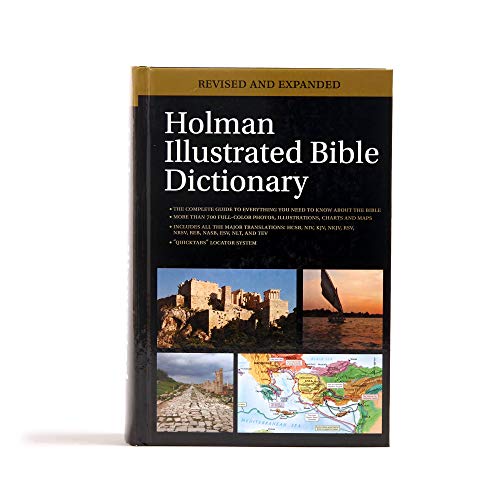
- 6,500-plus articles for broad Bible coverage
- Around 700 full-color visual aids
- Includes updated archaeological information
Best For: Pastors and Bible students who value clear explanations and visual context
Best for Original-Language Word Studies
Vine's Complete Expository Dictionary

- Covers over 6,000 biblical words
- Explains usage, frequency, and meaning
- Accessible without extensive Greek or Hebrew training
Best For: Pastors and students focused on biblical word studies
Best Comprehensive Illustrated Reference
Zondervan Illustrated Bible Dictionary

- More than 7,200 reference entries
- Includes 75 full-color maps
- Over 500 photos, charts, and illustrations
Best For: Pastors and teachers needing broad, visually rich Bible context
Best Traditional All-Purpose Reference
The New Unger's Bible Dictionary

- More than 67,000 entries
- Updated scholarship with essays and visual aids
- Cross-references several major Bible translations
Best For: Pastors building a deep, traditional research library
Comprehensive Evangelical Reference

- 1,000+ articles by 139 scholars
- Cross-references, maps, and illustrations
- Covers theology, history, and biblical books
Best For: Pastors wanting a comprehensive evangelical reference volume
Visual Study Powerhouse
Nelson's Illustrated Bible Dictionary

- More than 7,000 entries
- 500+ full-color visuals
- Includes maps, charts, timelines, and pronunciation guides
Best For: Pastors who prefer visual aids and broad reference coverage
Classic Scholarly Standard

- Third-edition evangelical reference
- Covers biblical and ancient Near Eastern studies
- Useful for ministers, students, and scholars
Best For: Pastors seeking a respected scholarly study reference
Best Illustrated Reference
Illustrated Dictionary of the Bible

- 5,500 entries with broad Bible coverage
- More than 500 photographs
- Includes teaching outlines
Best For: Pastors and teachers wanting a visual, full-size reference
Best Compact Coverage
Zondervan Compact Bible Dictionary
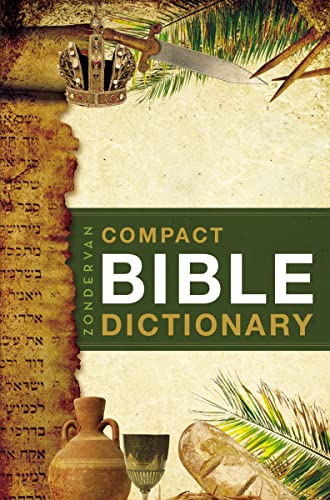
- More than 6,000 concise entries
- Includes maps and hundreds of illustrations
- Covers archaeology and biblical cultures
Best For: Readers needing broad information in a compact volume
Best Word-Study Focus
Unlocking the Bible's Language

- Focuses on biblical word etymology
- Includes verse references and cross-references
- Designed for pastors and educators
Best For: Language-focused sermon and classroom word studies
Best Visual Study Companion – Holman Illustrated Bible Dictionary
For pastors seeking a practical bible dictionary for pastors, the Holman Illustrated Bible Dictionary combines broad coverage with accessible explanations. Its 6,500-plus articles begin with concise definitions and expand into useful linguistic, historical, geographical, and cultural background for sermon preparation and Bible study.
Best For: Pastors, teachers, small-group leaders, and Bible students who want clear reference material supported by photos, maps, charts, and reconstructions.
Pros:
- More than 6,500 articles spanning biblical people, places, themes, and concepts
- Approximately 700 full-color photos, maps, charts, and reconstructions
- Revised and expanded with up-to-date archaeological information
- Clear structure that supports quick consultation and deeper study
Cons:
- The breadth and hardcover format may make it more substantial than a quick pocket reference
- Its general-reference focus may not replace specialized theological or language tools
Choose this edition if you want one visually rich, broadly useful volume for connecting the biblical text with its ancient setting. It is especially practical when sermon or lesson preparation benefits from concise definitions and contextual background in one place.
Best for Original-Language Word Studies – Vine's Complete Expository Dictionary
Vine's Complete Expository Dictionary of Old and New Testament Words: Super Value Edition
Check Price On AmazonVine’s Complete Expository Dictionary is a strong choice for anyone comparing biblical word meanings without years of Greek or Hebrew study. As a bible dictionary for pastors, it combines dictionary entries, commentary, and topical-concordance features in a single, affordable reference volume.
Best For: Pastors, students, and Bible readers who want to investigate the usage and meaning of key Old and New Testament words with limited formal language training.
Pros:
- Covers more than 6,000 key biblical words
- Explains word frequency, usage, and meaning
- Includes the numbering system used in The New Strong’s Exhaustive Concordance
- Combines dictionary, commentary, and topical-concordance functions
Cons:
- Its primary emphasis is word study rather than broad historical, geographical, or visual reference
- The 1,184-page volume may be more detail than readers need for quick devotional lookup
This is the better fit when sermon preparation centers on examining biblical vocabulary and usage. It offers pastors a focused way to enrich word studies while remaining accessible to readers without extensive original-language training.
Best Comprehensive Illustrated Reference – Zondervan Illustrated Bible Dictionary
The Zondervan Illustrated Bible Dictionary gives pastors a wide-ranging resource for researching the Bible’s historical, archaeological, geographical, social, theological, and biographical background. For those comparing options for a bible dictionary for pastors, its extensive entries and visual material make it useful for both preparation and teaching.
Best For: Pastors, Sunday school teachers, students, and general Bible readers who want a large, visually engaging one-volume reference.
Pros:
- More than 7,200 entries with current scholarship and archaeological findings
- Includes 75 full-color maps
- Features more than 500 full-color photographs, charts, and illustrations
- Covers context, people, places, and objects across the Bible
Cons:
- Its extensive 1,584-page format may be more than casual readers need
- The reference is based completely on the NIV and cross-referenced to the King James Version
Select this dictionary if you want maximum breadth and strong visual support in a single volume. It is particularly helpful when sermons or classes need historical and cultural context presented alongside maps, images, and concise reference articles.
Best Traditional All-Purpose Reference – The New Unger's Bible Dictionary
The New Unger’s Bible Dictionary is a long-established reference choice for pastors who want extensive coverage and updated scholarship. As a bible dictionary for pastors, it offers more than 67,000 entries along with essays, photographs, maps, charts, and cross-references useful across major Bible translations.
Best For: Pastors, teachers, and serious Bible students who want a substantial traditional reference work for research and sermon preparation.
Pros:
- Provides more than 67,000 entries
- Includes detailed essays, color photography, maps, charts, and illustrations
- Updated and expanded by respected Bible authorities
- Cross-references the New American Standard with major translations including NIV, KJV, and NKJV
Cons:
- The extensive entry count can make targeted browsing feel less streamlined
- Its primary basis is the New American Standard, so translation preferences may affect how readers use it
This is a solid pick for building a traditional reference shelf with unusually broad entry coverage. Choose it when you prefer a deep, established dictionary that supports cross-translation research as well as visual and essay-based study.
Comprehensive Evangelical Reference – Tyndale Bible Dictionary
For pastors seeking a thorough bible dictionary for pastors, the Tyndale Bible Dictionary combines more than 1,000 articles with cross-references, maps, illustrations, and contributions from 139 Bible scholars. Its broad coverage makes it useful when preparing sermons, planning Bible studies, or researching biblical background.
Best For: Pastors who want a comprehensive, single-volume evangelical reference for sermon preparation and deeper Bible study.
Pros:
- More than 1,000 informative, in-depth articles
- Thousands of cross-references for continued research
- Includes maps, photographs, and illustrations covering biblical places and cultures
- Covers biblical books, theological concepts, manuscripts, translations, and ancient history
Cons:
- At 1,352 pages and over four pounds, it is substantial to handle
- Its extensive coverage may be more than casual readers need
The Tyndale Bible Dictionary is a strong all-purpose choice for pastors who value accessible evangelical scholarship and visual helps in one large reference volume.
Visual Study Powerhouse – Nelson's Illustrated Bible Dictionary
Nelson’s Illustrated Bible Dictionary is a practical bible dictionary for pastors who appreciate quick access to a large number of entries alongside visual study aids. The enhanced edition includes more than 7,000 entries, full-color photographs, maps, charts, timelines, graphics, and pronunciation guides.
Best For: Pastors, teachers, and Bible students who want broad coverage with abundant visual resources and accessible reference features.
Pros:
- More than 7,000 up-to-date entries
- Includes over 500 full-color photographs and other visuals
- Features maps, charts, timelines, graphics, and pronunciation guides
- Provides cross-references to all major translations
Cons:
- Its 1,280 pages and 5.1-pound weight make it a large desk reference
- The extensive visual and entry coverage may be unnecessary for simple lookups
Choose this edition if visual context and extensive alphabetical coverage are priorities for sermon research, classroom teaching, or personal study.
Classic Scholarly Standard – New Bible Dictionary
The New Bible Dictionary is a proven bible dictionary for pastors and ministry students, with a third edition that incorporates developments in biblical studies, ancient Near Eastern studies, and archaeology. It is designed for a wide audience, from ministers and teachers to theological students and professional scholars.
Best For: Pastors and ministry students seeking a respected evangelical reference for serious biblical and historical study.
Pros:
- Established evangelical reference standard for five decades
- Third edition includes updated biblical, ancient Near Eastern, and archaeological research
- Suitable for ministers, teachers, students, laypeople, and scholars
- Provides a substantial 1,336-page reference resource
Cons:
- The third edition was published in 1996
- Its scholarly orientation may feel less immediately visual or introductory than an illustrated dictionary
This is a compelling pick for pastors who prioritize established evangelical scholarship and research depth over newer visual presentation features.
Best Illustrated Reference – Illustrated Dictionary of the Bible
For shoppers seeking a practical bible dictionary for pastors, the Illustrated Dictionary of the Bible combines broad A-to-Z coverage with visual aids and sermon-preparation tools. Its 5,500 entries address biblical people, places, facts, teachings, books, and historical background.
Best For: Pastors, teachers, students, and lay readers who want a substantial one-volume reference with photographs, cross-references, and teaching outlines.
Pros:
- Includes more than 5,500 entries across Bible topics and biblical times.
- Features over 500 photographs plus cross-references to several major English Bible translations.
- Teaching outlines can support lesson and sermon preparation.
- Offers 1,152 pages of extensive reference material.
Cons:
- Its 2.5-pound, 1,152-page format is less portable than a pocket reference.
- Published in 2003, it may not reflect newer scholarship or terminology.
This is a strong choice when depth, illustrations, and ministry-oriented usability matter more than compact size or a recent publication date.
Best Compact Coverage – Zondervan Compact Bible Dictionary
Zondervan Compact Bible Dictionary: A-to-Z Pocket Dictionary with Over 5,000 Entries
Check Price On AmazonThe Zondervan Compact Bible Dictionary is a useful bible dictionary for pastors who need wide-ranging information in a smaller reference format. It covers biblical people, places, objects, events, concepts, cultures, geography, archaeology, and theology, with more than 6,000 entries.
Best For: Pastors, students, teachers, and lay readers who want an easy-to-use reference with concise definitions, illustrations, maps, and Bible-book summaries.
Pros:
- Provides over 6,000 entries in a compact 621-page volume.
- Covers archaeology, geography, geology, cultures, philosophies, and lifestyles of biblical times.
- Includes hundreds of illustrations and maps spanning Abraham’s era through the Roman Empire.
- Offers summaries of the books of the Bible and conservative scholarship.
Cons:
- Its concise format may provide less depth than a larger, more specialized dictionary.
- Published in 2001, it is an older reference edition.
This model stands out for portability and breadth, making it a practical desk or study companion when quick access matters more than extensive article length.
Best Word-Study Focus – Unlocking the Bible's Language
Unlocking The Bible's Language: An Etymological Dictionary for Pastors and Educators
Check Price On AmazonUnlocking The Bible’s Language takes a specialized approach to the bible dictionary for pastors category, focusing on etymology, meaning, and usage. Alphabetical entries explain biblical words through historical and linguistic sources and point readers to verses where those words appear.
Best For: Pastors and educators who want an accessible word-study reference centered on biblical language origins, usage, and cross-referenced context.
Pros:
- Explains the origin, meaning, and usage of Bible words.
- Draws on ancient texts, historical documents, and linguistic studies.
- Provides verse references to show words in context.
- Includes an index and cross-referencing system for reference use.
Cons:
- At 47 pages, it is far narrower in scope than a comprehensive Bible dictionary.
- It is independently published and does not list a print length comparable to a full-size reference work.
- Its specialized etymological focus may not cover broad topics such as biblical geography or archaeology.
This is best treated as a focused language tool rather than an all-purpose dictionary, especially for sermon preparation and classroom word studies.
How We Picked the Best Bible Dictionary for Pastors
We focused on reference books that support recurring pastoral tasks: understanding biblical terms, checking historical and cultural background, comparing related concepts, and preparing teaching material. The selection includes established dictionaries with broad A-to-Z coverage, illustrated editions designed for quick orientation, compact volumes for portability, and specialized resources that examine the language behind biblical words.
We also considered practical factors such as editorial reputation, scope, readability, usefulness for sermon preparation, and whether a volume works best as a primary reference or as a supplement to a larger library. No single title is ideal for every pastor, so the best choice depends on how deeply and how often you research.
Quick Comparison
- Broadest all-purpose research: Look first at comprehensive single-volume references such as Zondervan Illustrated Bible Dictionary, The New Unger’s Bible Dictionary, or New Bible Dictionary.
- Visual study and fast orientation: Holman Illustrated Bible Dictionary and Nelson’s Illustrated Bible Dictionary are useful when maps, images, charts, and concise explanations help you get started.
- Portable reference: Zondervan Compact Bible Dictionary suits travel, office use, and quick lookups.
- Word-study support: Vine’s Complete Expository Dictionary and Unlocking The Bible’s Language are better suited to pastors who regularly examine word meanings and usage.
- Value-focused options: The Super Value editions can provide accessible coverage when budget matters.
Key Buying Factors for a Bible Dictionary for Pastors
Scope and Depth
Choose a comprehensive dictionary if you want one dependable starting point for people, places, events, doctrines, objects, and cultural background. A compact or highly specialized title may be faster, but it will not replace a broad reference for complex study.
Editorial Approach
Check whether the book emphasizes concise definitions, theological interpretation, historical background, or original-language analysis. Pastors who prepare expository sermons may benefit from pairing a general dictionary with a dedicated word-study resource rather than expecting one volume to do everything.
Layout and Usability
Illustrations, maps, cross-references, indexes, readable type, and clear alphabetical organization can save time during sermon preparation. A book that is technically thorough but difficult to scan may be less useful in a busy weekly workflow.
Format, Size, and Budget
Large reference books offer more content but can be inconvenient to carry. Compact editions work well for travel and quick consultation. Also verify the edition and publication details before buying, since revised, enhanced, and value editions may differ in content, formatting, and binding.
Who Should Buy Which Bible Dictionary for Pastors?
Buy a comprehensive illustrated dictionary if you want an approachable main reference with visual aids and broad topical coverage. Choose a traditional scholarly dictionary if depth, editorial authority, and detailed background matter more than portability. Select a compact dictionary for a desk, classroom, travel bag, or secondary reference.
Choose an expository or etymological resource if your study routinely focuses on Hebrew and Greek word usage, semantic relationships, or the development of biblical language. For many pastors, the most useful setup is a broad Bible Dictionary for Pastors combined with a specialized word-study volume and a reliable study Bible.