The best Bible dictionaries make unfamiliar names, places, customs, objects, and theological terms easier to understand in context. They can turn a confusing passage into a more informed and rewarding study session.
This roundup compares 10 Bible dictionaries, from detailed illustrated reference works to compact options for quick lookups, so you can choose the right fit for your study habits and budget.
Best 10 Bible Dictionaries Picks for 2026
Best Comprehensive Illustrated Reference
Holman Illustrated Bible Dictionary
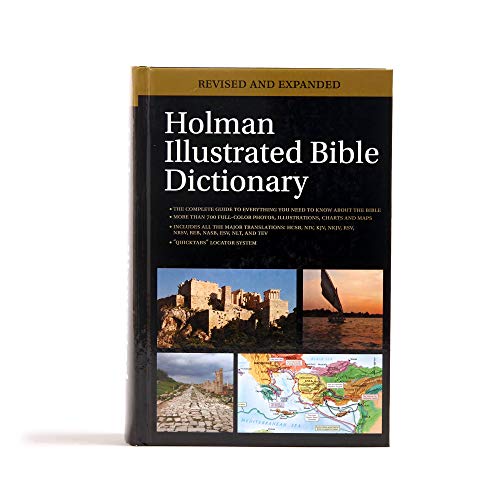
- 6,500+ articles with clear definitions and explanations
- About 700 full-color visual resources
- Updated archaeological and biblical background
Best For: Bible students, teachers, pastors, and everyday readers seeking broad visual coverage
Best Extensive Classic Reference
The New Unger's Bible Dictionary

- More than 67,000 entries and detailed essays
- Includes maps, photography, charts, and illustrations
- Cross-referenced across major Bible translations
Best For: Serious students, pastors, and teachers wanting a deep single-volume resource
Best Visual Context Builder
Zondervan Illustrated Bible Dictionary

- 7,200+ entries across biblical topics
- 75 full-color maps and 500+ visual resources
- Covers archaeological, social, and theological context
Best For: Readers, teachers, and students who prefer richly illustrated Bible reference material
Best Portable Beginner's Guide

- Accessible definitions for quick lookups
- Hundreds of colorful visual aids
- Portable 512-page revised and expanded format
Best For: Beginners, study groups, and readers who want an easy-to-carry reference
Best Visual Reference
Nelson's Illustrated Bible Dictionary

- More than 7,000 entries
- Over 500 full-color visuals
- Cross-references major translations
Best For: Visual Bible study and comprehensive home reference
Best for In-Depth Study

- More than 1,000 detailed articles
- Contributions from 139 scholars
- Thousands of cross-references
Best For: Sermon preparation and advanced Bible study
Best Value Reference
Illustrated Dictionary of the Bible

- 5,500 A-to-Z entries
- Over 500 photographs
- Cross-references six translations
Best For: Accessible study, teaching, and budget-conscious buyers
Best Comprehensive Reference
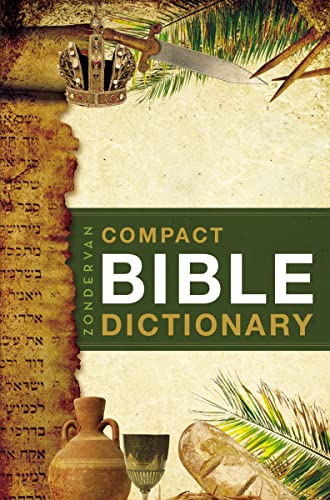
- Over 6,000 entries
- Maps, illustrations, and book summaries
- Covers biblical culture, geography, and archaeology
Best For: Broad Bible-study reference at home, school, or church
Best for Word Studies
Strong's and Vine's Concise Dictionary

- Combines concordance and dictionary tools
- Includes Strong's numbers and transliterations
- Supports biblical word and verse studies
Best For: Readers researching biblical vocabulary and passages
Best Pocket Option

- 2,500 concise entries
- Weighs only 3.99 ounces
- Includes illustrations and modern-translation cross-references
Best For: Portable, everyday Bible lookups
Best Comprehensive Illustrated Reference – Holman Illustrated Bible Dictionary
For readers comparing bible dictionaries, the Holman Illustrated Bible Dictionary is a broad, clearly organized reference for exploring biblical people, places, themes, language, history, and culture. Its concise definitions, expanded explanations, and visual resources make it useful for both quick lookups and deeper study.
Best For: Bible students, teachers, pastors, small-group leaders, and everyday readers who want extensive coverage without requiring advanced theological training.
Pros:
- More than 6,500 articles covering topics from Aaron to Zuzite
- Approximately 700 full-color photos, maps, charts, and reconstructions
- Provides linguistic, historical, geographical, and cultural context
- Revised and expanded with updated archaeological information
Cons:
- Its comprehensive scope may be more than casual readers need
- The hardcover reference format is less convenient for highly portable study
This is a strong all-purpose choice for building a personal Bible reference library, especially if visual aids and broad historical context are priorities.
Best Extensive Classic Reference – The New Unger's Bible Dictionary
Among bible dictionaries, The New Unger’s Bible Dictionary stands out for its substantial size and long publishing history. With more than 67,000 entries, essays, cross-references, maps, photographs, charts, and illustrations, it is designed for readers who want a deep single-volume reference.
Best For: Serious Bible students, pastors, teachers, and readers who value extensive entries and traditional reference depth.
Pros:
- More than 67,000 entries supplemented by detailed essays
- Includes photographs, maps, charts, and illustrations
- Updated with scholarship from respected Bible authorities
- Cross-referenced for use with major Bible translations
Cons:
- Its 1,408-page format may be more reference book than beginners need
- The substantial volume is less suited to carrying around regularly
The New Unger’s Bible Dictionary is a practical pick when coverage and research depth matter more than compact size or a beginner-focused presentation.
Best Visual Context Builder – Zondervan Illustrated Bible Dictionary
The Zondervan Illustrated Bible Dictionary is a compelling option for bible dictionaries shoppers who learn through images and contextual detail. It covers historical, chronological, archaeological, geographical, social, theological, and biographical subjects, pairing the entries with maps, photographs, charts, and illustrations.
Best For: Pastors, Sunday school teachers, students, and general Bible readers who want visual help understanding biblical context.
Pros:
- More than 7,200 entries with updated scholarship and archaeological findings
- Includes 75 full-color maps created with newer mapping technologies
- Features more than 500 full-color photos, charts, and illustrations
- Cross-referenced to the King James Version while based on the NIV
Cons:
- The large 1,584-page volume may be cumbersome for portable study
- Its wide-ranging coverage may feel excessive for quick, occasional lookups
Choose this dictionary if visual presentation and a wide-ranging look at the Bible’s world are central to how you study and teach Scripture.
Best Portable Beginner's Guide – Ultimate Bible Dictionary
For shoppers seeking compact bible dictionaries, the Ultimate Bible Dictionary offers accessible definitions in a portable format. It begins with quick explanations of biblical people, places, objects, and events, then often adds more detail alongside colorful maps, photos, and reconstructions.
Best For: Beginners, personal or group Bible-study participants, students, homeschoolers, and readers who want a portable reference.
Pros:
- Clear definitions designed for quick understanding
- Hundreds of colorful maps, photos, and reconstructions
- Compact 512-page format that is easy to carry
- Useful for personal study, group activities, and classroom settings
Cons:
- Its concise format offers less depth than larger reference volumes
- Readers seeking highly technical or exhaustive coverage may need a larger dictionary
This is the most convenient choice of the group for beginners and study groups that need straightforward explanations without carrying a large reference book.
Best Visual Reference – Nelson's Illustrated Bible Dictionary
For shoppers comparing Bible dictionaries, Nelson’s Illustrated Bible Dictionary is a substantial visual reference with more than 7,000 entries and extensive study aids. Its updated photographs, maps, charts, timelines, graphics, and pronunciation guides make it useful for readers who want quick definitions alongside visual context.
Best For: Bible students, teachers, and households seeking a comprehensive, highly visual reference.
Pros:
- More than 7,000 up-to-date entries.
- Includes more than 500 full-color photographs and other visuals.
- Provides cross-references to all major translations.
- Enlarged type supports easier reading.
Cons:
- Its 1,280-page format and 5.1-pound weight make it less portable.
- The breadth of material may be more than casual readers need.
This is a strong choice when visual learning and broad coverage matter most. The large, updated edition is better suited to a desk or home reference shelf than frequent carrying.
Best for In-Depth Study – Tyndale Bible Dictionary
Among Bible dictionaries, the Tyndale Bible Dictionary stands out for its depth and scholarly breadth. It combines more than 1,000 articles from 139 Bible scholars with extensive cross-references, maps, photographs, and coverage of biblical books, theology, manuscripts, translations, and ancient cultures.
Best For: Sermon preparation, Bible study leaders, and readers wanting detailed evangelical reference material.
Pros:
- Offers more than 1,000 informative, in-depth articles.
- Draws on the work of 139 Bible scholars.
- Includes thousands of cross-references for follow-up research.
- Covers canonical, apocryphal, and pseudepigraphical books.
Cons:
- At 1,352 pages and 4.05 pounds, it is a substantial desk reference.
- Its detailed approach may feel excessive for quick, basic lookups.
The Tyndale is the strongest fit here for readers who value depth and connected research. Its article-rich format supports extended study more than casual browsing.
Best Value Reference – Illustrated Dictionary of the Bible
For readers seeking affordable Bible dictionaries, the Illustrated Dictionary of the Bible offers broad A-to-Z coverage in a more streamlined Super Value Series format. Its 5,500 entries, more than 500 photographs, translation cross-references, and teaching outlines cover biblical people, places, books, backgrounds, teachings, and objects.
Best For: Students, laypeople, pastors, and teachers who want an accessible all-in-one reference.
Pros:
- Includes 5,500 entries on Bible-related topics.
- Features more than 500 photographs.
- Cross-references NKJV, KJV, NIV, RSV, NAS, and NEB.
- Teaching outlines can support lessons and sermon preparation.
Cons:
- It has fewer entries than the larger Nelson’s and Tyndale volumes.
- The 2003 publication date may matter to readers seeking a newer edition.
This is a practical pick for foundational study and teaching support, especially when an accessible, illustrated reference is more important than maximum depth or the newest edition.
Best Comprehensive Reference – Compact Bible Dictionary
Zondervan Compact Bible Dictionary: A-to-Z Pocket Dictionary with Over 5,000 Entries
Check Price On AmazonFor shoppers seeking broad Bible dictionaries coverage in a portable format, the Zondervan Compact Bible Dictionary combines more than 6,000 entries with maps, illustrations, book summaries, and background information on biblical cultures and places.
Best For: Laypersons, students, teachers, and pastors who want a wide-ranging general reference for Bible study.
Pros:
- Includes over 6,000 entries covering people, places, objects, events, and concepts.
- Adds archaeological information, hundreds of illustrations, and maps of the ancient world.
- Provides summaries of the books of the Bible and broad coverage of biblical-era cultures and ideas.
Cons:
- At 621 pages and 2.31 pounds, it is less pocket-friendly than smaller dictionary options.
- Published in 2001, so it may not reflect more recent scholarship or discoveries.
This is a strong all-purpose choice when breadth and visual context matter more than minimal size. Its extensive entry count and supporting maps make it especially useful for desk or classroom reference.
Best for Word Studies – Strong's and Vine's Concise Dictionary
Among Bible dictionaries and concordances, this two-in-one volume is designed for readers who want to investigate biblical vocabulary alongside verse references without needing prior Hebrew or Greek knowledge.
Best For: Bible students, ministry trainees, and readers who want concise word definitions, transliterations, Strong’s numbers, and concordance support in one book.
Pros:
- Combines a concise Strong’s concordance with Vine’s concise Bible dictionary.
- Includes definitions, explanations, transliterations, parts of speech, and Strong’s numbers for cross-referencing.
- Groups variant spellings of proper names and works with modern translations as well as the King James Version.
Cons:
- At 1,200 pages and 3.05 pounds, it is substantial rather than highly portable.
- Its focus on word studies and concordance work may be more specialized than a general Bible dictionary.
This is the most suitable pick for readers who want language-focused study tools in a single volume. It offers more technical indexing than a basic dictionary, while keeping the explanations concise and accessible.
Best Pocket Option – Pocket Bible Dictionary
If portability is the priority, this Pocket Bible Dictionary offers concise Bible dictionaries coverage in a small, lightweight format, with entries for 2,500 important people, places, things, and ideas.
Best For: Everyday Bible study, quick lookups, commuters, and readers who prefer a compact reference based on the King James Version.
Pros:
- Defines 2,500 biblically significant people, places, things, and ideas.
- Small 3.72-by-5.17-inch format and 3.99-ounce weight make it easy to carry.
- Includes cross-references to modern translations, black-and-white illustrations, and helpful phrase entries.
Cons:
- Its 2,500 entries provide less coverage than the larger Zondervan dictionary.
- Based on the King James Version, which may be less direct for readers using other translations despite the cross-references.
This is a practical choice for fast, no-nonsense lookups rather than extended research. Its compact design makes it especially convenient for carrying to church, study groups, or daily reading.
How We Picked These Bible Dictionaries
We selected these titles to represent the main ways readers use Bible reference books: detailed word and topic study, visual learning, sermon preparation, historical background, concordance work, and portable lookup. We considered entry coverage, readability, organization, illustrations, cross-references, edition updates, physical size, and usefulness for both new and experienced students.
A good dictionary should do more than provide a brief definition. The strongest choices explain how a term is used in Scripture, identify relevant people and locations, and add enough historical or cultural context to support responsible interpretation.
Quick Comparison
| Best For | Look For |
|---|---|
| Comprehensive study | Large one-volume works with extensive entries and illustrations |
| Visual learners | Maps, photographs, diagrams, and archaeological images |
| Fast lookups | Alphabetical organization, concise definitions, and clear cross-references |
| Small spaces or travel | Compact or pocket-sized formats |
| Word studies | Concordance features, original-language information, and related terms |
Key Buying Factors for Bible Dictionaries
Coverage and Depth
Check whether you need short definitions or substantial articles. Comprehensive dictionaries are better for research and preparation, while concise editions are faster for casual reading and basic clarification.
Illustrations and Maps
Visual material can make ancient geography, architecture, clothing, and artifacts easier to understand. If historical setting matters to your study, prioritize an illustrated edition with useful captions and maps.
Readability and Organization
Look for legible type, intuitive alphabetical entries, helpful headings, and cross-references. A book with excellent content is less useful if you cannot locate information quickly.
Size and Portability
Large reference volumes usually provide more detail but can be difficult to carry. Compact and pocket dictionaries work well for church, travel, group study, or keeping beside a Bible without taking up much space.
Study Purpose
Some titles are designed primarily as general Bible Dictionaries, while others combine dictionary entries with concordance or original-language tools. Choose based on whether you need background information, vocabulary help, or a broader reference system.
Who Should Buy Which Bible Dictionaries?
Choose a comprehensive illustrated dictionary if you want one main reference for serious personal study, teaching, or sermon preparation. These options offer the broadest context and are usually worth the extra size.
Choose a concise or compact dictionary if you mainly need quick explanations while reading. These are especially practical for beginners, students with limited shelf space, and readers who prefer straightforward definitions.
Choose a visual edition if maps, photographs, and diagrams help you connect biblical terms with real places, objects, and historical settings.
Choose a concordance-and-dictionary combination if you want to trace repeated words and explore related terms without buying multiple reference books. It may not replace a full study dictionary, but it can be highly efficient for focused word study.
When in doubt, start with the format you will actually use most often. The best Bible dictionary is the one that matches your reading level, study goals, and available space while providing enough context to answer your questions confidently.