A good microphone boom arm frees up desk space, keeps your mic positioned consistently, and makes streaming, gaming, podcasting, or recording more comfortable. You do not need to spend a fortune, but the right choice depends on your microphone’s weight, your desk thickness, and how much reach you need.
We selected 10 affordable boom arms with different strengths, including low-profile designs, heavy-duty options, cable management, broad adjustability, and compatibility with popular USB microphones. Use the guide below to narrow down the best fit for your setup.
Best 10 Microphone Boom Arm Under 100 Picks for 2026
Best Low-Profile Stability

- Low-profile design helps limit visual obstruction
- Supports microphones up to 2 kg
- Includes 1/4-inch and 5/8-inch adapters
Best For: Compact gaming, podcasting, and streaming setups
Best Portable Starter Arm
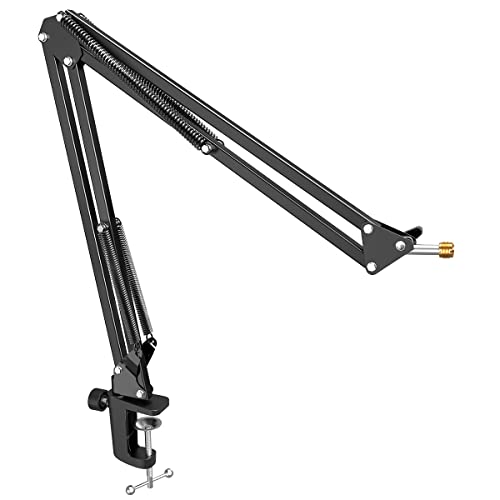
- Foldable design saves desk and storage space
- 180-degree vertical adjustment
- Anti-scratch clamp fits desks up to 2 inches
Best For: Beginners, small desks, and mobile recording
Best Heavy-Duty Damped Arm

- Pneumatic support handles up to 2.5 kg
- 30.2-inch horizontal reach
- Cable channels and a wide padded clamp
Best For: Heavier microphones and flexible creator setups
Best Reach and Cable Management
InnoGear MU-PSA28 Mic Boom Arm

- Up to 32.3 inches of horizontal reach
- Built-in cable channels with rubber covers
- Supports microphones up to 3.5 pounds
Best For: Monitor-clearing streaming and podcasting setups
Best Low-Profile Pick

- All-metal construction with a stable C-clamp
- Low-profile design stays beneath the monitor
- 29-inch reach with included thread adapters
Best For: Gaming and streaming setups with limited monitor or desk clearance
Best Flexible Setup

- 360-degree rotation with a foldable design
- Includes a 6-inch riser for overhead placement
- Supports up to 1,000 grams and includes multiple adapters
Best For: Creators who want adaptable desk or overhead microphone positioning
Best Heavy-Duty Pick
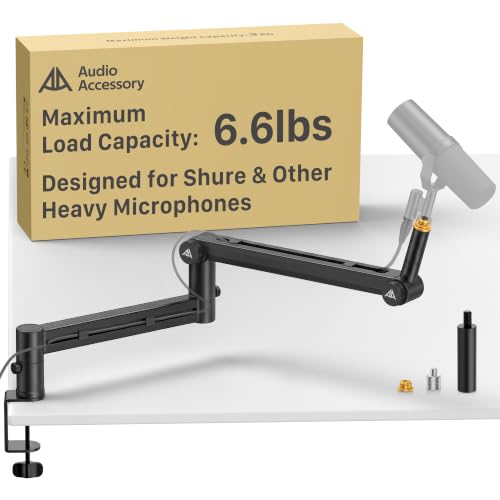
- 6.6-pound load capacity for heavy microphones
- Gear-lock mechanism is designed to resist sagging
- 780 mm reach with tool-free positioning
Best For: Podcasting and broadcast setups using heavier studio microphones
Best Overall Stability

- Supports up to 4 pounds
- 360° rotation with extension rod
- Padded clamp fits desks up to 2 inches
Best For: Heavy microphones and flexible desktop positioning
Best Low-Profile Design

- Low-profile shape reduces visual distraction
- Supports up to 2 kilograms
- 360° and 180° adjustment range
Best For: Clean gaming, streaming, and recording desks
Best Beginner-Friendly Arm

- Supports microphones up to 1 kilogram
- Clamp fits desks up to 2.2 inches
- Includes mic clip, adapter, and cable straps
Best For: Lightweight microphones and first-time setups
Best Low-Profile Stability – Aokeo AK-58i Mic Boom Arm
If you want a microphone boom arm under 100 that stays unobtrusive, the Aokeo AK-58i focuses on low-profile stability and straightforward positioning. Its steel construction supports up to 2 kg, while the arm design keeps the microphone and cable below the screen area.
Best For: Gamers, streamers, and podcasters who want a compact arm with a low-visibility profile.
Pros:
- Low center of gravity helps reduce shaking and shifting.
- 360-degree arm rotation and 180-degree microphone-arm movement provide flexible positioning.
- Includes 1/4-inch and 5/8-inch adapters and supports microphones up to 2 kg.
- Built-in cable routing helps reduce desktop clutter.
Cons:
- Fits tables less than 7 cm thick, which may limit desk compatibility.
- Its maximum height is listed at 30 cm, so it is designed more for low-profile placement than tall overhead positioning.
The AK-58i is a practical pick when stability and a clear line of sight matter more than maximum reach. Check your desk thickness and microphone mounting thread before buying.
Best Portable Starter Arm – FIFINE CS1 Boom Arm
The FIFINE CS1 is a sensible microphone boom arm under 100 for beginners who need a foldable, metal desk stand. Its 180-degree vertical adjustment and included adapter make it easy to bring a compatible microphone closer for recording, streaming, or gaming.
Best For: New creators and users with limited desk space who value portability.
Pros:
- Foldable design is convenient for storage and transport.
- Metal clamp includes an anti-scratch pad and fits desktops up to 2 inches thick.
- 180-degree up-and-down adjustment offers a useful positioning range.
- Strong springs help the arm remain more stable during adjustments.
Cons:
- The clamp is intended for desks 2 inches thick or less.
- Compatibility depends on using the included 5/8-inch-to-3/8-inch adapter where needed.
Choose the CS1 if you want an uncomplicated boom arm that folds away and covers common recording tasks. It is particularly appealing for smaller workspaces, provided your desk meets the clamp limit.
Best Heavy-Duty Damped Arm – NEEWER MS002 Low-Profile Arm
For shoppers seeking a microphone boom arm under 100 with a higher stated load capacity, the NEEWER MS002 combines a low-profile design with pneumatic damping. It supports microphones and other compatible equipment up to 2.5 kg, with adjustable tension, broad reach, and concealed cable channels.
Best For: Creators using heavier microphones who want wide adjustment and a tidy desk.
Pros:
- Pneumatic balancing system supports equipment up to 2.5 kg.
- Extends horizontally to 30.2 inches and offers 360-degree base movement.
- Cable channels help conceal and organize wires.
- Large padded clamp fits tables from 0.4 to 3.1 inches thick.
Cons:
- Joint tension can be adjusted but cannot be fully locked.
- Its 3.19 kg listed item weight makes it less convenient to move than lighter arms.
- Adjusting the pneumatic arm requires care because it can rebound.
The MS002 is the most equipment-focused option here, especially for heavier microphones or setups that need extended reach. Its adjustable damping adds flexibility, but users should be comfortable tuning the joints and handling a heavier stand.
Best Reach and Cable Management – InnoGear MU-PSA28 Mic Boom Arm
The InnoGear MU-PSA28 is a strong microphone boom arm under 100 choice for users who need extra reach and built-in cable organization. Its extension riser and long horizontal range help clear most monitors, while internal springs support microphones up to 3.5 pounds.
Best For: Streamers, podcasters, and desk users who need extended positioning over a monitor.
Pros:
- Reaches up to 32.3 inches horizontally and 37.4 inches vertically with the included riser.
- Built-in cable channels and removable rubber covers keep wiring organized.
- Supports up to 3.5 pounds, including heavier microphones such as the Yeti and SM7B.
- 135-degree back-and-forth and 180-degree up-and-down adjustment provide flexible placement.
Cons:
- The clamp fits desks up to 2 inches thick.
- The listed microphone connection is 5/8 inch, so some microphones may require an additional compatible mount or adapter.
The MU-PSA28 stands out when reach and a clean-looking setup are priorities. Its included riser is useful for clearing monitors, while the spring-supported arm is better suited to substantial microphones than lightweight basic stands.
Best Low-Profile Pick – FIFINE BM88 Boom Arm
If you need a microphone boom arm under 100 that keeps your monitor view clear, the FIFINE BM88 is a practical low-profile option. Its all-metal construction, concealed cable management, broad adjustment range, and included thread adapters suit gaming, streaming, podcasting, and recording setups.
Best For: Gamers and streamers who want a stable arm that extends beneath a monitor without obstructing the screen.
Pros:
- Low-profile design helps preserve monitor visibility and desktop space.
- All-metal arm and clamp are designed for stable positioning with less wobble.
- Offers 29-inch reach, 360-degree horizontal movement, and up to 220-degree vertical adjustment.
- Includes 1/4-inch, 3/8-inch, and 5/8-inch thread compatibility plus hidden cable management.
Cons:
- The clamp fits desktops from 0.8 to 2.4 inches thick.
- The section nearest the C-clamp cannot be adjusted vertically.
- The microphone is not included.
With its screen-friendly profile and sturdy metal build, the BM88 is a strong choice when clean cable routing and stable positioning matter as much as reach.
Best Flexible Setup – SENSIC SA-30 Boom Arm
The SENSIC SA-30 is a versatile microphone boom arm under 100 for users who want flexible positioning and an overhead setup. Its 360-degree rotation, foldable design, internal cable routing, and included 6-inch riser make it adaptable to desks, monitors, and mobile recording arrangements.
Best For: Creators who need flexible microphone placement, including an overhead position behind a monitor.
Pros:
- 360-degree rotation and a foldable arm support flexible positioning.
- Includes a 5.9-inch riser for placing the microphone over a monitor.
- Supports up to 1,000 grams and includes a table clamp and grommet mount.
- Concealed cable routing helps keep the workspace organized.
Cons:
- Its 1,000-gram maximum weight recommendation may not suit heavier microphones.
- The arm uses a mix of aluminum, stainless steel, and plastic components.
- A riser may be unnecessary for users who only need a standard desk-level position.
The SA-30 stands out for its included riser and positioning flexibility, making it a useful option for creators who regularly change microphone placement.
Best Heavy-Duty Pick – ABA01 Low-Profile Mic Arm
For shoppers searching for a microphone boom arm under 100 that can handle heavier studio microphones, the ABA01 focuses on load capacity and anti-sag stability. Its gear-lock mechanism, reinforced arms, long reach, and tool-free adjustments make it especially suitable for demanding podcasting and broadcast setups.
Best For: Users mounting heavier microphones such as the Shure SM7B, MV7, RODE PodMic, or Blue Yeti.
Pros:
- Supports up to 6.6 pounds, or 3 kilograms.
- Gear-lock construction is designed to prevent sagging over time.
- Offers a 780 mm reach with 360-degree horizontal and 120-degree vertical adjustment.
- Deep cable channels and included 3/8-inch-to-5/8-inch and 3/8-inch-to-1/4-inch adapters improve setup flexibility.
Cons:
- Its 1.63-kilogram weight is heavier than many basic microphone arms.
- The heavy-duty construction may be more than needed for lightweight microphones.
- The microphone is not listed as an included component.
The ABA01 is the most appropriate choice of these three for a substantial microphone, combining a high load rating with a locking adjustment system and extended reach.
Best Overall Stability – M05 Pro Boom Arm
If you need a microphone boom arm under 100 with extra reach and support for heavier microphones, the M05 Pro is a versatile option. Its aluminum-alloy arm supports up to 4 pounds, while the reinforced clamp fits desks up to 2 inches thick.
Best For: Streamers, podcasters, and gamers who need broad positioning flexibility and strong microphone support.
Pros:
- Supports microphones weighing up to 4 pounds, including heavier models such as the Blue Yeti.
- 360-degree arm rotation plus a 9.8-inch extension rod helps clear monitors and wider desks.
- Includes 3/8-inch and 5/8-inch compatibility, a mic clip, cable bands, and a conversion screw.
- Silicone-padded clamp helps protect the desk surface.
Cons:
- The clamp is limited to desks up to 2 inches thick.
- HyperX QuadCast users need an adapter that is not included.
Choose the M05 Pro when load capacity and reach matter more than having the smallest possible arm. Its one-year warranty adds useful reassurance for a budget setup.
Best Low-Profile Design – Aokeo AK-55 Boom Arm
For shoppers comparing a microphone boom arm under 100 that stays visually unobtrusive, the Aokeo AK-55 uses a low-profile design with a lower center of gravity. It supports up to 2 kilograms and is designed to keep the arm and cable below the main viewing area.
Best For: Gamers, streamers, and podcasters who want a discreet arm that minimizes screen-area distractions.
Pros:
- Low-profile construction is intended to improve stability and reduce visual interference.
- Both arms rotate 360 degrees, while the microphone arm also swings vertically through 180 degrees.
- Supports up to 2 kilograms and includes 1/4-inch, 3/8-inch, and 5/8-inch adapter options.
- The arm helps hide and secure the microphone cable.
Cons:
- Fits tables less than 7 centimeters thick, so very thick desktops may not work.
- The package does not include a microphone.
- Its white finish may not suit every desk setup.
The AK-55 is a practical pick when a clean sightline is a priority. Its broad adjustment range and metal construction provide useful flexibility for common recording and streaming microphones.
Best Beginner-Friendly Arm – MAONO BA20 Boom Arm
The MAONO BA20 is a straightforward microphone boom arm under 100 for smaller microphones and beginner recording setups. Its steel construction, spring design, and adjustable desk clamp support microphones up to 1 kilogram while allowing the arm to be moved out of the way when not in use.
Best For: New podcasters, gamers, and streamers using microphones within the 1-kilogram weight limit.
Pros:
- Steel construction and spring design support microphones up to 1 kilogram.
- Angle and height adjustments are made by loosening the knobs.
- Upgraded clamp fits desks up to 2.2 inches or 5.5 centimeters thick and includes a protective rubber pad.
- Includes a standard mic clip, 3/8-inch-to-5/8-inch adapter, and cable straps.
Cons:
- Its 1-kilogram capacity is lower than the other options in this roundup.
- The clamp may not work with glass tables.
- Microphones over the stated weight limit may affect performance.
The BA20 keeps the essentials simple and includes the adapters needed for many popular microphones. It is best suited to lighter setups where easy repositioning and a compact desk clamp are more important than maximum capacity.
How We Picked the Best Microphone Boom Arm Under 100
We focused on boom arms priced below $100 that offer practical value for common home setups. Our comparison considers microphone load capacity, clamp stability, arm movement, desk clearance, mounting hardware, cable management, and compatibility with popular microphones such as the Blue Yeti, HyperX QuadCast, Elgato Wave, and other USB or XLR models.
We also included different styles rather than treating every arm as interchangeable. Low-profile arms suit compact desks and keep the microphone out of the camera frame, while longer or reinforced arms are better for heavier microphones and wider positioning.
Quick Comparison
| What to prioritize | Best suited for |
|---|---|
| Low-profile construction | Small desks, gaming, and clean camera views |
| Higher load capacity | Heavy microphones, shock mounts, and accessories |
| 360-degree adjustment | Flexible speaking and recording positions |
| Integrated cable management | Neater streaming and podcasting setups |
| Multiple thread adapters | Mixed microphones and mounting hardware |
Key Buying Factors for a Microphone Boom Arm Under 100
Weight Capacity and Sag Resistance
Check the arm’s stated load rating before buying. A microphone’s total setup weight includes its shock mount, pop filter, and other attachments. If you are near the limit, choose a reinforced arm or one with a locking mechanism to reduce unwanted drooping.
Desk Clamp and Mounting Space
Measure your desk thickness and inspect the available edge space. A strong clamp matters more than maximum reach if the arm shifts during use. Low-profile mounts can also be easier to position on desks with shelves, monitors, or limited clearance.
Range of Motion
Look for smooth horizontal and vertical movement, useful rotation points, and enough reach to place the microphone close to your mouth without blocking your display. Pneumatic or tension-assisted designs may be quieter and easier to reposition.
Thread Compatibility and Cable Routing
Many microphones and shock mounts use 3/8-inch or 5/8-inch threads, while some accessories use 1/4-inch connections. Included adapters increase flexibility. Built-in clips or channels help keep the cable away from hinges and reduce desk clutter.
Who Should Buy Which Microphone Boom Arm Under 100?
- For compact gaming desks: Choose a low-profile arm that keeps the microphone below or beside the monitor when not in use.
- For Blue Yeti and similar USB microphones: Prioritize stable clamping, adequate load capacity, and the correct adapter or microphone mount.
- For heavier microphones: Select the highest-capacity design that fits your desk, especially if you use a shock mount and pop filter.
- For streamers and podcasters: Look for smooth adjustment, 360-degree positioning, and dependable cable management.
- For mixed or upgraded setups: A boom arm with 1/4-inch, 3/8-inch, and 5/8-inch adapters offers more room to change microphones later.
Before ordering, confirm the arm’s dimensions, clamp range, and weight rating against your desk and microphone. A slightly less expensive arm that fits securely will usually perform better than a feature-rich model that is overloaded or cramped.