A crowded desk does not have to limit your microphone setup. The right microphone boom arm for small desk use can free workspace, keep your mic positioned consistently, and make streaming, podcasting, gaming, or video calls more comfortable.
We selected compact options ranging from low-profile arms for lightweight microphones to reinforced models built for heavier studio gear. The guide below explains what to compare before choosing one.
Best 10 Microphone Boom Arm for Small Desk Picks for 2026
Best Low-Profile Stability
Aokeo AK-58i Low Profile Mic Boom Arm

- Low-profile design helps save visual and desk space
- Supports microphones or mounts up to 2 kg
- Includes common thread adapters and cable routing
Best For: Compact gaming, streaming, and podcast desks
Best for Quiet Adjustments
RØDE PSA1+ Professional Studio Boom Arm
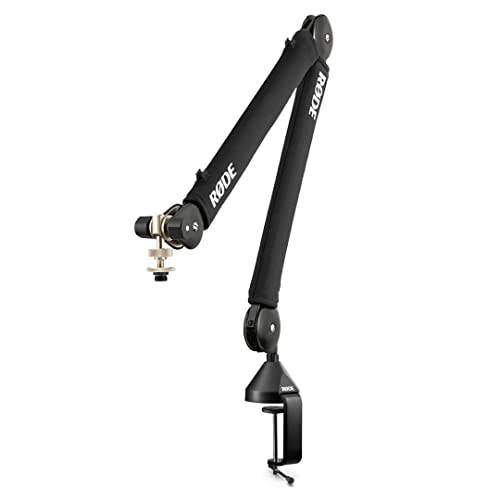
- Spring damping supports quiet mid-recording adjustments
- 360-degree rotation with integrated cable management
- Fits desks up to 70 mm and mics from 0.25 to 1.2 kg
Best For: Quiet podcasting and streaming setups
Best Heavy-Duty Option
ABA01 Low Profile Mic Boom Arm
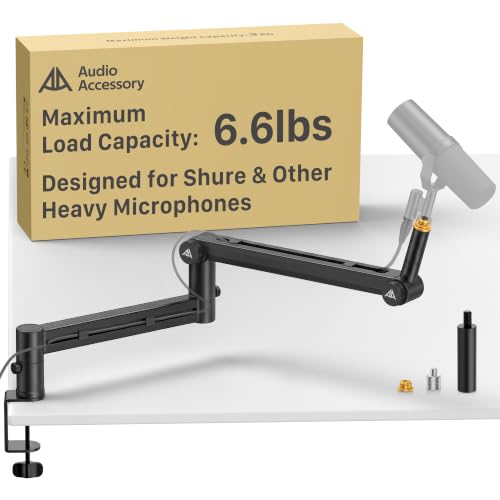
- Supports microphones up to 3 kg
- Gear-lock mechanism is designed to prevent sagging
- 780 mm reach with multi-cable routing channels
Best For: Heavy studio microphones on compact desks
Best Portable Budget Pick
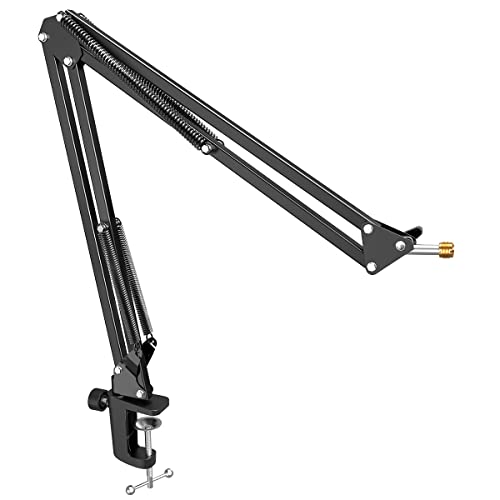
- Folds for easier storage and transport
- Clamp fits desktops up to 2 inches thick
- Includes a 5/8-to-3/8-inch metal adapter
Best For: Beginners and compact portable recording setups
Best Low-Profile Pick

- 3.35-inch low-profile arm
- Magnetic hidden cable channel
- 3.3-pound capacity with adapters
Best For: Minimalist desks and compact streaming stations
Best for Long Reach

- Extends up to 29 inches
- Low profile below monitor level
- Metal build with three thread sizes
Best For: Compact desks needing extended microphone reach
Best Starter Bundle
Amazon Basics 14-Inch Boom Arm

- Includes pop filter and windscreen
- Adjustable tension for standard microphones
- Supports up to 1.5 kg
Best For: Beginner recording setups with standard microphones
QuadCast Desk Clamp Pick

- Dual springs and reinforced knobs help improve stability.
- 3/8-inch to 5/8-inch adapter included.
- Padded clamp fits desks up to 1.89 inches thick.
Best For: Compatible Blue Yeti, HyperX, Fifine, Shure, and Rode microphones
Space-Saving Low-Profile Pick

- Slim arm extends behind a monitor and folds away.
- Cable channel keeps the setup neater.
- 3/8-inch and 5/8-inch threads included.
Best For: Lightweight microphones and compact gaming or streaming desks
Heavy-Duty Adjustable Pick
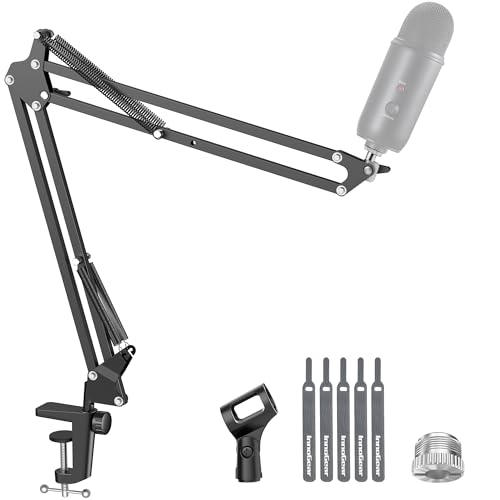
- Supports up to 3.3 pounds or 1.5 kg.
- Multiple joints provide flexible positioning.
- Folds away for compact storage.
Best For: Sturdy small-desk setups using compatible gaming, streaming, or dynamic microphones
Best Low-Profile Stability – Aokeo AK-58i Low Profile Mic Boom Arm
If you need a microphone boom arm for small desk setups, the Aokeo AK-58i stands out with a low-profile shape and a lower center of gravity. It clamps to tables less than 7 cm thick, helps keep the microphone steady, and hides the cable along the arm.
Best For: Gamers, streamers, and podcasters who want a compact, stable arm with minimal visual distraction.
Pros:
- Low-profile design improves stability and stays below the monitor area.
- 360-degree arm rotation and 180-degree vertical adjustment offer flexible positioning.
- Supports up to 2 kg and includes 3/8-to-1/4-inch and 3/8-to-5/8-inch adapters.
- Steel construction and integrated cable routing support long-term desk use.
Cons:
- Only fits tables less than 7 cm thick.
- Microphone and shock mount are not included.
The AK-58i is a practical choice when desk space and screen visibility matter. Its low profile and 2 kg capacity make it especially useful for compact workstations using popular USB or studio microphones.
Best for Quiet Adjustments – RØDE PSA1+ Professional Studio Boom Arm
For a microphone boom arm for small desk spaces, the RØDE PSA1+ combines a desk-friendly clamp with internal spring damping. It fits desks up to 70 mm thick, rotates 360 degrees, and is designed to move quietly during recording.
Best For: Podcasters and streamers who prioritize quiet repositioning, a clean cable setup, and studio-style construction.
Pros:
- Internal spring damping helps reduce creaks and handling noise while moving the arm.
- 360-degree rotation and full extension provide broad positioning flexibility.
- Integrated cable management keeps XLR runs concealed.
- Supports microphones and shock mounts from 0.25 kg to 1.2 kg.
Cons:
- Its 1.2 kg weight limit is lower than some heavy-duty alternatives.
- Fits desks only up to 70 mm thick.
The PSA1+ is a strong fit for recording environments where unwanted arm noise can be distracting. Its weight range covers many common microphones, while the included thread adapters improve compatibility.
Best Heavy-Duty Option – ABA01 Low Profile Mic Boom Arm
If your small desk setup uses a heavier microphone, this microphone boom arm for small desk use offers a reinforced low-profile design with a rated capacity of up to 3 kg. Its gear-lock mechanism is designed to resist sagging, while the 780 mm reach provides generous positioning range.
Best For: Users with heavier microphones such as the Shure SM7B, Shure MV7, or RØDE PodMic who need stable, tool-free adjustment.
Pros:
- Supports up to 3 kg with reinforced aluminum-alloy and glass-fiber nylon arms.
- Gear-lock construction is designed to prevent sagging over time.
- Offers 360-degree horizontal and 120-degree vertical adjustment.
- Extra-long 780 mm reach and deep cable channels accommodate larger setups.
Cons:
- Heavier than several basic boom arms at approximately 1.63 kg.
- The product details do not specify the compatible desk thickness range.
The ABA01 is the most suitable pick here for demanding microphones and users concerned about long-term arm stability. Its low-profile form keeps the footprint practical, but its heavier construction may be more than lightweight USB microphones require.
Best Portable Budget Pick – FIFINE CS1 Scissor Boom Arm
The FIFINE CS1 is a practical microphone boom arm for small desk users who want a foldable, portable stand. Its upgraded clamp fits desktops up to 2 inches thick, while the 180-degree vertical adjustment helps bring the microphone closer for voice recording.
Best For: Beginners, gamers, and mobile creators who need an affordable arm that folds away easily.
Pros:
- Foldable design saves desk space and makes the arm easier to transport.
- Metal clamp includes an anti-scratch pad and fits desktops up to 2 inches thick.
- 180-degree vertical adjustment supports flexible microphone placement.
- Includes a 5/8-to-3/8-inch metal adapter and supports several FIFINE microphones.
Cons:
- Maximum height is listed at 13 inches, limiting reach compared with longer arms.
- It uses spring suspension rather than a heavier-duty locking mechanism.
- Microphone is not included.
The CS1 makes sense for smaller work areas and occasional recording because it can fold down and travel easily. Its clamp and adapter provide useful compatibility, though users with especially heavy microphones may prefer a higher-capacity arm.
Best Low-Profile Pick – InnoGear LP98 Mic Arm
If you need a microphone boom arm for small desk setups, the InnoGear LP98 is designed to stay close to the desktop. Its 3.35-inch-low arm, hidden magnetic cable channel, and broad adjustment range help preserve workspace while keeping a microphone easy to position.
Best For: Minimalist desks, compact streaming stations, and users who want low-profile cable management.
Pros:
- Low-profile design helps free up desk and monitor space.
- Magnetic cable management keeps wires contained and hidden.
- Supports up to 3.3 pounds and includes 3/8-to-5/8-inch and 3/8-to-1/4-inch adapters.
- Offers 360-degree base rotation, 180-degree swivel, and 170-degree tilt.
Cons:
- The clamp fits flat-edged desks up to 2.36 inches thick.
- A shock mount is not included.
Choose this arm when preserving desk space and maintaining a clean appearance matter more than maximum reach. The alloy-steel construction and 3.3-pound capacity also make it suitable for many common microphones, provided the clamp fits your desk.
Best for Long Reach – FIFINE BM88 Low-Profile Arm
The FIFINE BM88 is a practical microphone boom arm for small desk users who still need extra reach. Its low-profile design can extend beneath a monitor, while the metal construction, cable management, and 29-inch extension support gaming, streaming, and recording setups.
Best For: Desks that need a longer reach without placing the arm directly in the monitor’s viewing area.
Pros:
- Low-profile arm can extend below the bottom of a computer screen.
- Metal construction and a C-clamp are designed for stable positioning.
- Extends up to 29 inches with 220-degree vertical and 360-degree horizontal adjustment.
- Includes 1/4-inch, 3/8-inch, and 5/8-inch thread compatibility.
Cons:
- The clamp fits desks from 0.8 to 2.4 inches thick.
- The section nearest the C-clamp cannot adjust vertically.
- The microphone is not included.
The BM88 stands out when a compact desk requires flexible microphone placement across a wider area. Confirm your desk thickness and keep the clamp-side movement limitation in mind when planning the installation.
Best Starter Bundle – Amazon Basics 14-Inch Boom Arm
For a straightforward microphone boom arm for small desk setups, the Amazon Basics 14-inch model includes useful recording accessories in the box. Its desk clamp, adjustable tension, pop filter, and windscreen make it a convenient option for standard microphones and basic recording workflows.
Best For: Standard microphones, beginner recording setups, and buyers who want a pop filter and windscreen included.
Pros:
- Includes a pop filter and windscreen to help reduce plosive sounds and unwanted noise.
- Adjustable tension helps accommodate different microphone weights.
- Supports up to 1.5 kg and includes a mic clip and screw adapter.
- Clamp fits desks up to 2 inches thick.
Cons:
- It is intended for standard microphones; heavier setups may perform differently.
- Fully extended or unevenly loaded positions may require additional tension adjustment.
- Proper clamp tightening is important for stability.
This is a sensible entry-level choice when included audio accessories are more important than a low-profile or extra-long arm. Match the microphone and accessory weight to the arm, then adjust tension after mounting.
QuadCast Desk Clamp Pick – Compact SUNMON Boom Arm
If you need a microphone boom arm for small desk setups, this SUNMON model offers a straightforward clamp-on design with broad microphone compatibility. Its dual suspension springs, adjustable joints, and padded clamp make it a practical choice for gaming, streaming, and voice recording.
Best For: Blue Yeti, HyperX QuadCast, SoloCast, Fifine, and other compatible microphones on desks up to 1.89 inches thick.
Pros:
- Dual suspension springs and reinforced knobs help keep the arm positioned while reducing shaking and sinking.
- Includes a pre-installed 3/8-inch to 5/8-inch adapter for compatibility with many microphones and shock mounts.
- Padded desk clamp helps protect the desktop from scratches.
- Supports microphones up to 1.4 kg according to the supplied specifications.
Cons:
- The clamp only fits desktops up to 1.89 inches thick.
- The microphone and shock mount are not included.
This is a sensible small-desk option if your microphone matches the listed compatibility range and you want a compact clamp arm with an adapter included. Check your desk thickness and microphone thread before ordering.
Space-Saving Low-Profile Pick – TODI Lightweight Mic Arm
For a microphone boom arm for small desk setups, the TODI emphasizes a slim, fold-away design that can stay behind a monitor or be stored close to the desk. Its cable channel, rotating base hinge, and 29-inch extension make it flexible, but it is intended for lightweight microphones rather than heavy studio models.
Best For: Lightweight microphones, gaming, podcasting, and streaming setups where preserving desk space is a priority.
Pros:
- Low-profile arm can extend behind a computer screen and fold away when not in use.
- 360-degree base hinge allows the microphone to be rotated into different positions.
- Built-in cable management helps keep the microphone cable organized.
- Includes both 3/8-inch and 5/8-inch mounting threads and supports up to 3 pounds.
Cons:
- Designed for lightweight microphones and is not recommended for heavy-duty or studio models.
- Not compatible with several listed exceptions, including Blue Yeti ORB, Yeti X, and Shure MV7i.
- Its flat base design differs from a traditional desk-edge clamp.
The TODI is particularly appealing when a clean, unobtrusive workspace matters more than maximum load capacity. Confirm that your microphone is within the lightweight range and does not use one of the excluded connections.
Heavy-Duty Adjustable Pick – InnoGear MU01 Mic Arm
If you want a microphone boom arm for small desk use without giving up load capacity, the InnoGear MU01 combines a fold-away profile with steel construction and strong springs. Its multiple adjustment points make it suitable for positioning a range of dynamic and condenser microphones.
Best For: Users who want a sturdy, repositionable arm for microphones such as Blue Yeti, HyperX, Shure, Fifine, and other listed compatible models.
Pros:
- 360-degree base rotation, 135-degree back-and-forth extension, and multiple adapter movements provide flexible positioning.
- Steel construction and strong springs support up to 3.3 pounds or 1.5 kg.
- Folds away for compact storage when not in use.
- Desk clamp fits squared, flat edges up to 2 inches thick.
Cons:
- The clamp is not intended for slanted or curved desk edges.
- A shock mount is not included.
- The microphone stand itself does not include a microphone.
The MU01 stands out for small desks that still need a stronger support arm and broad positioning range. Measure your desk edge carefully, especially if it is curved or angled, and verify whether your microphone requires a separate shock mount.
How We Picked the Best Microphone Boom Arm for Small Desk
We focused on arms that make sense for limited desktop space, prioritizing compact footprints, useful reach, adjustable positioning, and dependable desk clamps. We also considered load capacity, spring or tension control, mounting hardware, compatibility with common microphones, and features such as cable management or low-profile horizontal movement.
The selection includes budget-friendly choices, gaming-oriented arms, and sturdier models for heavier microphones. Because desk thickness and microphone weight vary, confirm the manufacturer’s specifications before ordering.
Quick Comparison
| Best For | What to Look For |
|---|---|
| Very small desks | Low-profile construction, compact clamp, and short folded depth |
| Heavy microphones | Higher load rating, reinforced joints, and a rigid clamp |
| Gaming and streaming | Smooth positioning, cable routing, and compatibility adapters |
| Lightweight microphones | Simple tension adjustment and easy storage or rotation |
| Budget setups | Standard 3/8-inch or 5/8-inch threading and included accessories |
Key Buying Factors for a Microphone Boom Arm for Small Desk
Desk Footprint and Reach
Measure the available rear or side edge of your desk before buying. A low-profile arm can preserve monitor and keyboard space, but an arm that is too short may not reach your preferred speaking position. Check both the arm’s maximum extension and its folded dimensions.
Weight Capacity and Tension
Match the stated capacity to the complete setup, including the microphone, shock mount, adapter, and any accessories. Leave some margin rather than choosing an arm that operates at its limit. Adjustable tension or spring damping helps prevent sagging and makes repositioning smoother.
Clamp and Desk Protection
A strong clamp matters more than a flashy accessory. Look for a broad contact surface, secure tightening hardware, and padding that protects the desktop. Verify the supported desk thickness, particularly with thick countertops or desks with rear cable trays.
Threading and Microphone Compatibility
Most microphone arms use 3/8-inch or 5/8-inch connections, and many include an adapter. Confirm the thread size and whether your microphone requires a shock mount. USB microphones such as Blue Yeti, HyperX QuadCast, FIFINE, and Elgato models may need the correct mount or adapter.
Movement and Cable Management
For a small desk, horizontal reach and vertical adjustment are especially useful. Cable clips or built-in routing reduce clutter and keep the arm from catching on peripherals. A rotatable or foldable design is helpful if you need to clear the desk after recording.
Who Should Buy Which Microphone Boom Arm for Small Desk?
Choose a low-profile arm if your monitor, speakers, or keyboard leave little room behind the desk. Pick a heavy-duty model if you use a large condenser microphone or a substantial shock mount. Gamers and streamers should prioritize smooth adjustment, reliable tension, and cable management. Lightweight microphones can work well with simpler arms that emphasize portability and easy storage.
Finally, compare the arm’s clamp size, reach, and weight rating with your actual desk and microphone—not just the product headline. Those three checks usually determine whether a compact boom arm feels stable and convenient in daily use.