Turning old prints into organized digital files does not require professional equipment. The best photo scanners under $300 can handle family snapshots, documents, and everyday scanning while fitting comfortably into a home office.
This roundup compares flatbed, feed-through, portable, and photo-focused models so you can choose the right balance of image quality, speed, convenience, and long-term flexibility.
Best 10 Photo Scanners Under 300 Picks for 2026
Fast Photo Digitizer

- Scans 4x6 photos in about 2 seconds at 300 dpi
- Supports common photo sizes plus letter and A4 paper
- Includes up to 600 dpi scanning and enhancement tools
Best For: High-volume scanning of printed photos
Compact Everyday Scanner

- Provides 2400 x 2400 dpi optical resolution
- Auto Scan Mode detects the scanned original
- Handles photos, receipts, business cards, and documents
Best For: Mixed home scanning tasks in a compact setup
Portable Photo Workflow
Plustek Z300 with Carrying Bag
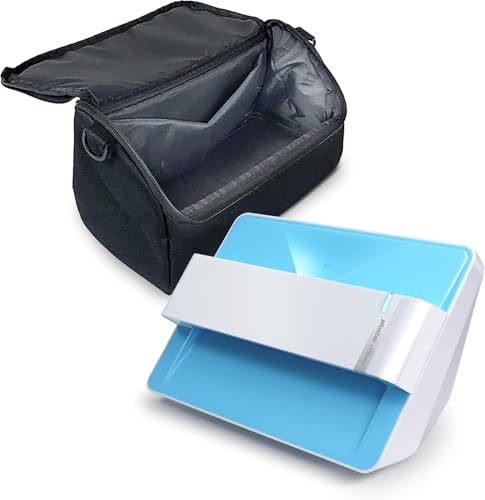
- Includes a carrying bag for storage and transport
- Scans 4x6 photos in about 2 seconds at 300 dpi
- Supports Windows and Mac systems listed in the notes
Best For: Portable, high-volume print scanning
Film and Print Restoration
Epson Perfection V500 Photo Scanner

- Scans photos, slides, negatives, and medium-format film
- Provides up to 6400 resolution and 48-bit color
- Includes Digital ICE and Easy Photo Fix features
Best For: Digitizing and restoring prints and film
Simple SD-Card Scanner
Personal Photo Scanner/Converter

- Scans prints up to 8.5 x 11 inches
- 600 dpi resolution
- Direct SD-card saving without a PC
Best For: Simple, PC-free photo digitizing
Photo-First Editing Bundle
AMBIR Photo Scanner with Cleaning Kit

- Scans sizes from 1 x 1 to panoramic 12-inch photos
- 300 or 600 dpi options
- Includes cleaning tools and photo software
Best For: Mixed-size photo archives and careful restoration
Portable Duplex Workhorse
HP Compact Desktop Duplex Photo Scanner

- 1200 dpi resolution for photos and documents
- 25-sheet auto-feed tray with duplex scanning
- Works with PC and Mac via USB
Best For: Mixed home-office scanning and batch documents
Best Detail on a Budget

- 4800 dpi optical resolution
- Easy Photo Fix restoration
- USB-powered flatbed design
Best For: Detailed photo scans and home document projects
Best for Batch Documents

- Duplex scanning up to 15 ppm
- Wi-Fi Direct connectivity
- Compact 1.3-pound design
Best For: Fast document, receipt, and business-card scanning
Best for Creative Scanning

- 4800 dpi optical resolution
- ScanSmart stitching and cloud tools
- One-click faded-photo restoration
Best For: Artwork, photos, and oversized-image projects
Fast Photo Digitizer – Plustek ePhoto Z300
If you are comparing photo scanners under 300 for a large print collection, the Plustek ePhoto Z300 is designed for straightforward, high-volume scanning. It scans a 4×6 photo in about two seconds at 300 dpi and accepts several common photo sizes, plus letter- and A4-size paper.
Best For: Quickly digitizing batches of standard-size prints with minimal handling.
Pros:
- Fast scanning: approximately two seconds for a 4×6 photo at 300 dpi.
- Supports 3×5, 4×6, 5×7, and 8×10 photos, along with letter and A4 paper.
- Offers up to 600 dpi optical resolution and image-enhancement tools for faded photos.
Cons:
- USB connectivity requires a computer connection.
- Its one-sheet capacity means photos must be inserted individually.
- The supplied minimum system requirement lists Windows 7.
The Z300 prioritizes speed and simple feed-through operation over film scanning or multifunction features. It is a practical choice when your main goal is converting a sizable print collection efficiently.
Compact Everyday Scanner – Canon CanoScan LiDE 300
The Canon CanoScan LiDE 300 is a versatile option among photo scanners under 300, combining photo and document scanning in a slim USB-connected design. Its Auto Scan Mode detects the type of original being scanned, while optical resolution reaches 2400 x 2400 dpi.
Best For: Home users who need one compact scanner for photos, receipts, documents, and business cards.
Pros:
- High 2400 x 2400 dpi optical resolution for detailed scans.
- Auto Scan Mode automatically detects what you are scanning.
- Supports photos, receipts, business cards, and paper documents.
- Compact 1.7-inch-high body uses USB connectivity and 4.5 watts.
Cons:
- It is a flatbed-style scanner with a one-sheet standard capacity.
- USB connection requires a computer.
- The supplied minimum system requirement lists Windows 7.
Choose the LiDE 300 if resolution and general-purpose flexibility matter more than high-speed batch photo feeding. Its Auto Scan Mode can also make routine scanning less hands-on.
Portable Photo Workflow – Plustek Z300 with Carrying Bag
For shoppers seeking photo scanners under 300 with easier storage or transport, this Plustek Z300 bundle adds a carrying bag to the fast photo-scanning design. It supports common print sizes, scans a 4×6 photo in about two seconds at 300 dpi, and works with both Windows and Mac systems listed in the supplied notes.
Best For: Users who want a fast photo scanner that can be carried between rooms, offices, or family projects.
Pros:
- Includes a carrying bag for transport and storage.
- Scans 4×6 photos in about two seconds at 300 dpi.
- Supports 3×5, 4×6, 5×7, and 8×10 photos, plus letter and A4 paper.
- Compatible with Windows 7/8/10/11 and Mac OS X 10.10 through 15.x, according to the notes.
Cons:
- Photos and documents are inserted one at a time.
- USB connectivity means it is not a standalone wireless scanner.
- Scanning is limited to the listed 300 dpi and 600 dpi settings.
This bundle has the same speed-focused workflow as the Z300 while adding a useful carrying solution. It makes the most sense for users who value portability alongside batch print scanning.
Film and Print Restoration – Epson Perfection V500 Photo Scanner
The Epson Perfection V500 stands out among photo scanners under 300 for users who also need to scan film. It supports photos, slides, negatives, and medium-format film, with 6400 resolution, Digital ICE dust and scratch removal, and Easy Photo Fix for restoring faded images.
Best For: Photographers and families digitizing both printed photos and film originals.
Pros:
- Scans slides, negatives, medium-format film, documents, and photos.
- Offers up to 6400 resolution and 48-bit color depth.
- Digital ICE helps remove dust and scratches from images.
- Easy Photo Fix restores faded photos with one touch.
Cons:
- Its listed item weight is 4,000 grams, making it less convenient to move.
- USB connectivity requires a computer connection.
- The supplied minimum system requirement lists Windows 7.
The V500 is the strongest fit here when film support and restoration features are priorities. Its capabilities are broader than a print-only scanner, though the larger, heavier design may be less suitable for occasional portable use.
Simple SD-Card Scanner – Personal Photo Scanner/Converter
For shoppers comparing photo scanners under 300, the Pandigital PANSCN06 is a straightforward option for digitizing prints without keeping a computer connected. It scans photos up to 8.5 x 11 inches at 600 dpi and saves directly to an SD card.
Best For: Users who want simple, PC-free photo scanning and SD-card storage.
Pros:
- Scans photos up to 8.5 x 11 inches.
- Offers 600 dpi resolution for detailed digital copies.
- Includes a five-in-one card reader for SD, MS, MSPRO, MMC, and XD cards.
- Can transfer scans to a digital photo frame or PC.
Cons:
- Its listed minimum system requirement is Windows 7.
- Storage is centered on removable media rather than direct computer transfer.
The PANSCN06 emphasizes convenience over advanced workflow features. Its no-PC operation and broad card-reader support make it practical for occasional home digitizing, especially if you already use SD cards.
Photo-First Editing Bundle – AMBIR Photo Scanner with Cleaning Kit
Among photo scanners under 300, the AMBIR bundle stands out for users who want more than basic capture. It scans several print sizes at 300 or 600 dpi and includes cleaning tools, a protective carrier sheet, and Picture Studio organization and editing features.
Best For: Families and archivists scanning mixed-size prints while cleaning, organizing, and enhancing images.
Pros:
- Handles sizes from 1 x 1-inch photos through panoramic images up to 12 inches.
- Offers 300 and 600 dpi scanning options.
- Includes a blower, microfiber cloth, anti-static brush, and protective carrier sheet.
- Picture Studio supports albums, tags, favorites, notes, and image editing.
Cons:
- Requires a USB connection for power and use.
- Its editing and organization features may be more than needed for occasional basic scans.
AMBIR is a strong fit when photo care and digital organization matter as much as scanning. The two-year warranty and broad size support add useful flexibility for a larger personal archive.
Portable Duplex Workhorse – HP Compact Desktop Duplex Photo Scanner
For buyers seeking photo scanners under 300 that can also handle office work, the HPPS200 combines photo support with an automatic feed tray and duplex scanning. It connects by USB, scans at up to 1200 dpi, and supports Windows and macOS workflows through HP WorkScan.
Best For: Home offices and small businesses that scan photos alongside documents, receipts, cards, and forms.
Pros:
- Scans photos and documents at up to 1200 dpi.
- Automatic feed tray holds up to 25 sheets.
- Duplex scanning captures both sides in one pass at a listed 25 pages per minute.
- Supports paper sizes from 2 x 2.9 inches to 8.5 x 14 inches.
Cons:
- At 3.1 pounds, it is less lightweight than a dedicated compact photo scanner.
- Requires a USB connection and AC wall adapter.
- Its automatic-feed design may be less suited to delicate or unusual photographs than a photo-focused scanner.
The HPPS200 is the most versatile choice here for mixed scanning workloads. Choose it if batch documents and two-sided pages are part of the job; dedicated photo users may prefer a simpler photo-first model.
Best Detail on a Budget – Epson Perfection V19 II
For shoppers comparing photo scanners under 300, the Epson Perfection V19 II is a straightforward flatbed option focused on detailed image capture. Its 4800 dpi optical resolution, one-touch controls, and USB-powered design suit home photo projects and everyday documents.
Best For: Digitizing photos, artwork, and letter-size documents when image detail and simple operation matter most.
Pros:
- 4800 dpi optical resolution for clear, detailed photo scans.
- Easy Photo Fix technology helps restore color to faded photos.
- One-touch buttons and scans of letter-size documents in as quickly as 10 seconds.
- Removable high-rise lid accommodates books and thicker materials.
Cons:
- USB connection only; no wireless connectivity is listed.
- Flatbed scanning requires placing originals individually.
The V19 II is a good fit for memory preservation and occasional home or office scanning. Choose it over a feeder-style model when photo quality and flatbed versatility are higher priorities than batch processing.
Best for Batch Documents – HP PS150 USB Photo Scanner
Among photo scanners under 300, the HP PS150 stands out for users who also need fast document handling. It combines duplex scanning at up to 15 pages per minute with Wi-Fi Direct, compact portability, and software features for organizing mixed-size originals.
Best For: Home offices, remote work, and users scanning documents, receipts, business cards, and occasional photos.
Pros:
- Duplex scanning reaches up to 15 pages per minute.
- Wi-Fi Direct connects directly to a computer without a router or internet.
- HP WorkScan software offers auto-scan, size detection, and image optimization.
- Handles originals from 2 x 2.9 inches to 8.5 x 14 inches and weighs 1.3 pounds.
Cons:
- Its listed resolution is 300 dpi, lower than the Epson flatbed models here.
- The supplied specifications identify it as a document scanner rather than a dedicated flatbed photo scanner.
The PS150 is the practical choice when scanning speed, wireless convenience, and document workflow are more important than maximum photo resolution. It is especially useful for mixed paperwork in a compact setup.
Best for Creative Scanning – Epson Perfection V39 II
For buyers seeking photo scanners under 300 with extra workflow flexibility, the Epson Perfection V39 II offers a flatbed design with 4800 dpi optical resolution and Epson ScanSmart features. It can scan photos, artwork, books, and documents, while stitching oversized images and sending scans to cloud storage.
Best For: Photo restoration, artwork digitization, and home users who want cloud and oversized-image scanning features.
Pros:
- 4800 dpi optical resolution supports detailed photo enlargements.
- Epson ScanSmart can stitch oversized images and send scans to cloud services.
- Easy Photo Fix restores color to faded photos with one click.
- One-touch controls and a removable high-rise lid add convenience.
Cons:
- USB-powered with no wireless connection listed.
- Flatbed operation is better suited to individual originals than high-volume batches.
The V39 II is a strong all-purpose flatbed for creative projects and family photo archiving. Its ScanSmart tools give it an edge over a basic flatbed when oversized artwork or cloud-based organization is part of the workflow.
How We Picked the Best Photo Scanners Under 300
We focused on scanners that offer practical value for home users, hobbyists, and small offices. Our comparison considers optical resolution, scanning speed, paper and photo handling, software features, connectivity, size, and ease of use. We also included different scanner designs because a high-resolution flatbed is better for delicate or varied originals, while a feed-through model may be faster for large batches.
Because advertised specifications do not tell the whole story, we also considered workflow: how easily each type of scanner can be set up, whether it supports automatic scanning features, and how useful it is beyond a single photo project.
Quick Comparison
| Scanner type | Best for | Main advantage | Potential trade-off |
|---|---|---|---|
| Photo-focused scanner | Stacks of standard prints | Fast, simple photo workflows | May be less versatile for documents |
| Flatbed scanner | Prints, artwork, books, and fragile originals | Flexible handling and strong image quality | Usually scans one item at a time |
| Portable or sheet-fed scanner | Documents and mobile use | Compact design and faster paper handling | Less suitable for irregular originals |
Key Buying Factors for Photo Scanners Under $300
Resolution and Image Quality
Look for optical resolution rather than an interpolated maximum. Around 600 dpi is generally sufficient for ordinary photo preservation, while 1200 dpi or higher can help when cropping, enlarging, or capturing fine artwork details. Higher resolution also creates larger files, so storage and processing time matter.
Photo Handling and Speed
If you are digitizing hundreds of 4-by-6-inch prints, a dedicated photo scanner can save substantial time. Flatbeds are slower but handle photos of different sizes, thick originals, pages from books, and delicate materials more safely. Automatic document feeders are useful for paperwork, but check whether the design is appropriate for loose or valuable photographs.
Software, File Formats, and Connectivity
Automatic cropping, color restoration, dust removal, PDF creation, and searchable-document support can make a bigger difference than headline resolution. Confirm that the scanner works with your operating system and saves to the formats you need, such as JPEG for photos and PDF for documents. USB models are usually straightforward, while wireless features can simplify use across multiple devices.
Size and Ongoing Workflow
Measure your desk before buying, especially for a full flatbed. Also consider whether the scanner has a dependable lid, easy-to-clean glass, replaceable accessories, and software you will still want to use after the initial photo project.
Who Should Buy Which Photo Scanners Under 300?
Choose a photo-focused model if your priority is quickly digitizing a large collection of standard prints. Pick a high-resolution flatbed if you need the greatest versatility for photos, artwork, books, negatives, or unusual originals. A compact portable scanner makes sense for limited desk space, travel, or occasional scanning, while a duplex or auto-feed model is better for buyers who scan documents as often as photos.
Before ordering, decide whether speed or flexibility matters more, check the included software and accessories, and verify compatibility with your computer. The best choice among these photo scanners under $300 is the one that matches the materials you scan most often—not necessarily the model with the highest advertised resolution.