The best Bible journals for children make faith practice approachable through age-appropriate prompts, Scripture, prayer, drawing, and reflection. The right format can help a child build a consistent habit without making quiet time feel like homework.
We compared these 10 options by activity style, writing space, age fit, guidance, and everyday usability so parents, caregivers, and gift-givers can choose with confidence.
Best 10 Bible Journals for Children Picks for 2026
Best First Faith Journal
My First Prayer and Gratitude Journal

- Daily prayers and Bible verses
- Builds gratitude habits
- Ages 8–12; 80 pages
Best For: Children beginning a regular prayer and gratitude practice
Best Creative Starter Journal

- Faith-and-feelings prompts
- Includes stickers and stacking crayon
- Designed for ages 6–9
Best For: Creative children who enjoy drawing and interactive activities
Best Doodling Devotional

- 60 Old and New Testament devotions
- Thick paper for art supplies
- Includes response spaces
Best For: Children who combine Bible learning with doodling
Best Guided Quiet-Time Journal
My Walk With God Bible Journal
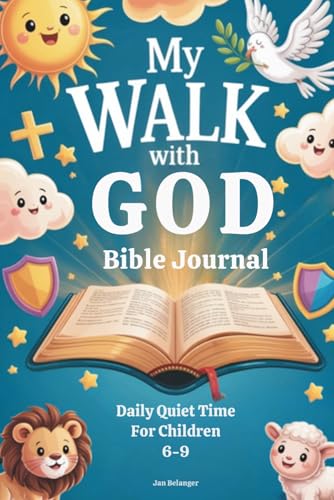
- Prompts for reading, prayer, and reflection
- Drawing box on every page
- 156 pages for extended daily use
Best For: Children building a consistent Bible and prayer routine
Best Guided Prayer Journal

- Daily prompts for praise, requests, and thanks
- Scripture encouragements and answered-prayer sections
- 174 pages for ages 6–12
Best For: Children building a daily prayer habit
Best Simple Bible Study Journal
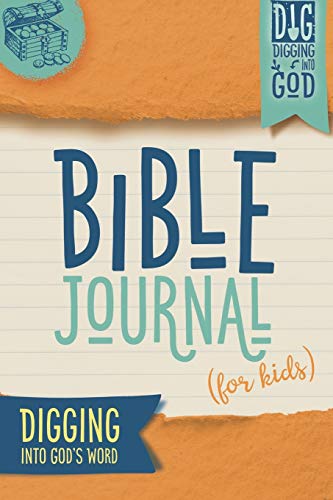
- Designed for ages 8–12
- Write, draw, and pray through selected verses
- Supports 5–10 minute daily study sessions
Best For: Kids starting independent Bible study
Best All-in-One Journal Bible
CSB Journal and Draw Bible for Kids

- Complete CSB Bible with two-inch journaling margins
- Nearly 200 coloring illustrations and 260 devotions
- Includes activities, Q&A, dictionary, and concordance
Best For: Kids wanting a Bible and creative journal in one
Best Interactive Pick
Sunday Scribbles Creative Journal

- 52 weekly spreads for church or Sunday school
- Combines writing, drawing, coloring, and games
- Includes kid-friendly faith reference tools
Best For: Children ages 7–11 who need guided activities during Bible lessons
Best Simple Lined Notebook

- 134 blank lined pages for flexible use
- 6-by-9-inch softcover notebook
- Useful for Bible study, notes, and doodling
Best For: Kids or students who prefer an open-ended lined journal
Best Spiral Format
God Say I Am Construction Notebook

- Portable 5.5-by-8.3-inch format
- Spiral binding and hardcover design
- 164 pages for notes, sketches, and reflections
Best For: Kids wanting a portable construction-themed notebook with flexible use
Best First Faith Journal – My First Prayer and Gratitude Journal
My First Prayer and Gratitude Journal: Daily Blessings and Bible Verses for Kids
Check Price On AmazonFor families seeking bible journals for children ages 8 to 12, My First Prayer and Gratitude Journal offers a simple introduction to devotional journaling. Daily prayers, Bible verses, and gratitude-focused prompts help children connect faith with everyday blessings.
Best For: Children beginning a regular prayer and gratitude practice.
Pros:
- Includes devotional prayers and daily Bible verses.
- Encourages children to recognize and record blessings.
- Designed for ages 8 to 12, with 80 pages for a manageable first journal.
Cons:
- Its focus is prayer and gratitude rather than extensive drawing or open-ended activities.
- The 80-page format may provide less long-term use than larger guided journals.
This is a focused option for parents who want a straightforward faith journal with built-in devotional content instead of a highly interactive activity book.
Best Creative Starter Journal – God Made Me Journal
Among bible journals for children, God Made Me Journal stands out for its bright, hands-on format. Creative prompts, artwork, stickers, and a stacking crayon give younger children multiple ways to explore their faith, feelings, ideas, and doodles.
Best For: Creative children ages 6 to 9 who enjoy drawing, stickers, and interactive activities.
Pros:
- Combines faith-and-feelings prompts with artwork.
- Includes 12 pages of stickers, a page of puffy stickers, and a multicolor stacking crayon.
- Its 84-page format is sized for younger children.
Cons:
- It may be less suitable for children who want a traditional writing-focused journal.
- The included craft supplies can be easier to lose than built-in activities.
This is a strong pick when engagement matters most and the child is likely to respond better to colorful, tactile activities than extended written reflections.
Best Doodling Devotional – Doodle Devotions for Kids
Doodle Devotions for Kids is a flexible choice for families comparing bible journals for children ages 6 to 10. Its 60 devotions cover stories and lessons from both the Old and New Testaments, while response spaces and thick paper invite children to write, draw, or color.
Best For: Children who learn best by combining Bible reading with doodling and creative responses.
Pros:
- Provides 60 devotional topics from across the Bible.
- Every devotional includes space to record a response.
- Thick paper accommodates colored pencils, crayons, and markers.
- Includes fun illustrations and a flexcover format.
Cons:
- It is organized as devotions rather than a dated daily journal.
- The one-color interior may be less visually bright than some children’s activity journals.
Choose this book when creative interaction with Bible stories is more important than following a fixed daily journaling schedule.
Best Guided Quiet-Time Journal – My Walk With God Bible Journal
For parents looking for bible journals for children ages 6 to 9, My Walk With God Bible Journal provides a repeatable structure for daily quiet time. Each guided entry includes space for Bible reading, prayer, a favorite verse, reflection, and a drawing related to the lesson.
Best For: Children building a consistent daily Bible and prayer routine at home, church, or in homeschool settings.
Pros:
- Each page includes prompts for Bible reading, prayer, a favorite verse, and reflection.
- A drawing box supports visual learners and creative responses.
- Includes an encouraging Scripture verse on every page.
- With 156 journal pages, it can support more than five months of daily use.
Cons:
- The guided format may feel restrictive for children who prefer completely open-ended journaling.
- It is currently listed as an independently published title with a January 2026 publication date.
This is the most structured option in the group, making it especially practical for families that want a clear, repeatable routine rather than occasional devotional activities.
Best Guided Prayer Journal – Prayer Journal for Kids
Prayer Journal for Kids: A Guided Christian Journal to Encourage Children to Pray and Grow in Faith
Check Price On AmazonFor families comparing bible journals for children, this guided prayer journal is a practical choice for building a consistent prayer routine. Its simple prompts, Scripture encouragements, and flexible space for writing or drawing are designed for children ages 6–12.
Best For: Kids who are learning to pray through daily praise, requests, gratitude, and reflection.
Pros:
- Guided prompts make it easier for children to know what to write or pray.
- Includes Scripture verses, answered-prayer sections, and prayers for different situations.
- At 174 pages, it can support daily use, reflection, or bedtime routines.
Cons:
- It focuses on prayer rather than providing a complete Bible text for reading.
- The listed publication date is November 4, 2025.
This is a strong fit when the main goal is helping a child develop confidence and consistency in prayer. The structured format still leaves room for personal expression through writing or drawing.
Best Simple Bible Study Journal – Digging Into God's Word
Among bible journals for children, the D.I.G. Bible Journal stands out for its straightforward approach to reading selected verses and responding. It gives children ages 8–12 open space to write, draw, and pray while learning to spend about 5–10 minutes with the Bible.
Best For: Children beginning independent Bible study, family devotionals, or Sunday School use.
Pros:
- Works with the Bible book or verses the child chooses.
- Uncluttered pages provide dedicated space to write, draw, and pray.
- The short daily format encourages consistency without an overly time-consuming routine.
Cons:
- It contains 60 journal pages rather than a full Bible text.
- Children may need initial instruction from a parent or teacher on how to use it.
This journal is a useful teaching tool for families who want to make Bible reading feel manageable. Its flexible, open-ended design supports gradual independence without requiring a lengthy study session.
Best All-in-One Journal Bible – CSB Journal and Draw Bible for Kids
For shoppers seeking bible journals for children that combine Scripture reading, creativity, and activities, the CSB Journal and Draw Bible for Kids offers a comprehensive option. It includes the complete CSB Bible text alongside wide journaling margins, coloring illustrations, devotions, and activity pages.
Best For: Kids ages 6–12 who want a full Bible with room to draw, journal, color, and learn.
Pros:
- Includes two-inch lined margins for notes, journaling, and personal creativity.
- Features nearly 200 line-art illustrations, 260 devotions, and 100 activity pages.
- Offers kid-friendly tools such as Big Picture Q&A, a dictionary, concordance, and ribbon marker.
- Durable Smyth-sewn, lay-flat binding supports regular use.
Cons:
- At 3.52 pounds and 1,442 pages, it is substantially larger and heavier than a journal-only book.
- The wide range of features may be more than children seeking a simple writing journal need.
This is the most complete option in the group for children who need the Bible text and creative engagement in one volume. Its readable CSB text and extensive extras make it suitable for ongoing study, though less portable than a slim journal.
Best Interactive Pick – Sunday Scribbles Creative Journal
For families looking for bible journals for children that actively engage kids during church or Sunday school, Sunday Scribbles offers a structured, screen-free format for ages 7–11. Its 52-week design combines writing, drawing, coloring, reflection, and listening activities to help children follow along and remember Bible lessons.
Best For: Children ages 7–11 who benefit from varied activities during sermons or children’s ministry.
Pros:
- Includes a full year of weekly journal spreads.
- Uses five rotating layouts for different learning styles.
- Adds practical faith-building resources, including a glossary, Bible book themes, prayer guidance, and a Bible map.
- Provides space for sermon notes, reflections, worship songs, and Bible verse art.
Cons:
- Its church-focused activities may be less suitable for children seeking a completely open-ended notebook.
- The recommended reading age is limited to ages 7–11.
With its guided weekly format and range of activities, this is the most feature-rich option for keeping children engaged while helping them reflect on spiritual lessons throughout the year.
Best Simple Lined Notebook – I Am a Child of God Journal
This lined notebook is a straightforward choice among bible journals for children, offering blank pages for Bible study, note-taking, doodling, and recording ideas. Its 6-by-9-inch softcover format and Christian quote cover make it suitable for children, students, or anyone who prefers an uncluttered journal.
Best For: Kids and students who want flexible lined pages for Bible study, writing, or sketches.
Pros:
- Provides 134 blank lined pages for flexible use.
- 6-by-9-inch size offers room for notes while remaining easy to handle.
- Matte-laminated soft cover is designed for durability.
- Christian quote cover gives it a faith-oriented presentation for gifting.
Cons:
- Does not include guided prompts, activities, or Bible-study reference material.
- Its lined format may be less suitable for children who prefer drawing or interactive pages.
This is a practical, open-ended option when the priority is writing space rather than structured devotional activities or age-specific prompts.
Best Spiral Format – God Say I Am Construction Notebook
For shoppers seeking bible journals for children with a compact, durable format, this Christian construction-themed notebook provides space for notes, reflections, sketching, and Bible verse study. Its 5.5-by-8.3-inch size, spiral binding, and hardcover design make it convenient for writing on the go.
Best For: Kids who like construction-themed designs and need a portable notebook for journaling or study notes.
Pros:
- Compact 5.5-by-8.3-inch size is easy to carry.
- Spiral binding allows pages to lay flat or fold back.
- Hardcover helps support writing away from a desk.
- Offers 164 pages for journaling, sketching, lists, or study notes.
Cons:
- The supplied details do not specify a recommended age range.
- It is described as a general-use notebook, so it may not provide guided Bible-journal prompts.
- Binding is listed as unknown in the product details.
This notebook suits children who value portability and a sturdy format, especially if they want freedom to combine Bible study with drawing and everyday writing.
How We Picked the Best Bible Journals for Children
We looked for journals that give children a clear, engaging way to connect with biblical ideas. Our comparison considered the amount of guidance, reading and writing demands, creative activities, page layout, portability, and suitability for independent or shared use. Because children develop at different rates, we also considered whether each format works best for early writers, elementary-age children, older readers, or a broad age range.
The selection includes guided prayer and gratitude journals, devotional workbooks, creative weekly journals, lined notebooks, and a full journal Bible with dedicated drawing space. This variety matters: some children respond to structured prompts, while others prefer open-ended drawing or writing.
Quick Comparison
| Journal style | Best for | What to look for |
|---|---|---|
| Prayer and gratitude | Building a daily reflection habit | Simple prompts and enough writing space |
| Guided devotional | Learning Scripture concepts | Age-appropriate explanations and activities |
| Creative journal | Children who enjoy drawing | Illustrations, open space, and varied prompts |
| Journal Bible | Older children studying Scripture | Readable text, wide margins, and durable binding |
| Blank lined notebook | Flexible notes and affirmations | Paper quality, page count, and portability |
Key Buying Factors for Bible Journals for Children
Age and Reading Level
Check whether the wording, prompt length, and writing requirements match the child. Younger children may need short questions, tracing-style activities, or adult support, while independent readers may prefer devotional lessons and more room for written responses.
Activity Format
Choose a format that matches the child’s interests. Prayer and gratitude prompts encourage routine, drawing pages support visual expression, and guided Bible studies provide more structure. A blank notebook offers flexibility but may require an adult to supply ideas.
Writing and Drawing Space
Look beyond the cover. Children need enough room for large handwriting, sketches, stickers, or coloring. A cramped layout can make a journal frustrating, especially for younger users.
Durability and Portability
For church bags, travel, or frequent handling, consider a sturdy cover and binding. A journal Bible may be heavier, while a spiral or softcover notebook can be easier to open and carry.
Faith Tradition and Supervision
Review the translation, wording, and devotional approach before buying. Some journals are designed for independent use; others work better as conversation starters for family worship, church classes, or bedtime routines.
Who Should Buy Which Bible Journals for Children?
Choose a prayer or gratitude journal for a child who benefits from a predictable daily routine. Pick a guided devotional for children who want short lessons paired with questions or activities. Creative journals are a strong fit for artistic children who engage more readily through drawing and visual prompts.
For older elementary readers ready to work directly with Scripture, a journal Bible with wide margins can support longer-term study. A lined Christian notebook is the most flexible choice for affirmations, sermon notes, prayers, or personal reflections. If you are unsure, prioritize age fit and the child’s preferred way of expressing ideas; a simple journal they will actually use is better than a more advanced option left untouched.