Finding reliable DMX control on a limited budget is easier when you first decide how many fixtures, channels, and control methods your setup actually needs. The options in this roundup cover compact consoles, USB interfaces, standalone controllers, decoders, and wireless DMX systems.
Use the guide below to compare control capacity, software compatibility, wireless range, fixture support, and setup complexity before choosing among these DMX controllers under $100.
Best 10 Dmx Controllers Under 100 Picks for 2026
Best Full-Featured Pick
192-Channel DMX Stage Lighting Console

- Controls up to 12 fixtures and 240 scenes
- Programs scenes with adjustable step timing
- Offers 3-pin DMX output and voice control
Best For: Standalone show programming and varied stage-lighting setups
Best Software Interface
SoundSwitch Micro DMX Interface

- Compact USB-to-DMX interface for one universe
- Supports audio BPM detection and scripted shows
- Includes a three-month SoundSwitch subscription
Best For: Computer-based DJ lighting and portable setups
Best Wireless Option
JERRAY Wireless DMX512 Controller

- Transmits DMX512 wirelessly over 2.4GHz
- LCD displays transmit, receive, and power status
- Includes DMX input and output ports
Best For: Wireless stage, DJ, disco, and party lighting
Best Entry-Level USB Pick
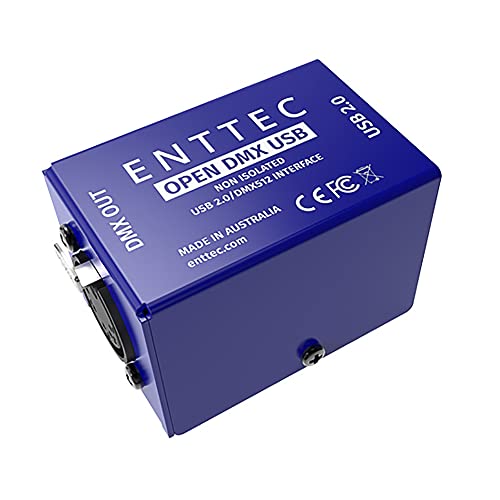
- Controls DMX lighting from a PC or laptop
- Compatible with a wide range of software
- Compact, lightweight design with 5-pin output
Best For: Beginners building a computer-based DMX setup
High-Capacity Decoder
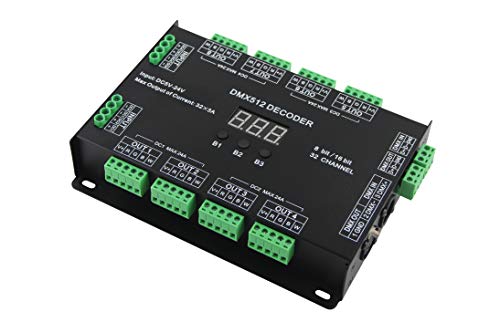
- 32 output channels with 8/16-bit operation
- DC 5–24V automatic voltage adaptation
- Power-loss memory and wiring protection
Best For: RGBW/RGB LED installations needing high-channel dimming
Cable-Free Setup
Wireless DMX 2.4G Transmitter and Receivers

- One transmitter and two receivers included
- Seven group IDs for separate lighting rigs
- 126-channel frequency hopping and up to 1,000-foot range
Best For: Mobile events needing wireless DMX links
Compact Scene Control
Mini 54-Channel DMX Controller

- 54 channels with nine programmable programs
- Stores up to 50 scenes per program
- Portable design with standard 3-pin DMX output
Best For: Small lighting rigs needing portable scene programming
Feature-Rich Pick

- 37 backlit silicone buttons and 4 rotary encoders
- Supports up to 4 universes
- Four output sockets in a compact design
Best For: Hands-on, multi-universe lighting control
Wireless Range Pick
2.4G DMX Transmitter and Receivers

- One transmitter with three receivers
- 126-channel frequency hopping
- Up to 400 meters in visible-distance conditions
Best For: Wireless DMX links for stage and party lighting
Adjustable Wireless Pick

- LCD display with adjustable power output
- 126-channel frequency hopping
- 16 wireless ID groups
Best For: Mobile DJ and party-lighting setups
Best Full-Featured Pick – 192-Channel DMX Stage Lighting Console
For shoppers comparing DMX controllers under 100, this 192-channel console is a practical choice when you want hands-on programming without relying on a computer. It controls up to 12 fixtures with up to 16 channels each and supports up to 240 scenes.
Best For: DJs, small venues, parties, weddings, churches, and users who want extensive scene programming with voice control.
Pros:
- Controls up to 12 intelligent lights and 240 scenes
- Supports up to 40 steps per scene with adjustable timing
- Includes 3-pin DMX512 output and voice-control functionality
- Organized controls are approachable for amateur users
Cons:
- The console has a larger, more hands-on workflow than a compact USB interface
- Its feature set may be more than needed for very basic lighting setups
This is the strongest option here for users who need standalone control and detailed scene creation. Its physical controls and broad fixture support make it more suitable for active show programming than simple software-based operation.
Best Software Interface – SoundSwitch Micro DMX Interface
Among DMX controllers under 100, the SoundSwitch Micro DMX Interface stands out for users who want a compact computer-based setup. It connects by USB to DMX equipment and supports one DMX universe through SoundSwitch lighting software.
Best For: DJs and performers who want software-driven lighting shows, audio synchronization, and a highly portable interface.
Pros:
- Ultra-compact USB-to-DMX design
- Supports live audio BPM detection from multiple audio sources
- Works with SoundSwitch and compatible AlphaTheta setups
- Includes a three-month SoundSwitch subscription
Cons:
- Requires a computer and SoundSwitch software for its primary workflow
- Supports one DMX universe
- Subscription fees apply after the included trial period
This interface is best when portability and automated, music-synced lighting matter more than onboard controls. It is a focused bridge between a computer and DMX fixtures rather than a standalone lighting console.
Best Wireless Option – JERRAY Wireless DMX512 Controller
If you are comparing DMX controllers under 100 and want to reduce cable runs, the JERRAY DMX512 Wireless Controller offers 2.4GHz wireless transmission between compatible transmitter and receiver units. Its LCD provides basic connection and power-status information.
Best For: DJs, parties, discos, and stage setups that need wireless DMX transmission between lighting equipment.
Pros:
- Uses 2.4GHz wireless DMX512 communication
- LCD shows transmit, receive, and power status
- Includes DMX input and output ports
- Provides adjustable power and identification controls
Cons:
- Requires compatible transmitter and receiver units for wireless operation
- Needs a DC 5V power input with at least 300mA
- The supplied notes do not specify fixture capacity or scene-programming features
This model makes the most sense for users prioritizing wireless connectivity and straightforward status monitoring. Check that your existing fixtures and wireless units match its DMX setup before buying.
Best Entry-Level USB Pick – Enttec Open DMX USB Interface
Enttec Open DMX USB 70303 Lighting Interface - Open Source/Hardware Only - Entry Level Model
Check Price On AmazonFor buyers seeking DMX controllers under 100, the Enttec Open DMX USB is a compact entry-level interface for controlling lights from a PC or laptop. It uses a USB connection and provides 5-pin DMX output for software-based operation.
Best For: Beginners and computer-based lighting users who need a small, lightweight interface compatible with a range of software.
Pros:
- Works with a wide range of lighting software
- Small and lightweight design for easy transport
- Supports PC or laptop control through USB
- Offers 5-pin DMX output
Cons:
- Requires a computer and lighting software
- Designed as an entry-level, hardware-only model
- Does not provide onboard console controls or stated scene capacity
This is a sensible low-complexity starting point for software-controlled DMX lighting. Its small aluminum housing suits portable setups, but users wanting standalone programming should consider a dedicated console instead.
High-Capacity Decoder – 32-Channel RGBW DMX Dimmer
For shoppers comparing dmx controllers under 100, this decoder is built for RGBW and RGB LED installations that need many output channels. It accepts standard DMX512 input, supports DC 5–24V systems, and provides 32 channels with linear, flicker-free dimming.
Best For: RGBW or RGB LED projects requiring a compact, high-current DMX decoder.
Pros:
- Automatically adapts to DC 5–24V input voltages.
- Provides 32-channel output with 8-bit or 16-bit operation.
- Includes power-loss memory and DMX-port incorrect-wiring protection.
- Offers 14 color-changing modes and 10 speeds for test operation.
Cons:
- Designed as a decoder/dimmer rather than a standalone scene-programming console.
- Its 96A current rating may require careful installation planning and suitable wiring.
The three-digit display, DMX signal indicator, and broad voltage compatibility make this a practical choice for fixed LED control setups. Confirm your LED load, wiring, and power requirements before installation.
Cable-Free Setup – Wireless DMX 2.4G Transmitter and Receivers
Among dmx controllers under 100, this wireless set focuses on reducing cable runs between compatible lighting equipment. It includes one transmitter, two receivers, power adapters, seven group IDs, and 2.4G frequency hopping intended for stable, delay-free communication.
Best For: Mobile DJs, weddings, parties, and stage setups that need quick wireless DMX deployment.
Pros:
- Includes one transmitter, two receivers, and three power adapters.
- Supports seven independent groups for separating lighting rigs.
- Uses 126-channel automatic frequency hopping for anti-interference operation.
- Offers a stated range of up to 1,000 feet.
Cons:
- Requires power adapters; the units do not have built-in batteries.
- It is a wireless DMX link rather than a programming console with onboard scene controls.
This set can simplify temporary installations by replacing some XLR cable runs, especially when multiple fixtures need separate group control. Check compatibility with your existing DMX equipment and plan for power at every unit.
Compact Scene Control – Mini 54-Channel DMX Controller
For buyers seeking dmx controllers under 100 with basic programming features, this palm-sized 54-channel console offers a straightforward wired control option. It supports nine programs, with up to 50 scenes saved in each program, and connects through a standard 3-pin DMX output.
Best For: DJs and small stage or LED-lighting systems needing portable scene programming.
Pros:
- Provides 54 channels with nine programs and up to 50 scenes per program.
- Compact, palm-sized design is easy to carry.
- Standard 3-pin DMX output connects to compatible lighting equipment.
- Computer memory function helps retain programmed settings.
Cons:
- Requires a 9–12V DC power supply.
- Its six controls and nine-program layout are intended for simpler setups rather than advanced consoles.
This controller is a practical fit when portability and scene storage matter more than extensive console features. Its wired 3-pin output and programmable memory make it suitable for compact lighting rigs with compatible fixtures.
Feature-Rich Pick – ADJ WMX1 Mk2 DMX Controller
For shoppers comparing DMX controllers under 100, the ADJ WMX1 Mk2 stands out as a standalone control surface with hands-on buttons and rotary encoders. It supports up to four universes and provides four output sockets, making it a substantial option for more involved lighting setups.
Best For: Users who want a standalone controller with tactile controls and multi-universe capability.
Pros:
- Includes 37 backlit silicone buttons for visible hands-on operation.
- Four rotary encoders provide additional control inputs.
- Supports up to four universes and has four output sockets.
- Compact 10 x 9.25 x 3.5-inch design weighs 2.36 pounds.
Cons:
- The supplied notes do not specify included lighting presets or fixture compatibility.
- Its multi-universe feature set may be more than needed for a basic setup.
The WMX1 Mk2 is the strongest fit here for buyers prioritizing physical controls and expansion potential. Confirm your required connections and fixture setup before purchasing.
Wireless Range Pick – 2.4G DMX Transmitter and Receivers
Among DMX controllers under 100, this kit is aimed at removing cable runs between a console and compatible lighting equipment. It includes one transmitter and three receivers, using standard DMX512 data over a 2.4G connection with a stated visible-distance range of up to 400 meters.
Best For: Stage, party, and DJ setups that need wireless DMX links across multiple fixtures.
Pros:
- Includes one transmitter and three receivers.
- Uses standard DMX512 protocol data wirelessly.
- Offers automatic frequency hopping across 126 channels.
- Seven selectable ID groups can support separate wireless networks.
Cons:
- The stated 400-meter distance is based on visible-distance conditions.
- This is a wireless transmitter/receiver kit rather than a full lighting console.
- The supplied notes do not specify battery or power details.
This kit makes the most sense when wireless distribution is the priority. Its transmitter-and-three-receiver configuration can simplify multi-light installations, provided your equipment uses compatible three-pin DMX connections.
Adjustable Wireless Pick – Lixada 2.4G DMX Controller
For buyers seeking DMX controllers under 100 with wireless flexibility, the Lixada DMX 512 controller combines transmitter and receiver functions with an LCD display. It supports adjustable power output, automatic frequency selection, and wireless DMX512 transmission for disco, DJ, party, and stage lighting.
Best For: Mobile DJs and party-lighting users who want adjustable wireless signal settings.
Pros:
- Includes an LCD display and adjustable wireless control features.
- Uses 126-channel automatic frequency hopping to reduce interference.
- Provides 16 selectable ID coding groups.
- Offers four power-rate output options and real-time DMX512 transmission.
Cons:
- The supplied notes do not specify the wireless range.
- Its compact package dimensions may indicate a small control interface.
- The notes do not identify the included connector configuration.
The Lixada is a practical choice when wireless operation and adjustable output matter more than a large bank of physical console controls. Check connector and range requirements against your fixtures before ordering.
How We Picked the Best Dmx Controllers Under 100
We selected models across the main budget DMX categories rather than treating every controller as interchangeable. The list includes traditional fader consoles for manual operation, USB interfaces for computer-based lighting software, standalone units for portable rigs, RGBW decoders for low-voltage LED installations, and wireless transmitter-and-receiver kits for stages where cable runs are inconvenient.
Our comparison focuses on channel count, fixture compatibility, connection type, wireless functionality, software requirements, and practical use. Because prices and included accessories can change, verify the current listing for cables, power supplies, receivers, software support, and return coverage before ordering.
Quick Comparison
| Controller type | Best suited to | Main advantage | Potential limitation |
|---|---|---|---|
| Compact DMX console | Simple DJ and stage rigs | Hands-on fader control | Limited scenes or fixture depth |
| USB DMX interface | Computer-based programming | Flexible software control | Requires a compatible computer and software |
| Wireless DMX kit | Temporary or cable-free setups | Faster fixture deployment | Needs compatible transmitters and receivers |
| LED decoder | RGB/RGBW low-voltage lighting | Direct dimming and color control | Not a general-purpose stage console |
| Standalone controller | Portable independent operation | No computer required | May offer fewer advanced programming tools |
Key Buying Factors for Dmx Controllers Under 100
Channel Count and Fixture Demands
Channel count determines how much of your lighting system can be controlled at once. A small LED setup may work well with a 54- or 192-channel console, while moving heads and fixtures with many attributes require more careful channel planning. Count each fixture’s DMX channels and leave room for future additions.
Control Method
Fader consoles are straightforward for live manual changes. USB interfaces are better when you want scenes, timelines, effects, or software automation. Standalone controllers sit between those approaches, offering programmable control without tying the rig to a computer.
Wired Versus Wireless DMX
Wireless systems can reduce cable clutter and speed up setup, but they still need dependable power and compatible endpoints. Check whether a product includes one transmitter, multiple receivers, repeater functionality, or only an interface. For critical events, wired DMX may remain the safer primary link.
Fixture and Voltage Compatibility
Confirm the controller’s signal format and connector type, then check fixture profiles and addressing requirements. RGBW decoders are designed for compatible low-voltage LED loads and should not be confused with universal DMX consoles. Never exceed the decoder’s voltage or current limits.
Who Should Buy Which Dmx Controllers Under 100?
Choose a compact console if you want direct fader access for basic PAR cans, small DJ setups, or occasional stage use. Choose a USB interface if you already work with lighting software and want deeper programming flexibility. Choose a wireless kit if fixtures are spread across a room or frequent setup makes long DMX cables impractical. Choose an LED decoder for permanent or semi-permanent RGB/RGBW strip and low-voltage fixture installations. Choose a standalone controller when portability and computer-free operation matter most.
Before purchasing, confirm the exact channel count, included hardware, connector arrangement, power requirements, and return policy. The best value among these DMX controllers under $100 is the one that matches your fixture list without forcing you to buy missing receivers, adapters, or software later.