If you want a biblical cities archaeology book that does more than name-drop ancient sites, you need one that connects ruins, texts, and historical context in a readable way.
This roundup focuses on books that help you understand the major cities, discoveries, and debates shaping biblical archaeology today.
Best 10 Biblical Cities Archaeology Book Picks for 2026
Comprehensive Reference
Zondervan Handbook of Biblical Archaeology

- Book-by-book archaeological discoveries tied to Scripture
- Includes photos, aerial views, maps, glossary, and bibliography
- Built for lay readers, pastors, students, and academics
Best For: A current, all-around archaeology reference for studying the Bible book by book
Cities and Canon
The Cities That Built the Bible
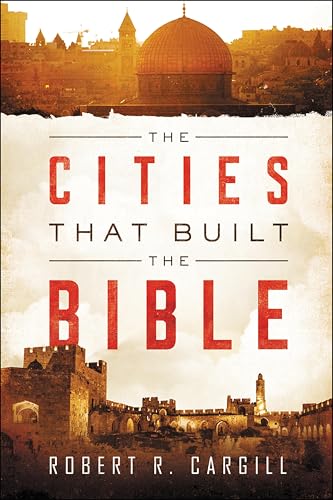
- Shows how fourteen ancient cities shaped the Bible
- Mixes archaeology, history, and personal narrative
- Includes photos of artifacts, ruins, and dig sites
Best For: Readers who want an engaging, city-focused look at the Bible’s formation
Jerusalem Deep Dive
Jerusalem the Center of the Universe
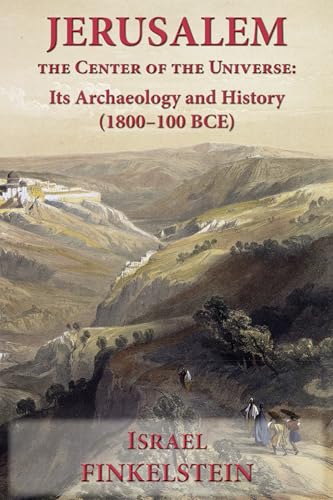
- Scholarly history of Jerusalem from Bronze Age to Hellenistic era
- Written by Israel Finkelstein with strong academic credentials
- Discusses archaeology alongside biblical tensions and updates
Best For: Advanced readers seeking a deep scholarly study of Jerusalem
Bible Lands Survey
The Essential Archaeological Guide to Bible Lands

- Covers more than 70 sites across Bible lands and the ancient Near East
- Includes over 200 full-color photos
- Uses archaeology to illuminate biblical historical narratives
Best For: Anyone wanting a broad, image-rich guide to major biblical sites
National Geographic overview

- Covers major sites, artifacts, and eras from Genesis to Rome.
- Richly illustrated with maps, timelines, photos, and drawings.
- Objective, nondenominational approach to biblical archaeology.
Best For: Readers who want a visually rich, broad biblical archaeology survey.
Evidence-focused guide
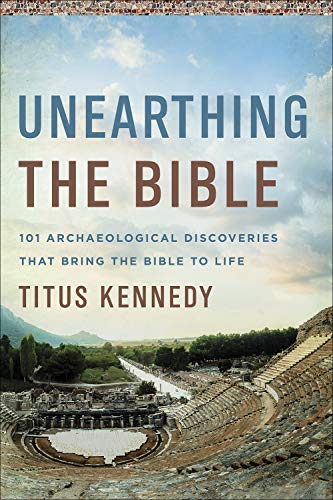
- Profiles 101 artifacts tied to biblical history.
- Uses photos and detailed descriptions for each discovery.
- Draws from 50+ museums, private collections, and sites.
Best For: Readers who want artifact-by-artifact evidence for biblical history.
People and inscriptions
Archaeology and the People of the Bible

- Examines more than 130 biblical figures.
- Backed by inscriptions, manuscripts, photos, and illustrations.
- Includes a rating system for each person’s evidence.
Best For: Readers focused on historical evidence for biblical people.
Classic Biblical History

- Revised classic with updated archaeological material
- Connects Bible events to historical discoveries
- Useful for teaching and general study
Best For: Readers who want a dependable overview of Bible history through archaeology
Controversial Reassessment

- Uses archaeology to reexamine biblical narratives
- Covers evidence from multiple ancient Near Eastern sites
- Best for readers who want a critical perspective
Best For: Readers seeking a scholarly, provocative take on ancient Israel
Old Testament Site Guide
The Archaeology of the Old Testament

- Over 115 discoveries from the Old Testament period
- Includes photos, maps, charts, glossary, and index
- Accessible resource for study and teaching
Best For: Readers wanting a visual, easy-to-use Old Testament archaeology resource
Comprehensive Reference – Zondervan Handbook of Biblical Archaeology
If you want a biblical cities archaeology book that works as a broad reference, this handbook is built to supplement the historical context of Scripture book by book. It combines archaeological discoveries, photos, maps, sidebars, and study helps to help readers connect excavations and artifacts with the biblical text in a practical way.
Best For: Lay readers, pastors, students, and academics who want a current, book-by-book archaeology resource tied to the Bible.
Pros:
- Covers archaeological discoveries in canonical order for every book of the Bible
- Includes latest photos, aerial excavation images, artifact photos, and historic structures
- Offers a glossary, detailed maps, bibliography, and study helps
- Designed as a comprehensive but accessible biblical archaeology reference
Cons:
- More of a reference handbook than a narrative read
- May be broader than needed if you only want one city-focused study
Overall, this is one of the strongest picks if you want a structured, up-to-date biblical archaeology guide that supports both study and teaching. Its book-by-book format makes it especially useful for pairing archaeology with the biblical text.
Cities and Canon – The Cities That Built the Bible
If you are looking for a biblical cities archaeology book with a strong narrative angle, this title focuses on how major ancient cities shaped the Bible as it was formed. It blends archaeology, biblical history, and the author’s perspective while touring fourteen cities across the ancient world.
Best For: Readers who want an engaging city-by-city tour that connects archaeology with the development of the Bible.
Pros:
- Explores fourteen influential cities, including Jerusalem, Babylon, Rome, and Alexandria
- Combines archaeology, biblical history, and personal storytelling
- Includes photos of artifacts, dig sites, ruins, and relics
- Written in a lively style that makes difficult topics approachable
Cons:
- More interpretive and discussion-driven than a neutral site guide
- Less focused on step-by-step archaeological cataloging than a reference handbook
This is a smart choice if you want a readable book that treats biblical cities as drivers of biblical history, not just as backdrops. It works well for readers who want context, movement, and a strong historical narrative.
Jerusalem Deep Dive – Jerusalem the Center of the Universe
Jerusalem the Center of the Universe: Its Archaeology and History (1800–100 BCE)
Check Price On AmazonFor buyers searching for a serious biblical cities archaeology book centered on Jerusalem, this volume offers a scholarly deep dive into the city’s archaeology and history from the Middle Bronze Age through the late Hellenistic period. It brings together essays and articles that examine how archaeological evidence often sits in tension with the biblical text.
Best For: Readers who want an advanced, research-heavy study of Jerusalem’s archaeology and its relationship to the Bible.
Pros:
- Focuses specifically on Jerusalem across multiple historical periods
- Written by a leading archaeologist with extensive academic credentials
- Addresses major topics such as Saul, David, Solomon, Josiah, and the Assyrian era
- Includes short addenda that update readers on recent developments
Cons:
- Scholarly and dense compared with general-interest guides
- Centered on Jerusalem rather than a wider survey of Bible lands
This is best for readers who want depth over breadth and are comfortable with critical archaeological discussion. If your priority is Jerusalem itself, this is one of the most focused academic options available.
Bible Lands Survey – The Essential Archaeological Guide to Bible Lands
If you want a biblical cities archaeology book that covers a wide geographic range, this guide offers an extensive overview of key sites across Bible lands and the ancient Near East. It pairs archaeology with historical context and uses full-color photos to help readers connect excavations with the biblical narratives.
Best For: Readers who want a broad, photo-rich guide to major biblical sites across the ancient world.
Pros:
- Profiles more than 70 key locations and historical sites
- Covers Mesopotamia, Egypt, Anatolia, Greece, the Holy Land, and beyond
- Includes more than 200 full-color photos of ruins and artifacts
- Combines site analysis with archaeological context and historical narratives
Cons:
- Broader survey rather than a city-by-city deep dive
- Leans toward apologetic framing in its discussion of historicity
This guide is a strong option if you want breadth, visuals, and a practical way to investigate biblical sites. It works especially well as a travel-minded reference for readers exploring the historical setting of Scripture.
National Geographic overview – Archaeology of the Bible
Archaeology of the Bible: The Greatest Discoveries From Genesis to the Roman Era
Check Price On AmazonIf you want a biblical cities archaeology book that pairs ancient sites with a broad sweep of the biblical world, this National Geographic volume is a strong fit. It traces discoveries from Genesis through the Roman era, using maps, timelines, and hundreds of photos to place Scripture-related history in a wider archaeological context.
Best For: Readers who want a richly illustrated, big-picture introduction to biblical archaeology and major sites across the Middle East.
Pros:
- Covers hundreds of sites and artifacts from Sumer, Babylon, the Exodus route, and the Second Temple period.
- Includes maps, timelines, and many photos and illustrations for visual reference.
- Written from an objective, nondenominational perspective.
- Spans from early civilization to present-day archaeology developments.
Cons:
- Its broad scope may be less focused if you only want one specific city or excavation.
- The large, illustrated format may be more reference-style than quick-reading.
This is a good choice if you want a polished overview that connects biblical stories to archaeological findings without leaning heavily devotional. It works especially well as a coffee-table style reference for exploring the geography and material culture of the Bible.
Evidence-focused guide – Unearthing the Bible
Unearthing the Bible: 101 Archaeological Discoveries That Bring the Bible to Life
Check Price On AmazonFor shoppers searching for a biblical cities archaeology book that emphasizes specific objects and historical evidence, this volume is built around 101 discoveries. It gathers artifacts from museums, private collections, and archaeological sites to show how material finds connect to the biblical text and the ancient world.
Best For: Readers who want an evidence-driven, photo-heavy guide to artifacts that support and illuminate Scripture.
Pros:
- Features 101 archaeological objects that span from early civilization to the early church.
- Draws from more than 50 museums, private collections, and excavation sites.
- Includes photographs and detailed descriptions for close examination.
- Designed to provide cultural context along with historical support for biblical narratives.
Cons:
- Centered on artifacts rather than a sweeping survey of biblical geography.
- Its apologetics angle may be less appealing if you want a neutral reference work.
This book is best if you want a structured look at individual discoveries instead of a general archaeological overview. It gives you a practical way to connect specific pieces of evidence with the Bible’s historical setting.
People and inscriptions – Archaeology and the People of the Bible
If you want a biblical cities archaeology book with a strong focus on named people, this title goes beyond places and examines the historical existence of Bible characters. It compiles archaeological inscriptions, ancient manuscripts, photos, and references for more than 130 figures from the Old and New Testaments.
Best For: Readers who want a reference centered on biblical人物, inscriptions, and evidence for historical individuals.
Pros:
- Covers more than 130 people from the Old and New Testaments.
- Uses inscriptions, manuscripts, photos, and illustrations to support its entries.
- Includes a rating and supporting information for each person’s identification.
- Offers clear writing and a straightforward structure for research use.
Cons:
- Focuses on people rather than a broad survey of cities or excavations.
- Publication date listed in 2026 may be a drawback if you want a currently available edition.
This is the most specialized pick of the three if your interest is the historical credibility of specific biblical figures. It’s a useful companion for readers who want evidence organized person by person rather than by site or era.
Classic Biblical History – Archaeology and Bible History
If you want a biblical cities archaeology book that connects Scripture with excavation evidence, this revised classic is built for that purpose. It brings archaeological and historical material up to date while explaining how discoveries illuminate Bible history, making it a practical choice for readers who want a grounded overview rather than a flashy theory-driven read.
Best For: Pastors, Sunday school teachers, college students, and lay readers who want a clear, updated survey of Bible history through archaeology.
Pros:
- Revised edition updates the archaeological and historical material.
- Notes that earlier archaeological interpretations were modified where needed.
- Designed as a rigorous but accessible work for broad study use.
- Updated bibliography supports further research.
Cons:
- Originally a classic work, so some readers may prefer a more modern, visuals-heavy format.
- Focuses on history and interpretation more than site-by-site touring.
This is a strong pick if you want a dependable reference that ties biblical events to archaeology without getting overly specialized. Its updated scholarship makes it especially useful for guided study and teaching.
Controversial Reassessment – The Bible Unearthed
The Bible Unearthed: Archaeology's New Vision of Ancient Israel and the Origin of Its Sacred Texts
Check Price On AmazonFor shoppers comparing a biblical cities archaeology book that takes a more critical approach, this title stands out for how it uses recent digs to challenge familiar Bible narratives. It draws on archaeological research from Israel, Egypt, Jordan, and Lebanon to present a revised picture of ancient Israel, so it works best for readers who want a thought-provoking, scholarly argument rather than a devotional survey.
Best For: Readers interested in a provocative, evidence-driven reassessment of ancient Israel and the origins of biblical texts.
Pros:
- Grounded in recent archaeological research and discoveries.
- Covers major sites and regions across Israel and neighboring lands.
- Clearly distinguishes between historical evidence and traditional narratives.
- Engages important questions about when and why the Bible was written.
Cons:
- Its conclusions are intentionally controversial and may not suit every reader.
- More academic and interpretive than a simple field-guide style resource.
This is best treated as a serious discussion book for readers who want to weigh archaeology against biblical tradition. If you want a balanced, debate-friendly addition to your shelf, it offers a sharp and influential perspective.
Old Testament Site Guide – The Archaeology of the Old Testament
If you’re shopping for a biblical cities archaeology book with lots of concrete evidence, this one is especially practical. It gathers more than 115 discoveries from the Old Testament period and pairs them with photos, maps, charts, and site references, making it a useful guide for readers who want archaeology to shed light on the text and its settings.
Best For: Laypeople, seminary students, college classes, church groups, and personal study focused on Old Testament archaeology.
Pros:
- Includes over 115 discoveries from the Old Testament period.
- Features more than 160 color photographs plus maps and charts.
- Covers sites linked to Genesis through Nehemiah and related OT books.
- Accessible format with glossary, footnotes, bibliography, and index.
Cons:
- Focuses on Old Testament archaeology, so it is narrower than a full Bible-history survey.
- More informational than narrative-driven.
This is a strong choice if you want a visually rich, study-friendly resource anchored in archaeological finds. It’s especially helpful when you want evidence, context, and reference material in one place.
How We Picked the Best Biblical Cities Archaeology Books
We prioritized books that balance scholarly credibility with practical readability. The strongest titles explain archaeological findings clearly, connect them to biblical narratives without overclaiming, and cover important places such as Jerusalem, Samaria, Jericho, and broader Bible lands.
We also looked for useful scope. Some readers want a broad survey of biblical archaeology, while others want a focused Biblical Cities Archaeology Book with more site-specific detail. The best options in this list serve one of those needs well.
Quick Comparison
If you want a broad overview, choose a general archaeology of the Bible title. If you want more city-centered history, look for books that emphasize Jerusalem, ancient Israel, or the relationship between archaeology and major biblical sites. If your main goal is evidence and interpretation, select a book that explains methods, artifacts, and scholarly debate rather than only summarizing discoveries.
Key Buying Factors for a Biblical Cities Archaeology Book
Scope and Geographic Focus
Some books concentrate on one city or region, while others survey the whole ancient Near East. Decide whether you want depth on a few places or a wider map of biblical lands.
Reading Level
Popular-level books are easier for general readers, students, and church groups. More academic books are better if you want footnotes, technical archaeology, and deeper historical argumentation.
Balance of Faith and Evidence
Different books handle biblical reliability differently. Choose one that matches your expectations, whether you want a faith-friendly overview, a neutral historical survey, or a more critical scholarly perspective.
Use of Visuals and Site Detail
Maps, timelines, site descriptions, and artifact discussions can make a big difference. A strong Biblical Cities Archaeology Book should help you picture where events happened and why those locations matter.
Who Should Buy Which Biblical Cities Archaeology Book?
Choose a broad introductory title if you are new to biblical archaeology and want an easy entry point.
Choose a city-focused or Jerusalem-centered book if you want deeper location-specific history and excavation context.
Choose a scholarly or debate-driven title if you care most about historical method, interpretation, and competing views among archaeologists.
Choose an evidence-oriented popular title if you want an accessible companion for Bible study, teaching, or general learning without getting too technical.
In short, the best choice depends on whether you want a survey, a site-by-site reference, or a thoughtful bridge between biblical text and archaeological discovery.