If you want a Jewish Bible with rabbinic commentary, the best choice depends on how you study: traditional learning, classroom use, or verse-by-verse analysis.
This roundup highlights ten strong editions that balance translation quality, commentary depth, and readability for 2026 buyers.
Best 10 Jewish Bible with Rabbinic Commentary Picks for 2026
Traditional Chumash Pick

- Torah, Haftaros, and Five Megillos in one volume
- Rabbinic commentary from Talmud, Midrash, Rashi, and more
- Durable binding and synagogue-friendly layout
Best For: Traditional study and synagogue/home use
Jewish Study Bible with Notes
The Complete Jewish Study Bible

- Tanakh plus B’rit Hadashah with study notes
- Over 100 themed articles and 30 extra topical essays
- Jewish names, pronunciation guide, and reading calendars
Best For: Cross-traditional study with Jewish context
Layered Torah Commentary
Etz Hayim Torah and Commentary

- P’shat and d’rash commentary in one volume
- Sources include Talmud, Midrash, Rashi, and modern scholars
- Includes haftarot, maps, glossary, and indexes
Best For: Conservative Jewish study and clergy use
Scholarly Hebrew Bible Pick
The Jewish Study Bible, Second Edition
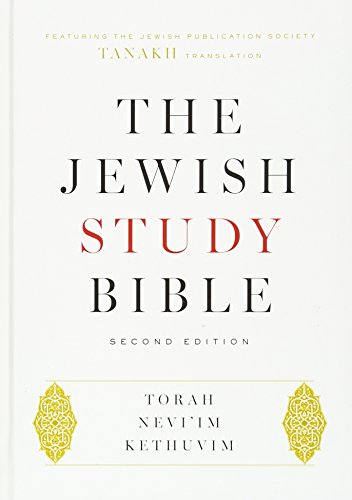
- Full Hebrew Bible in JPS TANAKH translation
- Revised notes plus 40 new and updated essays
- Strong fit for academic and interpretive study
Best For: Serious Hebrew Bible study with scholarly notes
JPS Torah Commentary Series
Classic Torah scholarship in 5 volumes

- Complete Hebrew text with JPS translation and notes
- Scholar commentary with classical and modern sources
- Includes essays, glossary, maps, and bibliographic notes
Best For: Readers seeking an authoritative Torah study set
Koren Humash by Rabbi Sacks
Readable Torah text with modern commentary
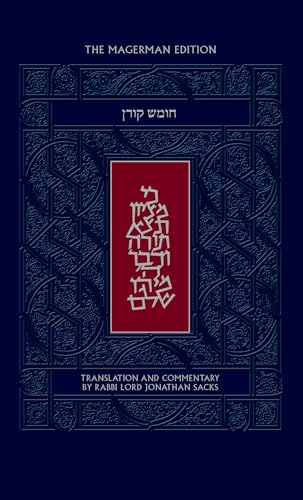
- Rabbi Sacks commentary and English translation
- Clear Koren Hebrew font and elegant formatting
- Includes parasha breaks and full haftarot
Best For: Readers who want an accessible Humash with modern insight
Commentators' Bible Set
English Miqra'ot Gedolot with medieval voices

- Hebrew text surrounded by JPS translations
- English renderings of Rashi, Ibn Ezra, Nachmanides, and more
- Large-format set with glossary and study aids
Best For: Readers comparing classic rabbinic commentary in English
Chasidic Study Edition
Torah Chumash With Rashi-Based Commentary

- Interpolated translation keeps Torah and commentary in one reading flow
- Rashi commentary is explained through the Lubavitcher Rebbe’s approach
- Includes charts, maps, diagrams, and fully vocalized Rashi text
Best For: Beginners and regular students who want an accessible Chumash with integrated rabbinic and Chasidic commentary
Verse-by-Verse Guide

- Explains the Torah line by line in plain English
- Clarifies Hebrew words while adding rabbinic wisdom
- Includes context and spiritual reflections for approachable study
Best For: Readers who want an easy-entry annotated Torah with clear explanations, Hebrew insights, and reflective commentary
Commentary History Guide

- Shows how Torah commentary evolved from rabbinic to modern times
- Compares major commentators on selected Torah passages
- Includes chapter charts that help summarize interpretive patterns
Best For: Students and readers interested in the evolution of Jewish Bible commentary across rabbinic and modern eras
Traditional Chumash Pick – The Stone Edition Chumash
If you want a jewish bible with rabbinic commentary that feels equally suited to synagogue use and home study, The Stone Edition Chumash is built for exactly that. It combines the Torah, Haftaros, and Five Megillos in one large-volume edition with a contemporary English translation faithful to Rashi and classic Rabbinic commentators, plus an anthologized commentary drawn from the Talmud, Midrash, and other rabbinic writings.
Best For: Readers seeking a single-volume, traditional Chumash with extensive rabbinic commentary for daily study, synagogue reading, or family use.
Pros:
- Includes Torah, Haftaros, and the Five Megillos in one volume.
- Commentary draws on Talmud, Midrash, Rashi, Onkelos, and classic rabbinic commentators.
- Newly reset text with durable binding, gilded page heads, and a ribbon marker.
- Includes index, genealogy section, and introductory haftarah comments.
Cons:
- Large and heavy compared with compact study editions.
- Focuses on traditional commentary rather than a broad academic approach.
This is a strong choice if you want a long-lasting, tradition-forward Torah volume that emphasizes classic Jewish interpretation and practical usability.
Jewish Study Bible with Notes – The Complete Jewish Study Bible
The Complete Jewish Study Bible (Hardcover): Illuminating the Jewishness of God's Word
Check Price On AmazonThe Complete Jewish Study Bible is a practical option if you want a jewish bible with rabbinic commentary that also connects the Tanakh to broader biblical and theological study. It pairs the Complete Jewish Bible text with detailed notes, Jewish-perspective introductions, and more than 100 articles on topics like Jewish customs, Shabbat, the Torah, and messianic prophecy.
Best For: Readers who want a study Bible with Jewish context, topical articles, and cross-traditional interest for Jewish and Christian audiences.
Pros:
- Includes over 100 articles plus 30 additional topical pieces.
- Provides extensive notes, book introductions, and Jewish names with pronunciation guides.
- Follows the Jewish order of the Tanakh books.
- Includes Sabbath, festival, feast, and fast readings, plus maps and ribbon markers.
Cons:
- Includes the B’rit Hadashah, so it is not a Tanakh-only volume.
- Its focus is broad study material rather than a heavy rabbinic commentary format on every verse.
Choose this if you want a feature-rich study Bible with a distinctly Jewish frame of reference and lots of contextual material.
Layered Torah Commentary – Etz Hayim Torah and Commentary
Etz Hayim is a strong pick if you want a jewish bible with rabbinic commentary that presents multiple layers of interpretation in one place. It offers separate p’shat and d’rash commentary, combining the plain meaning of the text with insights from more than 2,000 years of Torah study, including Talmud, Midrash, Rashi, Hasidic thought, and contemporary rabbis and scholars.
Best For: Lay readers, clergy, and Conservative Jewish study groups looking for a balanced Torah commentary with both traditional and modern perspectives.
Pros:
- Dual commentary approach: p’shat and d’rash side by side.
- Draws from Talmud, Midrash, Rashi, Hasidic teachers, and modern scholars.
- Includes haftarot commentary, maps, glossary, timeline, and indexes.
- Highlights traditional readings for Sephardic and Ashkenazic communities.
Cons:
- Centered on the Torah and haftarot rather than the full Hebrew Bible.
- Best suited to readers comfortable with a Conservative movement framing.
This edition stands out for readers who want thoughtful, layered Torah study without losing sight of practical reading structure and community use.
Scholarly Hebrew Bible Pick – The Jewish Study Bible, Second Edition
The Jewish Study Bible, Second Edition is a strong choice if you want a jewish bible with rabbinic commentary that leans toward scholarly explanation and interpretation. It combines the JPS Tanakh translation with revised notes, introductory materials, and many essays on the Bible, its interpretation, Jewish worship, and the Hebrew Bible’s influence in the ancient world.
Best For: Students and readers who want a well-regarded scholarly Hebrew Bible with extensive notes and interpretive essays.
Pros:
- Includes the full Hebrew Bible in the JPS TANAKH translation.
- Revised annotations cover nearly the entire Bible.
- Adds 40 new and updated essays on interpretation and Jewish practice.
- Slipcase format and extensive supplementary material add value for study.
Cons:
- More academic than devotional or synagogue-focused.
- Does not emphasize classical rabbinic commentary in the same way as a Chumash.
If your priority is serious Hebrew Bible study with strong editorial notes and essays, this is one of the most practical and respected options.
JPS Torah Commentary Series – Classic Torah scholarship in 5 volumes
If you want a jewish bible with rabbinic commentary that balances traditional sources with modern scholarship, the JPS Torah Commentary Series is a strong reference set. Each volume presents the complete Hebrew text, the JPS translation, aliyot breaks, Masoretic notes, and commentary from a distinguished Hebrew Bible scholar, plus supplementary essays and bibliographic notes for deeper study.
Best For: Readers who want a scholarly, multi-volume Torah commentary that integrates classical and modern sources.
Pros:
- Includes complete traditional Hebrew text with cantillation notes.
- Provides the JPS translation alongside detailed scholarly commentary.
- Adds supplementary essays, glossary entries, maps, and extensive bibliographic notes.
- Written by recognized Torah scholars and described as authoritative yet accessible.
Cons:
- Five-volume set is substantial and takes up a lot of shelf space.
- At 13 pounds, it is not especially portable.
- Focused on the Torah rather than the full Hebrew Bible.
This is a strong choice if you want a serious study set that works for both reference reading and deeper textual work. The combination of Hebrew text, translation, and commentary makes it especially useful for readers who want a broad, well-sourced view of the Torah.
Koren Humash by Rabbi Sacks – Readable Torah text with modern commentary
For shoppers looking for a jewish bible with rabbinic commentary that feels accessible in synagogue or at home, the Koren Humash with commentary by Rabbi Lord Jonathan Sacks is built around clarity and contemporary relevance. It combines Koren’s Hebrew text formatting with Rabbi Sacks’ English translation, Torah commentary, parasha breaks, and full haftarot for regular and special occasions.
Best For: Readers who want a modern, readable Humash shaped by Rabbi Sacks’ insights.
Pros:
- Features Rabbi Sacks’ Torah commentary with contemporary relevance.
- Includes his modern English translation of the Torah.
- Uses Koren’s clear Hebrew font and elegant formatting.
- Includes parasha breaks and full haftarot for many customs and occasions.
Cons:
- More focused on readability and commentary than on dense traditional analysis.
- Very large page count may be more than casual readers need.
- The publication date listed is future-dated in the supplied details.
This edition is a good fit if you want a polished Torah text with commentary that connects classical study to present-day questions. It stands out for its accessibility and for centering Rabbi Sacks’ teaching throughout the volume.
Commentators' Bible Set – English Miqra'ot Gedolot with medieval voices
If you want a jewish bible with rabbinic commentary that brings the classic Miqra’ot Gedolot format into English, The Commentators’ Bible is designed for that purpose. The five volumes place the Hebrew biblical text at the center, surrounded by JPS translations and contemporary English renderings of major medieval commentators such as Rashi, Ibn Ezra, Nachmanides, and others.
Best For: Readers who want an English edition of Miqra’ot Gedolot for study and comparison.
Pros:
- Presents the Hebrew text with both the 1917 and 1985 JPS translations.
- Includes contemporary English translations of major medieval commentators.
- Adds introductions, glossary, source notes, and study resources.
- Large-format design makes the many text elements easier to navigate.
Cons:
- Bulky five-volume set is not convenient for travel.
- Large format and extensive layout may feel overwhelming for quick reading.
- Primarily aimed at readers comfortable with a layered study format.
This set is especially useful if you want to compare classic rabbinic voices side by side in an English edition. It offers a study-rich layout that should appeal to readers who value depth, source comparison, and traditional commentary structure.
Chasidic Study Edition – Torah Chumash With Rashi-Based Commentary
If you want a jewish bible with rabbinic commentary that reads smoothly from the page, this Torah Chumash is built for that kind of study. It weaves the Torah text together with Rashi commentary, explained through the Lubavitcher Rebbe’s understanding, so the translation and commentary feel like one continuous reading experience rather than separate layers.
Best For: Beginners and regular students who want an accessible Chumash with integrated rabbinic and Chasidic commentary.
Pros:
- Interpolated English translation creates a clear, easy-to-follow reading flow
- Includes Rashi-based commentary plus Chasidic insights and inner dimensions
- Strong study aids such as overviews, topic titles, charts, illustrations, diagrams, and maps
- Fully vocalized Hebrew text of Rashi’s commentary supports closer reading
Cons:
- Large, heavy volume may be less convenient for travel
- Its approach is specific to the Rebbe’s explanation of Rashi, not a broad multi-commentary anthology
This is a practical pick if you want one substantial study edition that combines translation, commentary, and visual aids in a single volume. The emphasis is on readability and guided learning, making it useful for both first-time readers and more experienced students.
Verse-by-Verse Guide – The Torah Annotated Edition
This annotated Torah is aimed at readers who want a jewish bible with rabbinic commentary presented in a straightforward, step-by-step format. It focuses on verse-by-verse clarity, explains key Hebrew terms in plain English, and adds organized rabbinic wisdom and spiritual reflections without assuming prior study background.
Best For: Readers who want an easy-entry annotated Torah with clear explanations, Hebrew insights, and reflective commentary.
Pros:
- Verse-by-verse format helps readers follow the Five Books of Moses with less confusion
- Plain-English explanations make key Hebrew words and concepts more approachable
- Combines rabbinic insights, historical context, and spiritual reflections in one volume
- Designed to guide independent study without requiring technical background
Cons:
- At 207 pages, it is less expansive than large traditional study editions
- Best suited to guided reading and reflection rather than deep multi-source analysis
Choose this if you want a modern, beginner-friendly study companion that keeps the commentary organized and readable. It is especially appealing for readers who want context and meaning presented in a clear progression from verse to verse.
Commentary History Guide – Torah Through Time
Torah Through Time: Understanding Bible Commentary from the Rabbinic Period to Modern Times
Check Price On AmazonIf you are shopping for a jewish bible with rabbinic commentary but want to understand how interpretation developed over time, this book offers a strong historical lens. It traces Torah commentary through rabbinic, medieval, and modern periods, comparing how major commentators read selected passages and how their historical context shaped their answers.
Best For: Students and readers interested in the evolution of Jewish Bible commentary across rabbinic and modern eras.
Pros:
- Maps the development of Jewish Bible commentary across three major historical periods
- Examines multiple commentators side by side on specific Torah narratives and legal topics
- Accessible approach makes comparative commentary easier to follow
- Charts at the end of each chapter help summarize the interpretive patterns
Cons:
- Focuses on selected source texts rather than covering the entire Torah continuously
- More analytical and historical than a verse-by-verse devotional study edition
This is a smart pick for readers who want commentary in context, not just commentary alone. It is especially useful if you want to see how Jewish interpretation changes across time and how each commentator responds to the same textual questions.
How We Picked the Best Jewish Bible with Rabbinic Commentary
We focused on books that are genuinely useful for studying Torah with interpretation from classic and modern Jewish sources. That means strong translation work, respected commentary, clear formatting, and editions that serve different study goals, from beginner-friendly reading to advanced textual analysis.
We also looked at whether each Jewish Bible with Rabbinic Commentary offers a distinct approach, since some editions emphasize traditional rabbinic explanation while others lean scholarly or comparative.
Quick Comparison
If you want a single volume for everyday study, choose a compact study Bible or a well-edited Chumash. If you want academic context, a study Bible or commentary series may be better. If you want a classic synagogue-style experience, a Torah-and-commentary edition with Hebrew and English is usually the strongest fit.
Key Buying Factors for a Jewish Bible with Rabbinic Commentary
Translation Style
Look for a translation that matches your comfort level. Some editions prioritize literal accuracy, while others smooth the text for readability. If you read Hebrew, you may prefer a bilingual format; if not, a clear English rendering matters more than ever.
Commentary Tradition
Not all commentary is the same. Some books draw heavily on Rashi and other classical rabbinic sources, while others combine traditional notes with academic scholarship. Decide whether you want a traditional, academic, or blended approach.
Depth and Layout
A good Jewish Bible with Rabbinic Commentary should be easy to navigate. Check whether notes sit on the page, whether references are concise or expansive, and whether the layout helps you study a verse quickly or deeply.
Scope of the Edition
Some books cover only the Torah, while others include Haftarot, the Five Megillot, or broader biblical commentary. Choose the scope that fits your study routine rather than paying for material you may not use.
Who Should Buy Which Jewish Bible with Rabbinic Commentary?
Beginners and casual readers: Choose an accessible study Bible or a user-friendly Chumash with clear English commentary.
Traditional learners: A synagogue-style Torah edition with classic rabbinic notes is usually the best fit.
Academic readers and students: Select a study Bible or commentary series that adds historical context, source criticism, and literary analysis.
Deep Torah students: If you want layered interpretation, look for editions that pair Hebrew text with substantial rabbinic commentary and verse-level notes.
In short, the best choice depends on whether you value tradition, readability, scholarship, or a balanced mix of all three.