A good pop filter can make vocals, podcasts, livestreams, and voiceovers sound cleaner by reducing harsh bursts of air without forcing you to change your microphone. The best choice depends on your mic shape, mounting setup, and preferred filter material.
We selected 10 microphone pop filters ranging from flexible dual-layer mesh designs to metal studio models, foam windscreens, and specialized options for Blue Yeti and handheld microphones.
Best 10 Microphone Pop Filters Picks for 2026
Flexible Dual-Layer Shield
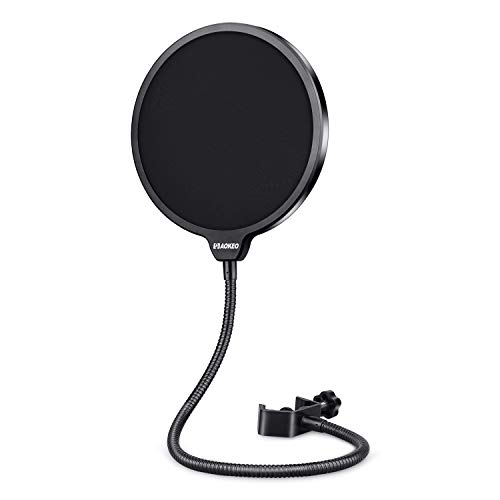
- Dual-layer screen reduces plosive air blasts.
- 360-degree gooseneck supports precise placement.
- Clamp fits various stands and boom mounts.
Best For: Singers, streamers, and Blue Yeti setups
Studio Nylon Classic

- 4.75-inch dual-layer nylon screen reduces P-Pops.
- Flexible 8-inch gooseneck simplifies positioning.
- Universal stand adapter supports most microphones.
Best For: Studio vocal and spoken-word recording
Metal Mesh Precision

- Metal mesh helps disperse intrusive plosives.
- Sturdy gooseneck supports repeatable placement.
- Swivel C-clamp fits stands, boom arms, and desks.
Best For: Podcasts, voice-overs, and singing
Acoustic Isolation Enclosure
Penypeal Microphone Isolation Filter

- Five-sided foam design reduces noise and reflections.
- Double-layer opening helps control plosives and spray.
- Fits many 50–75 mm XLR and USB microphones.
Best For: Home studios and broader acoustic shielding
Flexible Dual-Layer Pick
Adjustable Gooseneck Pop Filter

- Dual-layer mesh helps control plosives
- 360° flexible positioning
- Clamp fits surfaces up to 1.57 inches
Best For: Streaming, podcasts, vocals, and home studios
Classic Studio Shield

- Dual-layer screen controls air blasts
- Steel gooseneck stays adjustable
- Rotating clamp simplifies mounting
Best For: Singers, streamers, and actors
Three-Layer Mic Cover
PEMOTech Metal Mesh Windscreen

- Foam, metal mesh, and etamine layers
- Fits microphones 45–61 mm wide
- Not compatible with Blue Yeti
Best For: Compatible handheld and studio microphones
Flexible Studio Shield
Dual-Layer Gooseneck Pop Filter

- 360-degree adjustable gooseneck
- Clamp secures to mic stands
- Designed to reduce vocal popping
Best For: Studio vocals, streaming, karaoke, and home recording
Heavy-Duty Plosive Control
Six-Layer Metal-Arm Pop Filter

- Six layers target plosives and sibilance
- Flexible arm supports precise positioning
- Clamp fits stands up to 1.38 inches
Best For: Studio, broadcast, streaming, and singing setups
Blue Yeti Vocal Companion
Pop Filter and Foam Windscreen

- Designed for Blue Yeti microphones
- Includes pop filter and foam cover
- Six-layer filter with adjustable gooseneck
Best For: Blue Yeti voice recording, podcasting, and streaming
Flexible Dual-Layer Shield – Aokeo Adjustable Pop Filter
For singers, streamers, and voice performers, this microphone pop filter uses two screens to reduce air blasts before they reach the microphone. Its adjustable clamp and flexible gooseneck make it practical for a range of stands and boom setups.
Best For: Blue Yeti users, vocal recording, streaming, and flexible home-studio setups.
Pros:
- Dual-layer design disperses and contains plosive air pressure.
- 360-degree gooseneck allows flexible positioning.
- Adjustable, scratch-resistant clamp fits various tubular booms and microphone stands.
- Helps reduce harsh “S” sounds and “B” and “P” plosives.
Cons:
- The clamp-and-gooseneck design may require careful positioning.
- The supplied details do not specify the screen diameter.
This is a versatile microphone pop filter for users who want broad compatibility and precise placement. The dual-screen construction and included warranty support its role as an everyday vocal-recording accessory.
Studio Nylon Classic – Samson PS04 Pop Filter
The Samson PS04 is a straightforward microphone pop filter for studio vocals and spoken recordings. Its dual-layer nylon mesh is designed to reduce “P-Pops,” while the flexible gooseneck makes positioning simple.
Best For: Studio users seeking a compact, conventional nylon pop filter with universal stand compatibility.
Pros:
- Dual-layer, 4.75-inch nylon mesh helps reduce plosives.
- Flexible 8-inch gooseneck allows easy adjustment.
- Universal microphone stand adapter supports use with most microphones.
- Steel construction is designed for durability.
Cons:
- The 4.75-inch screen is smaller than some larger pop-filter designs.
- The supplied details emphasize studio use rather than portable setups.
Choose this microphone pop filter if you prefer a familiar nylon-screen design and uncomplicated stand mounting. Its modest size and adjustable neck suit focused studio placement.
Metal Mesh Precision – 512 Audio 512-POP Filter
512 Audio by Warm Audio 512-POP Professional Metal Pop Filter w Gooseneck Clamp
Check Price On AmazonThis metal microphone pop filter is built for close-range speech, podcasts, voice-overs, and singing. Its alloy-style mesh is intended to disperse plosives while the sturdy gooseneck and swivel clamp help maintain consistent placement.
Best For: Podcasters, broadcasters, singers, and users who prefer a durable metal-mesh filter.
Pros:
- Metal mesh is designed to disperse plosives and preserve natural sound.
- Flexible, sturdy gooseneck supports set-and-forget positioning.
- Adjustable swivel C-clamp attaches to stands, boom arms, and desk stands.
- Suitable for close-range speech and singing.
Cons:
- Metal construction may be less forgiving than soft nylon if bumped.
- The supplied details do not list a screen diameter.
The 512-POP is a strong microphone pop filter choice for fixed recording stations where repeatable placement matters. Its metal screen and secure clamp prioritize durability and dependable positioning.
Acoustic Isolation Enclosure – Penypeal Microphone Isolation Filter
Unlike flat microphone pop filters, this isolation-ball design surrounds much of the microphone with sound-absorbing foam. Its five-sided seal and double-layer opening are intended to reduce plosives, reflections, wind interference, and saliva spray.
Best For: Home studios, live recording, outdoor performance, and users needing broader acoustic shielding.
Pros:
- Five-sided foam enclosure helps reduce noise and reflections from multiple directions.
- Double-layer opening helps control divergent sound and plosives.
- Compatible with many XLR and USB microphones measuring 50–75 mm with a removable jacket.
- Lightweight 120-gram design can mount on desktops, tripods, arms, and floor stands.
Cons:
- Microphone fit depends on the 50–75 mm diameter range and removable jacket.
- The enclosure is bulkier than a standard flat mesh screen.
- Its surrounding foam design may be less convenient for users who frequently reposition the microphone.
This microphone pop filter is best suited to users who want more than basic plosive control. The enclosed format adds directional sound absorption, but compatibility and available mounting space should be checked first.
Flexible Dual-Layer Pick – Adjustable Gooseneck Pop Filter
This microphone pop filter is a practical choice for recording, streaming, podcasts, and voiceovers. Its dual-layer screen helps disperse bursts of air, while the flexible gooseneck lets you position the filter between your mouth and microphone.
Best For: Blue Yeti users and home setups with a compatible stand, boom arm, or desk mounting point.
Pros:
- Dual-layer mesh helps reduce plosive P and B sounds.
- 360° gooseneck adjusts for angle, distance, and placement.
- Clamp fits surfaces up to 1.57 inches thick.
- Useful for vocals, podcasts, gaming, streaming, and voiceovers.
Cons:
- Requires a suitable stand, boom arm, or desk edge for mounting.
- Its clamp may not fit surfaces thicker than 1.57 inches.
Choose this model if you want flexible positioning and a clamp-on design that can move between compatible recording setups.
Classic Studio Shield – NEEWER Dual-Layer Pop Filter
The NEEWER Professional Microphone Pop Filter Shield uses two screen layers to contain air blasts before they reach the microphone. Its adjustable metal gooseneck and rotating clamp make it a versatile option among microphone pop filters for singers, streamers, and actors.
Best For: Vocal recording setups using tubular boom arms or microphone stands.
Pros:
- Dual-layer design helps disperse and reduce plosive air pressure.
- Adjustable steel gooseneck supports positioning changes.
- Rotating clamp allows installation, removal, and location adjustment.
- Helps reduce plosives and some hissing or lisping sounds.
Cons:
- Compatibility depends on a suitable tubular boom or microphone stand.
- Microphone is not included.
This is a straightforward pick for users who want a repositionable dual-layer shield with a metal gooseneck and clamp mounting system.
Three-Layer Mic Cover – PEMOTech Metal Mesh Windscreen
This PEMOTech microphone pop filter is a direct-fit cover designed for microphones measuring 45 to 61 mm in diameter. Its foam, metal mesh, and etamine layers help reduce plosives, wind interference, breath sounds, and crackles during vocal recording or streaming.
Best For: Compatible handheld and studio microphones such as the AT2020, AT2035, Rode NT1A, MXL 770, and similar models.
Pros:
- Three-layer construction combines foam, metal mesh, and etamine.
- Helps reduce pops, breath sounds, wind interference, and crackles.
- Elastic bands and an inner rubber ring provide a firm fit.
- Helps protect the microphone from saliva and supports cleaner use.
Cons:
- Not designed for Blue Yeti microphones.
- Only fits microphones with a 45 to 61 mm diameter.
- Fits directly over the microphone rather than using a separate clamp and gooseneck.
Consider this cover when your microphone falls within the stated diameter range and you prefer a compact, fitted shield over a stand-mounted filter.
Flexible Studio Shield – Dual-Layer Gooseneck Pop Filter
This dual-layer option is a practical choice among microphone pop filters for speech, singing, broadcasting, karaoke, and home recording. Its flexible arm and adjustable clamp make it easy to position in front of a wide range of microphones, including Blue Yeti models.
Best For: Studio vocals, streaming, karaoke, and users who want flexible positioning.
Pros:
- 360-degree flexible gooseneck holder supports adjustable placement.
- Dual-layer design helps reduce popping sounds from fast-moving air.
- Adjustable clamp secures to a microphone stand.
- Lightweight 6.4-ounce construction.
Cons:
- Microphone is not included.
- Its clamp requires a suitable microphone stand or support.
This is a straightforward microphone pop filter for recording environments where easy adjustment and broad compatibility matter more than extra accessories.
Heavy-Duty Plosive Control – Six-Layer Metal-Arm Pop Filter
For buyers comparing microphone pop filters, this model emphasizes layered filtering and sturdy positioning. Its six-layer construction is designed to reduce plosives, sibilance, and unwanted noise, while the flexible arm and rotating clamp accommodate many boom arms and desk stands.
Best For: Recording studios, broadcasting, singing, live streaming, and users seeking broad positioning control.
Pros:
- Six filtering layers combine dual metal mesh and high-density foam.
- 360-degree carbon-steel arm supports customized placement.
- Clamp fits tubes up to 1.38 inches and includes an anti-scratch EVA pad.
- Helps shield the microphone from moisture and saliva.
Cons:
- The extended setup measures 21.06 inches, so it may need extra workspace.
- At 5.91 inches, the outer filter may be larger than compact desktop setups require.
Its layered construction and long, bendable arm make it a strong fit when precise placement and added plosive control are priorities.
Blue Yeti Vocal Companion – Pop Filter and Foam Windscreen
Blue Yeti owners looking at microphone pop filters may appreciate this purpose-built combination. It includes a six-layer pop filter and a foam windscreen, with a 360-degree gooseneck and L-style swivel clip for positioning the filter around the microphone.
Best For: Blue Yeti users recording voices, podcasts, streams, and video content.
Pros:
- Designed specifically for the Blue Yeti microphone.
- Six-layer material helps reduce plosives and unwanted recording noise.
- Includes both a pop filter and foam windscreen.
- Gooseneck and swivel clip allow adjustable placement.
Cons:
- Its stated compatibility is specifically centered on Blue Yeti microphones.
- The product is supplied as a single pack.
This is the most targeted choice of the three for Blue Yeti setups, particularly if you want both external pop filtering and a foam microphone cover in one purchase.
How We Picked These Microphone Pop Filters
We focused on designs that address the main causes of unwanted plosive noise: fast-moving air from sounds such as “p,” “b,” and “t.” The selection includes mesh, metal, foam, and layered filters, with attention to mounting flexibility, compatibility, adjustment range, and suitability for recording, streaming, podcasting, and voice work.
Because microphone setups vary considerably, we included both clamp-on pop screens and foam-style covers. A flexible gooseneck can make positioning easier, while a fitted windscreen may be more convenient for compact or unusual microphone shapes.
Quick Comparison
- Best general-purpose choice: A dual-layer mesh filter with a clamp and adjustable gooseneck.
- Best for studio durability: A metal pop filter with a sturdy clamp and flexible arm.
- Best for Blue Yeti users: A model specifically sized or shaped for the Blue Yeti.
- Best for handheld microphones: A layered metal-and-foam windscreen designed to fit over the mic.
- Best for convenience: A foam windscreen that requires little setup and travels easily.
Key Buying Factors for Microphone Pop Filters
Filter Material and Layering
Mesh filters are a versatile choice for vocals and speech because they diffuse air before it reaches the capsule. Metal filters are typically rigid and durable, while foam covers are lightweight and simple to install. Multi-layer designs can provide additional airflow control, but they may slightly change the microphone’s high-frequency character depending on fit and thickness.
Mounting and Adjustment
Check whether the filter uses a clamp, integrated mount, or slip-on fit. Clamp-on models should match the thickness of your stand or boom arm. A 360-degree gooseneck makes it easier to keep the filter between your mouth and the microphone, ideally with a small gap between the filter and mic grille.
Microphone Compatibility
Large desktop microphones may need a wider screen or a model made for their grille shape. Foam windscreens must fit snugly without obstructing controls, while handheld-mic covers should be sized for the microphone body. Confirm dimensions and mounting clearance before ordering.
Cleaning and Long-Term Use
Pop filters collect moisture and airborne debris, especially during close vocal recording. Removable or wipe-clean screens are easier to maintain. Foam covers are convenient but may need replacement when they become stretched, dirty, or compressed.
Who Should Buy Which Microphone Pop Filters?
Streamers and podcasters will usually benefit from an adjustable dual-layer clamp-on screen that stays in position during long sessions. Vocalists and home-studio users may prefer a durable metal filter with a stable arm for frequent recording. Blue Yeti owners should prioritize a compatible fitted screen or a broad filter that clears the microphone’s body and controls.
Handheld-mic users should choose a slip-on layered windscreen rather than a desk clamp. Mobile creators and occasional users may prefer foam because it is lightweight, quick to install, and easy to transport. Whichever style you choose, correct placement and consistent distance from the microphone remain just as important as the filter itself.