A good boom arm should position your microphone precisely without crowding your desk or leaving cables tangled across your workspace. The right model can make streaming, podcasting, recording, and video calls more comfortable and consistent.
We compared 10 microphone boom arms with cable management across stability, reach, load capacity, adjustment, mounting flexibility, and value to help you find the best fit for your setup.
Best 10 Microphone Boom Arm with Cable Management Picks for 2026
Best All-Around Cable Control

- Covered cable channels for a cleaner setup
- 32.3-inch horizontal and 37.4-inch vertical reach
- Supports microphones up to 3.5 pounds
Best For: Streamers and podcasters needing reach and strong support
Best Low-Profile Design

- Low-profile shape keeps the screen area clear
- Built-in cable management channels
- 360-degree horizontal adjustment and 29-inch reach
Best For: Compact podcasting, gaming, and home-office desks
Best for Quiet Adjustments
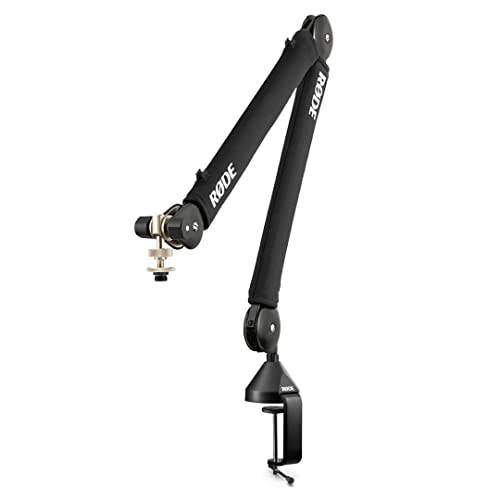
- Internal spring damping helps reduce creaks
- Integrated cable management hides XLR runs
- 360-degree rotation with 1.2-kilogram capacity
Best For: Podcast and broadcast setups needing quiet repositioning
Best Heavy-Duty Stability
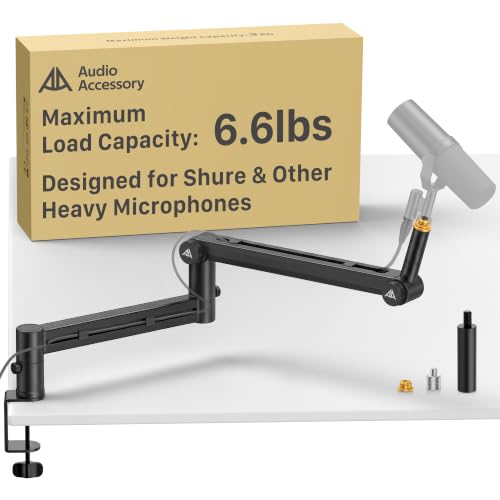
- 6.6-pound capacity for heavy microphones
- Gear-lock design helps prevent sagging
- Deep channels route multiple cables
Best For: Heavy studio microphones and stability-focused setups
Best All-Around Pick

- Supports microphones up to 4.4 pounds
- 360° positioning with cable management
- Includes three thread-size adapters
Best For: Versatile streaming, podcasting, and home-office setups
Best for Everyday Use

- Low center of gravity for stability
- Cable is hidden along the lower arm
- 360° rotation and 180° vertical swing
Best For: Compact desks and distraction-free gaming setups
Best Space-Saving Option

- Fold-away design saves desk space
- 29-inch extension with 360° hinge
- Cable channel keeps wiring organized
Best For: Lightweight microphones and compact workstations
Low-Profile Cable-Conscious Pick

- Low-profile design preserves monitor and desk visibility
- Built-in channels route USB and XLR cables
- Supports up to 3.3 pounds with broad thread compatibility
Best For: Streamers and podcasters who want a tidy, unobtrusive desk arm
Suspension-Arm Value Pick
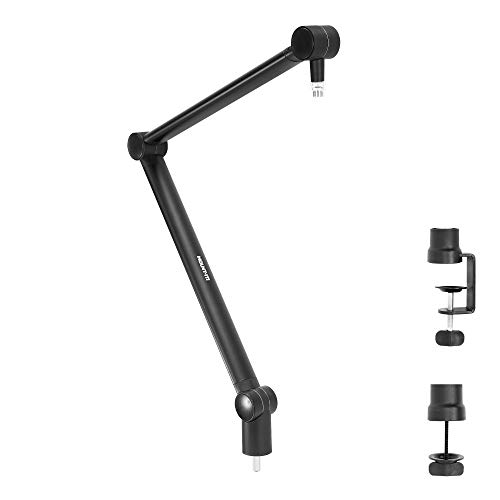
- Supports common 3/8-inch and 5/8-inch microphones
- Nearly 360-degree adjustment with spring suspension
- Includes tube-style cable management and screw adapter
Best For: Users with Blue Yeti, Snowball, or similar microphones
Heavy-Duty Cable-Channel Pick

- Supports up to 3.31 pounds with a reinforced aluminum arm
- Concealed channel helps organize and protect cables
- Includes a detachable 360-degree mobile phone holder
Best For: Streaming and recording setups using heavier microphones or a phone
Best All-Around Cable Control – InnoGear Mic Arm
If you want a microphone boom arm with cable management for a flexible home recording or streaming setup, the InnoGear MU-PSA28 combines covered cable channels with broad positioning options. Its extended reach and 3.5-pound capacity also suit heavier microphones such as the Blue Yeti and Shure SM7B.
Best For: Streamers, podcasters, and home-studio users who need strong support, long reach, and an organized desk.
Pros:
- Built-in cable channels with removable rubber covers help keep cables neat.
- 135-degree back-and-forth and 180-degree up-and-down adjustment, plus a 360-degree rotating base.
- Reaches up to 32.3 inches horizontally and 37.4 inches vertically, with a 3.5-pound load capacity.
- Includes a 6.3-inch extension riser and clamps to desks up to 2 inches thick.
Cons:
- The shock mount is not included.
- Its maximum desk-clamp thickness is 2 inches, which may not fit thicker desks.
The InnoGear stands out as a versatile choice when reach, microphone support, and tidy cable routing matter equally. It is especially practical for setups that need to extend over a monitor.
Best Low-Profile Design – FIFINE BM88W Boom Arm
The FIFINE BM88W is a microphone boom arm with cable management designed to stay below the screen and preserve desk space. Its low-profile shape, metal construction, and built-in cable routing make it a practical fit for compact podcasting, gaming, and home-office setups.
Best For: Users who want a space-saving arm with broad adjustment and adaptable microphone mounting.
Pros:
- Low-profile design extends from below the screen to keep the workspace unobstructed.
- Built-in cable management helps reduce cable clutter.
- Offers up to 29 inches of extension, 220 degrees of vertical adjustment, and 360-degree horizontal adjustment.
- Includes adapters for 1/4-inch, 3/8-inch, and 5/8-inch connections.
Cons:
- The 1.5-kilogram capacity is lower than some heavy-duty boom arms.
- The section near the C-clamp cannot be adjusted up and down.
- The microphone is not included.
Choose the BM88W when maintaining a clear sightline and compact footprint is more important than maximum weight capacity. Its connection adapters add useful flexibility for varied microphone setups.
Best for Quiet Adjustments – RØDE PSA1+ Boom Arm
The RØDE PSA1+ is a microphone boom arm with cable management aimed at podcast and streaming users who need smooth, quiet repositioning. Its internal spring damping is designed to reduce creaks and handling noise while integrated routing keeps the XLR cable hidden.
Best For: Podcast and broadcast-style setups where quiet arm movement and a clean appearance are priorities.
Pros:
- Internal spring damping supports quiet movement during recording.
- Integrated cable management keeps XLR runs hidden.
- Provides 360-degree rotation with full extension.
- Supports microphones and shock mounts from 0.25 to 1.2 kilograms.
Cons:
- Its 1.2-kilogram capacity is not intended for the heaviest microphone setups.
- The desk clamp fits desks up to 70 millimeters thick, so thicker surfaces may not work.
The PSA1+ is a strong fit for voice-focused recording environments where unwanted movement noise can be distracting. Its included thread adaptors support both 3/8-inch and 5/8-inch microphone mounts.
Best Heavy-Duty Stability – ABA01 Low-Profile Mic Arm
For a microphone boom arm with cable management built around heavier microphones, the ABA01 uses reinforced aluminum-alloy arms, deep cable channels, and a gear-lock mechanism. Its 6.6-pound capacity and extra-long reach make it suited to substantial studio microphones that can challenge lighter spring-loaded arms.
Best For: Users mounting heavy microphones such as the Shure SM7B, Shure MV7, RØDE PodMic, or Blue Yeti.
Pros:
- Supports up to 6.6 pounds, or 3 kilograms.
- Gear-lock construction is designed to resist sagging over time.
- Deep cable channels can route multiple cables neatly.
- Offers a 780-millimeter reach with 360-degree horizontal and 120-degree vertical adjustment.
Cons:
- The heavy-duty construction weighs about 1.63 kilograms.
- Its low-profile design may provide less vertical positioning than taller traditional arms.
- The microphone is not included.
The ABA01 is the most appropriate option here when stability and load capacity take priority. Its tool-free knobs and locking mechanism are useful for users who want to position a heavy microphone without relying on spring tension alone.
Best All-Around Pick – Premium Adjustable Mic Arm
For shoppers seeking a microphone boom arm with cable management, this aluminum model combines broad positioning flexibility with support for microphones up to 4.4 pounds. Its 360° base, included adapters, and padded clamp make it a versatile choice for streaming, podcasting, recording, or home-office setups.
Best For: Users who want a sturdy, highly adjustable arm with wide thread compatibility and an organized desktop setup.
Pros:
- Supports microphones weighing up to 4.4 pounds.
- 360° horizontal rotation enables flexible positioning.
- Built-in cable management helps prevent tangles and accidental pulls.
- Includes 1/4-inch, 3/8-inch, and 5/8-inch adapters plus a phone clip.
Cons:
- The clamp fits desks from 0.8 to 2.4 inches thick, so unusually thick or thin desktops may not be compatible.
- Its standard arm design may take more desk or screen space than a low-profile model.
With a 4.4-pound capacity, three thread sizes, and a two-year warranty, this is a strong general-purpose option for buyers prioritizing compatibility and adjustability.
Best for Everyday Use – Aokeo AK-58i Desk Mic Arm
This low-profile microphone boom arm with cable management is designed to stay visually unobtrusive while keeping the microphone stable. Its low center of gravity, 360° arm rotation, and 180° vertical swing make it practical for gaming, streaming, podcasting, and recording at desks under 7 cm thick.
Best For: Users who want a stable, discreet arm that keeps the microphone cable secured below the screen area.
Pros:
- Low-profile construction helps reduce visual distractions.
- Low center of gravity is designed to limit shaking and shifting.
- Arms rotate 360°, while the microphone arm swings vertically 180°.
- Supports up to 2 kg and includes 1/4-inch and 5/8-inch adapters.
Cons:
- Desk compatibility is limited to tables less than 7 cm thick.
- Its maximum listed height is 30 cm, which may not suit users seeking a tall overhead position.
- The microphone is not included.
The AK-58i is a sensible choice when stability and a clean sightline matter more than maximum height. Its concealed cable path and low-profile shape suit compact gaming and workstations.
Best Space-Saving Option – TODI Slim Mic Arm
If you need a microphone boom arm with cable management for a smaller desk, the TODI model folds away and extends up to 29 inches. Its metal-alloy construction, 360° base hinge, and cable channel offer flexible positioning without taking up as much visual or physical space as many larger arms.
Best For: Users with large or compact office desktops who use lightweight microphones and want a fold-away design.
Pros:
- Space-saving slim profile folds away when not in use.
- Extends up to 29 inches and can be used in low- or high-profile positions.
- Integrated cable management helps reduce pulling and desktop clutter.
- Strengthened screws, a 360° hinge, and included hex wrench support custom adjustment.
Cons:
- Limited to microphones weighing up to 3 pounds.
- Uses 3/8-inch and 5/8-inch threads only; some 1/4-inch microphones are incompatible.
- Designed for lightweight microphones rather than heavy-duty studio models.
The TODI stands out for its compact, foldable format and long reach. Confirm your microphone’s weight and thread size before choosing it, especially if you use a Blue Yeti ORB, Yeti X, or another listed 1/4-inch model.
Low-Profile Cable-Conscious Pick – NEEWER MS007
If you want a microphone boom arm with cable management that keeps your workspace visually clear, the NEEWER MS007 uses a low-profile dual-arm design that can sit beneath a monitor. Its built-in channels and included straps help route USB and XLR cables while the aluminum construction supports microphones up to 3.3 pounds.
Best For: Streamers, podcasters, and video-call users who want a low-profile arm with broad positioning control.
Pros:
- Low-profile design helps avoid blocking a monitor, camera view, or desk space.
- Built-in cable channels and four straps help reduce visible cable clutter.
- 360-degree horizontal rotation, 100-degree arm tilt, and a swiveling ball head provide flexible positioning.
- Includes adapters for 1/4-inch, 3/8-inch, and 5/8-inch microphone threads.
Cons:
- The 3.3-pound maximum load may not suit heavier microphone setups.
- The C-clamp fits desks from 0.4 to 2.4 inches thick, so thicker surfaces may not be compatible.
The MS007 is a strong choice when maintaining a clear sightline matters as much as microphone positioning. Its cable-routing channels and wide thread compatibility make it particularly practical for tidy creator and meeting setups.
Suspension-Arm Value Pick – MOUNT-IT! MI-7610
The MOUNT-IT! MI-7610 is a practical microphone boom arm with cable management for standard studio and gaming microphones. Its aluminum-and-steel scissor arm supports up to 2.2 pounds, while the tube-style cable management helps keep the installation neater.
Best For: Blue Snowball, Blue Yeti, and other microphones using 3/8-inch or 5/8-inch threads.
Pros:
- Compatible with many microphones using 3/8-inch and 5/8-inch threads.
- Nearly 360-degree movement makes it easy to reposition around a desk corner.
- Spring-based suspension helps reduce shaking, dropping, sinking, or dipping.
- Includes a screw adapter, instructions, and tube-style cable management.
Cons:
- The 2.2-pound capacity is lower than some competing arms in this roundup.
- The microphone is not included.
- Its scissor-arm design may occupy more visible space than a low-profile arm.
For users with a compatible, relatively lightweight microphone, the MI-7610 offers straightforward setup and smooth adjustment. The suspension springs and included cable-management tube make it a sensible entry-level choice for gaming or recording desks.
Heavy-Duty Cable-Channel Pick – VEVOR AK-V6
For a microphone boom arm with cable management and a higher stated load capacity, the VEVOR AK-V6 combines a reinforced aluminum support rod with a sturdy C-clamp. Its concealed cable channel keeps wiring tucked away, while the included phone holder adds flexibility for streaming and recording.
Best For: Users who need a 360-degree adjustable arm for microphones such as the Blue Yeti, Shure SM7B, MV7, or similar models.
Pros:
- Supports up to 3.31 pounds with a reinforced aluminum rod and C-clamp.
- Concealed cable channel helps organize and protect cables from friction and accidental contact.
- 360-degree rotation and noiseless adjustments support flexible positioning.
- Includes a detachable, 360-degree adjustable mobile phone clip.
Cons:
- The clamp-based design requires a suitable desk edge for attachment.
- It has a 3/8-inch to 5/8-inch adapter but does not list 1/4-inch thread compatibility.
- The included phone holder may be unnecessary if your setup does not use a mobile device.
The AK-V6 stands out for combining concealed cable routing, a 3.31-pound capacity, and an included phone clip. It is a versatile option for recording or streaming setups that need both microphone and mobile-device positioning.
How We Picked the Best Microphone Boom Arm with Cable Management
We evaluated these microphone arms based on the features that matter most in daily use: desk-clamp security, arm reach, movement range, weight capacity, cable-routing design, and compatibility with common microphones and shock mounts. We also considered whether each arm suits a compact workstation, a full-size desktop studio, or a flexible streaming setup.
Because microphone weights vary considerably, we separated lightweight options from heavy-duty arms rather than treating every model as interchangeable. Construction quality, adjustment smoothness, storage convenience, and included adapters also influenced the overall recommendations.
Quick Comparison
| Best For | What to Prioritize |
|---|---|
| Streaming and gaming | Low-profile reach, smooth positioning, and tidy cable routing |
| Podcasting and recording | Stable joints, broad movement, and reliable load support |
| Heavy microphones | High weight capacity, reinforced joints, and a secure clamp |
| Small desks | Compact folded storage and a low-profile mounting design |
| Shared workspaces | Easy adjustment, removable mounting, and flexible positioning |
Key Buying Factors for a Microphone Boom Arm with Cable Management
Weight Capacity and Stability
Check the combined weight of the microphone, shock mount, pop filter, and any accessories. An arm rated close to its maximum may sag or drift, so leave a safety margin when possible. A firm desk clamp and solid joint tension are just as important as the advertised capacity.
Reach and Adjustment Range
Measure the distance from your desk edge to your speaking position. Low-profile arms are convenient for monitors and small desks, while longer scissor-style arms provide more positioning freedom. Look for smooth rotation and joints that hold their position without excessive tightening.
Cable Management and Compatibility
A Microphone Boom Arm with Cable Management should keep the XLR or USB cable secured along the arm without sharply bending it. Confirm that the included clips, channels, or sleeves fit your cable thickness. Also check whether the arm includes the correct 3/8-inch or 5/8-inch adapter for your microphone mount.
Clamp and Desk Fit
Verify the clamp’s maximum desk thickness and the amount of clearance beneath the desktop. A wide, padded clamp can reduce vibration and protect the surface. For glass, hollow, or unusually shaped desks, confirm that the mounting design is suitable before buying.
Who Should Buy Which Microphone Boom Arm with Cable Management?
Choose a low-profile arm if you have limited desk space, use a monitor-mounted setup, or want the microphone to fold away between sessions. Choose a heavy-duty model for large broadcast microphones, substantial shock mounts, or frequent repositioning.
Choose a smooth, highly adjustable arm for podcasting and live production, where microphone placement changes often. Choose a simpler cable-managed arm for gaming, calls, and entry-level streaming if your microphone is relatively light and you value an uncomplicated setup.
Before ordering, compare the arm’s capacity, reach, clamp dimensions, adapter sizes, and cable-routing method with your existing equipment. Those details will determine whether the upgrade feels stable and effortless or requires constant readjustment.