Choosing a video distribution amplifier can feel complicated when inputs, outputs, video formats, and cable types all vary. The right unit lets one source feed several displays or monitoring devices without unnecessary signal loss or setup frustration.
This roundup compares 10 practical options for beginners, covering composite RCA, SDI, coaxial BNC, HDTV, cable TV, and antenna distribution. Use the guide below to match output capacity, signal format, and installation needs to your system.
Best 10 Video Distribution Amplifiers for Beginners Picks for 2026
Easy Analog Setup
DTECH 4-Way RCA Video Splitter

- Four RCA outputs from one composite input
- Built-in amplification for longer connections
- Color-coded ports and AC adapter included
Best For: Beginner analog AV distribution and dubbing setups
Broadcast-Ready Expansion
Blackmagic Mini Converter SDI Distribution

- One SDI input feeds eight outputs
- Supports SD, HD, and 3G-SDI formats
- Handles embedded audio and ancillary data
Best For: Entry-level broadcast, studio, and live-event SDI systems
Beginner CCTV Distribution
AuviPal 4-Port BNC Video Splitter
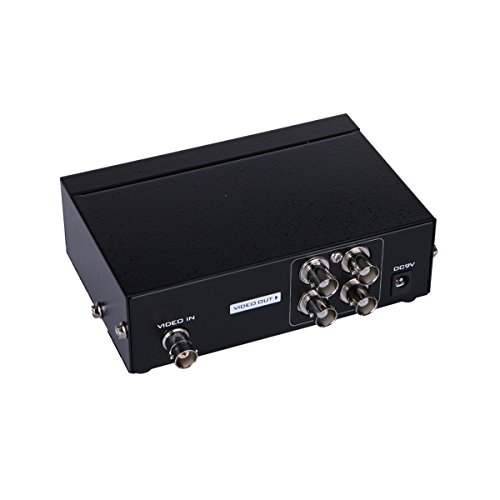
- One BNC input feeds four outputs
- Supports PAL, NTSC, and SECAM analog formats
- Plug-and-play metal unit with adapter included
Best For: Analog CVBS CCTV and monitoring systems
Simple RCA Mirroring
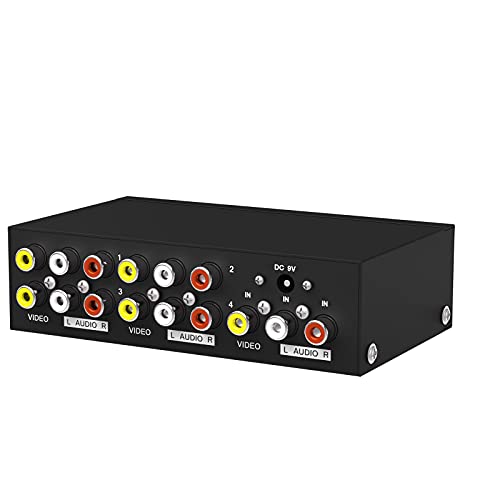
- Mirrors one RCA audio/video input to four outputs
- Plug-and-play design with no software
- Best suited to RCA-equipped TVs and DVRs
Best For: Basic composite AV distribution
Indoor TV Expansion
ClearStream JUICE4 4-Output Amplifier

- Splits an antenna signal to up to four TVs
- Supports ATSC 3.0, 4K, and 8K applications
- Includes power adapter and 40-inch RG6 cable
Best For: Beginner over-the-air TV distribution
Multi-Monitor SDI Setup

- Sends one SDI signal to eight outputs
- Supports SD, HD, and 3G-SDI formats
- Uses BNC connections for monitoring and CCTV
Best For: Entry-level SDI monitoring and distribution
Best SDI Pick for Beginners
Compact 1×4 SDI Distribution Amplifier

- Auto-detects HD, SD, and 3G-SDI signals
- Reclocks all four outputs for stable transmission
- Supports long-distance SDI runs
Best For: Entry-level SDI camera and monitoring setups
Best Analog Audio/Video Pick

- Splits one RCA source into eight outputs
- Amplifies analog audio/video for longer connections
- Color-coded ports simplify installation
Best For: Composite TV, projector, and audio distribution
Best BNC Pick for Beginners
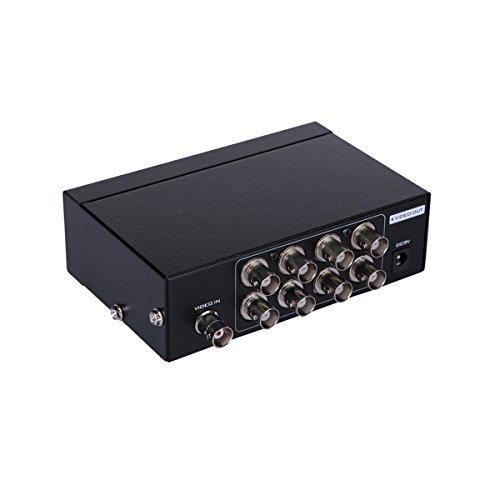
- Distributes one BNC input to eight outputs
- Supports PAL, NTSC, and SECAM analog formats
- Plug-and-play metal-housed design
Best For: Analog CCTV and CVBS monitoring systems
Easy Analog Setup – DTECH 4-Way RCA Video Splitter
For beginners comparing video distribution amplifiers for beginners, the DTECH 4-way RCA splitter is a straightforward choice for duplicating one analog composite video-and-audio source across up to four outputs. Its color-coded jacks, included power adapter, and plug-and-play design keep setup simple.
Best For: Sharing an RCA video and stereo-audio signal with multiple TVs, monitors, speakers, or dubbing setups.
Pros:
- Splits one 3-RCA input into four outputs for simultaneous viewing.
- Built-in signal amplification supports clearer video and audio over longer connections.
- Compact metal housing, LED indicator, color-coded ports, and included AC adapter simplify installation.
Cons:
- Designed for analog RCA composite signals rather than SDI or digital video.
- No switching function is included.
This is a practical entry-level option when your equipment already uses yellow, white, and red RCA connections. It is especially convenient for basic multi-display or analog dubbing projects.
Broadcast-Ready Expansion – Blackmagic Mini Converter SDI Distribution
For beginners exploring video distribution amplifiers for beginners in an SDI workflow, this Blackmagic Design Mini Converter distributes one SD, HD, or 3G-SDI source to eight re-clocked outputs. Automatic format switching and support for embedded audio make it suited to more advanced video systems.
Best For: Sending an SDI signal to multiple broadcast, studio, or live-event devices at once.
Pros:
- Provides eight re-clocked SDI outputs from one input.
- Automatically switches among supported SD, HD, and 3G-SDI formats.
- Supports ancillary data, embedded audio, ASI, and a redundant SDI input.
Cons:
- SDI-focused design may be more capability than a basic home user needs.
- The supplied notes list the main unit but do not mention included cables or a power adapter.
This is the strongest fit for a beginner who is learning professional SDI distribution rather than connecting consumer RCA equipment. Its eight outputs and re-clocking are useful when multiple downstream devices need a dependable shared feed.
Beginner CCTV Distribution – AuviPal 4-Port BNC Video Splitter
Among video distribution amplifiers for beginners, the AuviPal 4-port BNC splitter offers a simple way to send one analog surveillance video signal to four displays or devices. Connect the BNC input and outputs, apply power, and the plug-and-play unit is ready for compatible CVBS equipment.
Best For: Analog CCTV, monitoring, and other PAL, NTSC, or SECAM video distribution setups.
Pros:
- Splits one BNC input to four simultaneous BNC outputs.
- Supports resolutions up to 1080p at 60Hz according to the supplied notes.
- Includes a US power adapter and user manual in a durable metal housing.
Cons:
- Not compatible with SDI or digital signals.
- Connected cameras must be set to CVBS mode for seamless output.
This is a sensible beginner option when the system uses coaxial BNC connections and analog CVBS video. Confirming the camera format before purchase is important, since SDI and other digital sources are outside its stated compatibility.
Coax Signal Recovery – Winegard HDA-100 Coax Distribution Amplifier
For beginners comparing video distribution amplifiers for beginners on antenna or cable installations, the Winegard HDA-100 is designed to reduce signal loss across coaxial runs. It covers 54–1,000 MHz and provides 15 dB of gain for distributing TV signals through longer cable paths.
Best For: HDTV and cable TV coaxial runs that need compensation for signal loss.
Pros:
- Provides 15 dB of gain across the stated 54–1,000 MHz range.
- Designed to overcome signal loss between an antenna or cable source and TVs.
- Includes a 5–42 MHz two-way bypass with -2 dB loss and weather-resistant housing.
Cons:
- The supplied notes do not specify the number of distribution outputs.
- Its stated application is TV antenna and cable coax, not RCA, BNC CCTV, or SDI video.
- Warranty coverage is listed as 90 days limited.
This model is best understood as a coaxial TV signal amplifier rather than a general-purpose video splitter. It makes sense when cable length and distribution loss are the central problem, provided its connection requirements match the installation.
Simple RCA Mirroring – 4-Way Composite AV Splitter
For beginners comparing video distribution amplifiers for beginners, the MT-VIKI 104AV is a straightforward choice for duplicating one composite RCA audio/video source across four displays or recording devices. It is plug and play, requires no software, and works with devices that use RCA inputs.
Best For: Basic home setups that need one composite AV source mirrored to up to four RCA-equipped devices.
Pros:
- Duplicates one audio/video input to four outputs.
- Plug-and-play operation with no software required.
- Compatible with RCA-equipped devices such as TVs and DVRs.
Cons:
- Uses composite RCA connections rather than modern digital video interfaces.
- May experience noise if placed near routers, power supplies, TVs, or other transmitters.
- Ground-loop issues can also introduce noise.
This is a practical entry-level splitter when simplicity and RCA compatibility matter most. Careful placement and properly grounded equipment are important for a cleaner signal.
Indoor TV Expansion – ClearStream JUICE4 4-Output Amplifier
Among video distribution amplifiers for beginners, the Antennas Direct ClearStream JUICE4 is designed for splitting an over-the-air antenna signal to as many as four TVs or digital converter boxes. It supports ATSC 3.0, 4K, and 8K UHD applications, while its compact housing simplifies indoor installation.
Best For: Beginners distributing one antenna or compatible CATV signal to four televisions.
Pros:
- Provides four outputs for TVs or digital converter boxes.
- Supports ATSC 3.0 NEXTGEN TV, 4K, and 8K UHD applications.
- Includes a 40-inch RG6 cable, power adapter, wall screws, and grounding screw.
- Offers gain per port with a low noise figure below 3 dB.
Cons:
- It cannot provide cable TV channels from an antenna.
- Reception still depends on tower distance and obstructions.
- The included manufacturer warranty is limited to 90 days for parts.
The JUICE4 is the more specialized beginner option for antenna distribution, especially when four outputs and newer broadcast standards are priorities. It should not be viewed as a replacement for an antenna or cable service.
Multi-Monitor SDI Setup – 1×8 SDI Distributor Amplifier
For beginners evaluating video distribution amplifiers for beginners in professional-style systems, this HDSUNWSTD unit distributes one SDI source to eight simultaneous outputs. It supports SD-SDI, HD-SDI, and 3G-SDI formats through BNC connections, making it suitable for compatible monitoring, CCTV, broadcast, and training setups.
Best For: SDI-based video monitoring systems, security camera installations, and small broadcast or training rooms needing eight outputs.
Pros:
- Distributes one SDI input to eight simultaneous SDI outputs.
- Supports SD-SDI, HD-SDI, and 3G-SDI signal formats.
- Uses straightforward BNC input and output connections.
- Listed for broadcast rooms, nonlinear editing, CCTV, and training environments.
Cons:
- Requires SDI-compatible equipment and BNC cabling.
- It is not intended for RCA or typical consumer HDMI setups.
- The supplied notes identify a US power supply but do not specify additional accessories.
This distributor is a sensible starting point for beginners working with SDI rather than home-theater connections. Its eight-output layout is useful when many compatible monitors or cameras must receive the same feed.
Best SDI Pick for Beginners – Compact 1×4 SDI Distribution Amplifier
For beginners seeking video distribution amplifiers for beginners, the AVMATRIX SD1141 is a practical choice for splitting one SDI source across four outputs. It automatically detects HD, SD, and 3G-SDI signals, supports video up to 1080p at 60Hz, and reclocks each output for more reliable longer-distance transmission.
Best For: Beginners building SDI camera, studio, or monitoring setups that need four outputs and extended cable runs.
Pros:
- Supports HD, SD, and 3G-SDI signals up to 1080p at 60Hz.
- Provides four outputs with signal reclocking for stable transmission.
- Supports transmission distances up to 400m for SD, 200m for HD, and 120m for 3G-SDI.
- Includes a detachable wall-mounting bracket and three-year warranty.
Cons:
- Uses SDI connections rather than RCA, BNC composite, or general digital video connectors.
- Only outputs 2 and 4 support DVB-ASI signals.
The SD1141 stands out when long cable runs and SDI reliability matter. Its automatic signal detection and reclocking reduce setup complexity, while the compact housing and mounting bracket make installation easier.
Best Analog Audio/Video Pick – Powered 1×8 RCA Splitter
The DTECH FJ108-US is a straightforward option for beginners comparing video distribution amplifiers for beginners and working with analog composite equipment. It splits one RCA audio/video source into eight outputs, adds amplification for longer connections, and uses color-coded jacks with an included power adapter.
Best For: Beginners distributing composite video and stereo audio to multiple TVs, projectors, receivers, or capture devices.
Pros:
- Distributes one 3RCA input to eight outputs.
- Built-in amplifier supports clearer video and audio over longer connections.
- Color-coded RCA ports and LED indicator simplify setup.
- Compact metal housing includes anti-skid feet and a DC 9V power adapter.
Cons:
- Designed for RCA composite audio/video rather than SDI or BNC signals.
- Requires external power through the included adapter.
This DTECH splitter is beginner-friendly because it needs no software or configuration. It is best suited to older analog systems, multi-display arrangements, and dubbing projects rather than modern digital video workflows.
Best BNC Pick for Beginners – 1×8 1080p CCTV Video Splitter
For beginners choosing video distribution amplifiers for beginners in a surveillance setup, the AuviPal 8-port BNC splitter offers simple one-input, eight-output distribution. It supports analog PAL, NTSC, and SECAM signals up to 1080p at 60Hz and uses a plug-and-play design with a durable metal housing.
Best For: Beginners distributing analog CCTV or CVBS video to multiple compatible monitors or devices.
Pros:
- Splits one BNC input to eight BNC outputs simultaneously.
- Supports resolutions up to 1080p at 60Hz for analog video signals.
- Works with PAL, NTSC, and SECAM formats.
- Includes a US power adapter, user manual, and one-year warranty.
Cons:
- Not compatible with SDI or digital signals.
- Requires cameras to be set to CVBS mode for compatible output.
- Uses BNC connections, so it is not a direct fit for RCA-only systems without suitable cabling.
The AuviPal is a sensible starting point for analog security-video distribution because installation is simply a matter of connecting the input and outputs. Confirm that your cameras produce CVBS analog video before choosing it.
How We Picked These Video Distribution Amplifiers for Beginners
We focused on the factors that matter most in a first distribution setup: signal compatibility, output count, amplification, connector type, installation simplicity, and intended use. The selection includes compact RCA splitters for legacy devices, SDI distribution amplifiers for professional video, BNC units for CCTV and monitoring, and antenna or cable amplifiers for home TV systems.
Because these devices are not interchangeable, the most important requirement is matching the amplifier to the source and destination. A composite RCA model will not distribute an SDI signal, while an antenna amplifier is designed for RF television signals rather than camera video.
Quick Comparison
| System type | Typical connectors | Best for | What to check |
|---|---|---|---|
| Composite video and audio | RCA | Older consoles, DVD players, and AV equipment | Video format, audio channels, and power adapter |
| SDI video | BNC | Broadcast, production, and professional cameras | SD, HD, or 3G-SDI support and output count |
| CCTV and monitoring | BNC coaxial | Security cameras and monitoring displays | Resolution support, cable length, and impedance |
| TV antenna or cable | Coaxial F-type | Multiple televisions or long coax runs | Frequency range, gain, and overload protection |
Key Buying Factors for Video Distribution Amplifiers for Beginners
Match the Signal Format
Start with the source device. Composite systems commonly use yellow, white, and red RCA connections. SDI and many CCTV systems use BNC connectors, but connector shape alone does not confirm compatibility. For broadcast gear, verify whether the amplifier supports SD-SDI, HD-SDI, or 3G-SDI.
Count the Required Outputs
Choose an output count that covers your current displays and leaves modest room for expansion. Four outputs suit a small room or monitoring station, while eight outputs are more useful for camera systems, classrooms, showrooms, or multi-screen installations.
Consider Amplification and Distance
A distribution amplifier is useful when a passive splitter could weaken the signal across several destinations or long cables. Check the product’s supported cable type and rated distance. Extra gain is not always better, especially with strong antenna signals, so look for a model suited to your source level.
Check Power, Resolution, and Installation
Powered units need a nearby outlet and appropriate adapter. Confirm that the amplifier supports the resolution and refresh requirements of your equipment. For permanent installations, prioritize clearly labeled ports, secure connectors, and a durable enclosure.
Who Should Buy Which Video Distribution Amplifiers for Beginners?
Beginners connecting older gaming consoles, DVD players, or composite AV equipment should start with a powered RCA distribution box. Buyers building a professional camera or production chain should choose an SDI model that matches their exact SDI standard. CCTV users should select a BNC video splitter with enough outputs for every monitor and camera feed. For distributing antenna or cable television to multiple rooms, use a dedicated RF distribution amplifier rather than a composite or SDI unit.
If you are unsure, write down the source connector, destination connector, video standard, number of screens, and approximate cable lengths before buying. Those details will quickly narrow the choices and help prevent purchasing an amplifier that fits physically but cannot carry your signal.