Choosing among the best cellos for intermediate players is not only about finding more difficult music. The right next resource should strengthen technique, maintain motivation, and match how the student practices.
This roundup covers method books, scale and bowing studies, ensemble material, classical arrangements, and familiar songbooks so progressing cellists can build a useful, balanced library.
Best 10 Cellos for Intermediate Players Picks for 2026
Structured Skill Builder
Essential Elements Cello Book 2

- Sequenced lessons for advancing students
- Covers tone, bowing, rhythm, and accuracy
- Includes interactive EEi practice tools
Best For: Students moving beyond Book 1
Classical Repertoire Sampler

- Contains 50 familiar classical themes
- Suitable for easy and intermediate solos
- Chord changes support added accompaniment
Best For: Players expanding their classical repertoire
Ensemble Practice Pick
Beautiful Music for Two Cellos

- Develops listening and balance skills
- Playable with or without piano
- Useful for classes, recitals, and festivals
Best For: Students with a duet or ensemble partner
Technique-Focused Supplement
Intermediate Scales and Bowings

- Exercises in seven major keys
- Covers slurred, legato, staccato, and détaché bowings
- Compact 16-page practice resource
Best For: Focused scale and bowing practice
Best for Easy Setup
Essential Elements Cello Book 3

- Progressive bowing, shifting, and sight-reading studies
- Includes Essential Elements Interactive resources
- Useful for lessons, orchestra, or self-study
Best For: Intermediate cellists wanting a guided technique method
Ensemble Repertoire Pick
Intermediate Classic Duets for Two Cellos
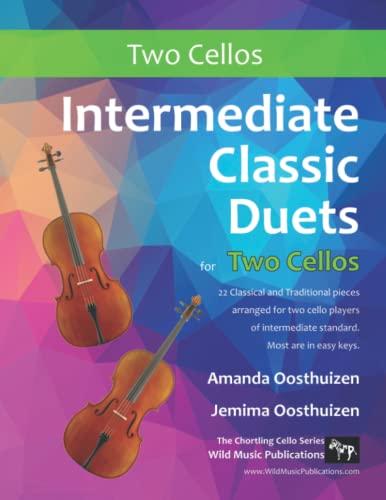
- Includes 22 classical and traditional duets
- Parts share the melody to encourage listening
- Designed for players around Grade 4 and above
Best For: Intermediate players seeking enjoyable two-cello repertoire
Young Learner Favorite
Intermediate FUNdamental Cello Book

- Designed for students in their second year
- Features large notation and clear visual guidance
- Adds YouTube support videos and creative activities
Best For: Young intermediate learners needing accessible instruction
Best Disney Repertoire Builder

- 101 solo Disney arrangements
- Builds reading, rhythm, tone, and phrasing
- Useful for practice, lessons, and recitals
Best For: Intermediate cellists who enjoy familiar Disney melodies
Best Early-Intermediate Method
Sound Innovations String Orchestra, Book 2

- Reviews Book 1 and adds new concepts
- Covers keys, rhythms, tone, scales, and arpeggios
- Supports ensemble playing with online media
Best For: Early-intermediate students preparing for string orchestra
Best Technical Skills Workbook
Essential Technique for Strings: Cello

- Develops shifting and higher-position skills
- Covers scales, keys, bowings, and special techniques
- Designed for lessons, orchestra preparation, or self-study
Best For: Intermediate cellists strengthening core orchestra technique
Structured Skill Builder – Essential Elements Cello Book 2
For cellos for intermediate players, Essential Elements for Strings—Cello Book 2 offers a structured next step after Book 1. Its sequenced lessons focus on bow control, tone production, rhythmic precision, and left-hand accuracy, with EEi online tools adding play-along audio and instructional support.
Best For: Advancing students in classroom, private-lesson, or self-paced study settings.
Pros:
- Builds core tone, bowing, rhythm, and finger-placement skills.
- Includes EEi access with audio, videos, and self-assessment tools.
- Supports both teacher-guided and independent practice.
Cons:
- Its method-book format may feel less repertoire-focused than a collection of solos.
- EEi access is most useful with a compatible computer, tablet, or smartphone.
This is a practical choice when steady, guided progression matters more than a large selection of performance pieces. The 48-page format keeps the material focused while supporting a transition into intermediate repertoire.
Classical Repertoire Sampler – Fifty Famous Classical Themes
Fifty Famous Classical Themes for Cello: Easy and Intermediate Solos for the Advancing Cello Player
Check Price On AmazonAmong cellos for intermediate players, this collection is a useful way to expand repertoire through recognizable classical melodies. It provides 50 easy and intermediate cello solos, with clear notation and chord changes for teacher-provided accompaniment.
Best For: Advancing players who want varied classical themes for lessons, practice, or informal performance.
Pros:
- Offers 50 themes from widely known classical works.
- Includes material suited to easy and intermediate levels.
- Chord changes allow teachers to add accompaniment.
Cons:
- The supplied notes do not indicate that piano accompaniment is included.
- It emphasizes individual themes rather than a progressive technical method.
Choose this book when motivation and repertoire variety are priorities. The broad selection can help an intermediate student encounter major classical melodies without committing to a single large work.
Ensemble Practice Pick – Beautiful Music for Two Cellos
For cellos for intermediate players who enjoy playing with others, Beautiful Music for Two String Instruments, Book 4 provides duet material for two cellos. The format develops listening, balance, phrasing, intonation, and tone awareness while offering preparation for larger ensembles.
Best For: Cellists practicing with a sibling, classmate, teacher, or another ensemble partner.
Pros:
- Builds ensemble skills through two-part playing.
- Can be used by two performers or multiple players per part.
- Works with or without piano accompaniment.
- Suitable for recitals, festivals, and school string programs.
Cons:
- Requires another cellist to use the duet format fully.
- Its primary focus is ensemble playing rather than solo technique.
This is a strong supplemental choice for an intermediate player who needs practical ensemble experience. Its flexible performance format also makes it useful beyond individual practice.
Technique-Focused Supplement – Intermediate Scales and Bowings
Intermediate Scales and Bowings is a compact technique supplement for cellos for intermediate players. It covers exercises in seven major keys and works through slurred, legato, staccato, and détaché bowings for focused daily practice.
Best For: Students and teachers seeking concise scale and bowing exercises to supplement a broader method.
Pros:
- Covers seven major keys in a focused format.
- Addresses four useful bowing approaches.
- Its 16-page layout is easy to add to a practice routine.
Cons:
- It is an exercise book, not a repertoire collection.
- The supplied notes do not mention audio, video, or other digital support.
- Players looking for extensive technical material may find it brief.
This book makes the most sense as a targeted add-on rather than a complete learning method. It is especially practical when a teacher wants clearly defined scale and bowing work alongside repertoire study.
Best for Easy Setup – Essential Elements Cello Book 3
For cellos for intermediate players, Essential Elements Cello Book 3 is a structured method choice focused on advancing technique. It builds on earlier volumes with progressive work in bowing, shifting, sight-reading, scales, arpeggios, ensemble playing, and tone development.
Best For: Intermediate students, orchestra programs, private lessons, and self-guided practice.
Pros:
- Includes access to Essential Elements Interactive with video demonstrations, play-along tracks, and practice tools.
- Covers practical intermediate skills such as shifting, bow control, rhythm, phrasing, and sight-reading.
- Supports both classroom instruction and independent practice.
Cons:
- The 48-page format may feel limited for players seeking a large repertoire collection.
- Its method-book structure may be less appealing to learners primarily seeking performance pieces.
This is a strong fit when you want a clearly sequenced study plan and digital support to reinforce regular practice. It is especially useful for players progressing through formal instruction or preparing for ensemble and audition work.
Ensemble Repertoire Pick – Intermediate Classic Duets for Two Cellos
Among cellos for intermediate players, this duet collection stands out for musicians who want to develop ensemble skills while playing recognizable classical and traditional melodies. It contains 22 pieces arranged for two players of a similar intermediate standard, generally around Grade 4 and above.
Best For: Intermediate cellists who regularly play with a friend, teacher, family member, or fellow student.
Pros:
- Offers 22 classical and traditional selections, including works by Beethoven, Bach, Dvořák, Holst, and Saint-Saëns.
- Melody moves between parts, encouraging active listening and balanced ensemble playing.
- Most pieces use easy keys and can work for lessons, informal performances, or family entertainment.
Cons:
- It requires access to a second cellist, so it is less suitable for solo-only practice.
- Some selections are described as tricky despite the generally accessible keys.
This book is best viewed as a playing companion rather than a comprehensive technique method. Its part-sharing format makes it a practical choice for improving musical communication and keeping intermediate practice social.
Young Learner Favorite – Intermediate FUNdamental Cello Book
The Intermediate FUNdamental Cello Book (The Intermediate FUNdamental String Series)
Check Price On AmazonFor younger cellists comparing cellos for intermediate players resources, The Intermediate FUNdamental Cello Book emphasizes accessibility and motivation. Designed as a second-year follow-up, it combines simplified songs, large notation, illustrations, and video support with fundamentals such as posture, bowing, rhythm, theory, and expression.
Best For: Elementary-age intermediate students, especially those who benefit from large print and highly guided materials.
Pros:
- Uses extra-large notation, letter names inside note heads, diagrams, and limited material per page.
- Includes YouTube support videos for students and teachers.
- Combines technique and music fundamentals with classic songs, coloring pages, creativity, and music appreciation.
Cons:
- The child-focused illustrations and letter-name notation may feel too basic for older or more advanced players.
- It focuses on foundational intermediate development rather than advanced technique or extensive repertoire.
This is a practical choice for a young learner who needs an encouraging bridge between beginner and intermediate study. Its clear layout and supplemental videos can make home practice less intimidating while reinforcing essential habits.
Best Disney Repertoire Builder – 101 Disney Songs for Cello
For cellos for intermediate players, this Disney songbook offers a motivating way to reinforce reading, rhythm, tone, phrasing, and musicality. Its 101 solo arrangements include familiar selections from classic and modern Disney films, television, and theme parks, making it useful for home practice, lessons, recitals, or relaxed repertoire building.
Best For: Intermediate students and adult players who enjoy Disney music and want engaging solo material for practice or performance.
Pros:
- Includes 101 recognizable Disney songs in solo cello arrangements.
- Supports work on tone, phrasing, rhythm, reading, and musical expression.
- Suitable for lessons, home practice, recitals, and gifting.
Cons:
- Focuses on Disney repertoire rather than a systematic technical curriculum.
- Players seeking ensemble parts or accompaniment may need additional materials.
This is a strong choice when enjoyment and consistency are priorities. It complements, rather than replaces, a structured method book, giving intermediate cellists approachable repertoire that can keep practice rewarding.
Best Early-Intermediate Method – Sound Innovations String Orchestra, Book 2
Among cellos for intermediate players, this Book 2 method is designed for early-intermediate development and a transition toward ensemble playing. It reviews Book 1 while introducing new keys, rhythms, tone development, scales, arpeggios, and structured practice goals, with online ensemble videos and accompaniment recordings available through the publisher’s platform.
Best For: Early-intermediate cello students continuing a method sequence and preparing for string orchestra participation.
Pros:
- Begins with a review of Book 1 before adding new concepts.
- Introduces keys, rhythms, tone work, scales, and arpeggios in stages.
- Includes ensemble-focused practice and access to streaming media.
- Uses benchmarks, assessments, and intermediate goals to organize progress.
Cons:
- Its string-orchestra focus may be less suitable for exclusively solo study.
- Online media access requires an internet connection.
This book is most useful for players who want a clearly sequenced path into ensemble musicianship. Its segmented approach can make new material manageable while keeping technique connected to real orchestra skills.
Best Technical Skills Workbook – Essential Technique for Strings: Cello
For cellos for intermediate players who need stronger fundamentals, Essential Technique for Strings: Cello concentrates on the skills that support orchestra performance. Its graded studies address higher positions, shifting, keys, scales, bowings, and special techniques, making it suitable for classroom instruction, private lessons, or focused self-guided practice.
Best For: Intermediate cellists working on shifting, position changes, scales, bow control, and broader orchestra technique.
Pros:
- Targets higher positions, shifting, keys, scales, and bowings.
- Offers progressively organized studies for structured development.
- Works in classroom, private-lesson, and self-guided settings.
- Connects technical practice with musical expression and orchestra preparation.
Cons:
- At 48 pages, it is a focused technique book rather than a large repertoire collection.
- Players seeking songs or performance pieces will need a separate repertoire source.
This is a practical supplement for players ready to move beyond basic technique. It is especially valuable when a teacher or practice plan can assign the graded exercises according to the cellist’s current needs.
How We Picked These Cellos for Intermediate Players
We selected resources that address the main needs of a developing cellist: reading fluency, shifting, bow control, scales, repertoire, and ensemble playing. The list includes structured methods such as Essential Elements, Sound Innovations, and Essential Technique, alongside focused studies, duets, classical themes, and accessible popular music.
We also considered flexibility. Some books work best with a private teacher or school orchestra, while others can support independent practice. Online access, where included, may add demonstrations, play-along material, or supplemental instruction.
Quick Comparison
| Resource type | Best use | Ideal buyer |
|---|---|---|
| Method books | Structured progression and reading | Students wanting a guided curriculum |
| Technique studies | Scales, bowings, shifting, and control | Players focused on fundamentals |
| Classical themes | Solo repertoire and performance practice | Players seeking recognizable pieces |
| Duets | Intonation, timing, and ensemble skills | Students who regularly play with a partner |
| Popular songbooks | Motivation and informal playing | Players who enjoy familiar melodies |
Key Buying Factors for Cellos for Intermediate Players
Match the Difficulty to Current Technique
“Intermediate” can cover a wide range. Check whether the student is comfortable reading in multiple positions, handling basic shifting, and maintaining consistent bow contact. A method labeled early-intermediate may be a better fit than an advanced collection if core skills are still developing.
Balance Technique with Repertoire
Technique books build reliable habits, but repertoire keeps practice engaging. A practical combination is one structured method or study book plus a collection of solos, duets, or familiar songs.
Consider the Practice Setting
Students in an orchestra or school program may benefit most from ensemble-oriented methods. Independent learners should look for clear instructions, recordings, or online media. Duets are especially useful when a teacher, sibling, or friend can rehearse regularly.
Check Arrangement and Format Details
Confirm whether a book is for solo cello, two equal cellos, or string orchestra. Also check included access codes, downloadable audio, page format, and whether piano accompaniment is required. These details affect how easily the material fits existing lessons and equipment.
Who Should Buy Which Cellos for Intermediate Players?
Choose a sequential method book for a student who wants a clear path through new notes, rhythms, and playing skills. Select a scale, bowing, or shifting study for someone whose teacher has identified a specific technical weakness. Classical-theme collections suit players preparing short performances, while Disney and other familiar songs can make daily practice more appealing.
For shared lessons or family playing, two-cello duet books offer a practical way to develop timing and listening. Orchestra students should prioritize materials designed around ensemble skills and supplemental media. When uncertain, pair one fundamentals-focused title with one enjoyable repertoire book rather than buying several resources that teach the same thing.